

Actions during service 133
The first cases of alkali aggregate reaction were observed in the 1920s
and 1930s in California USA, showing severe cracking only a few years
after construction. It was Stanton (1940) who first demonstrated the
existence of a deleterious reaction between the constituents of the concrete. Nevertheless, it took many more years before the mechanism of
alkali aggregate reaction became clearer. A first international conference on alkali aggregate reaction was organized in 1975 in Reykjavik
(Asgeirsson 1975), with additional conferences following later in the
1970s and 1980s. In many countries, the first cases of alkali silica reaction were diagnosed in the 1980s, e.g. in Belgium in the Kontich Bridge
around 1985 (De Ceukelaire 1986, 1988, 1991). Gradually, the concrete
industry became well aware of the risk of alkali silica reaction and appropriate preventive measures have been defined. Nevertheless, alkali silica
reaction in concrete structures is still an important issue in many parts
of the world.
5.3.1.1 Mechanism
5.3.1.1.1 Alkali silica reaction
It is generally accepted that alkali silica reaction is linked to the presence
of silicon dioxide, SiO 2 , in the aggregates, and more specifically whether it
is crystalline or amorphous. Most aggregates contain silicon dioxide, often
in the crystalline form of mineral quartz, although other minerals can also
occur. Due to its chemically stable bonds, quartz is quite unreactive and it
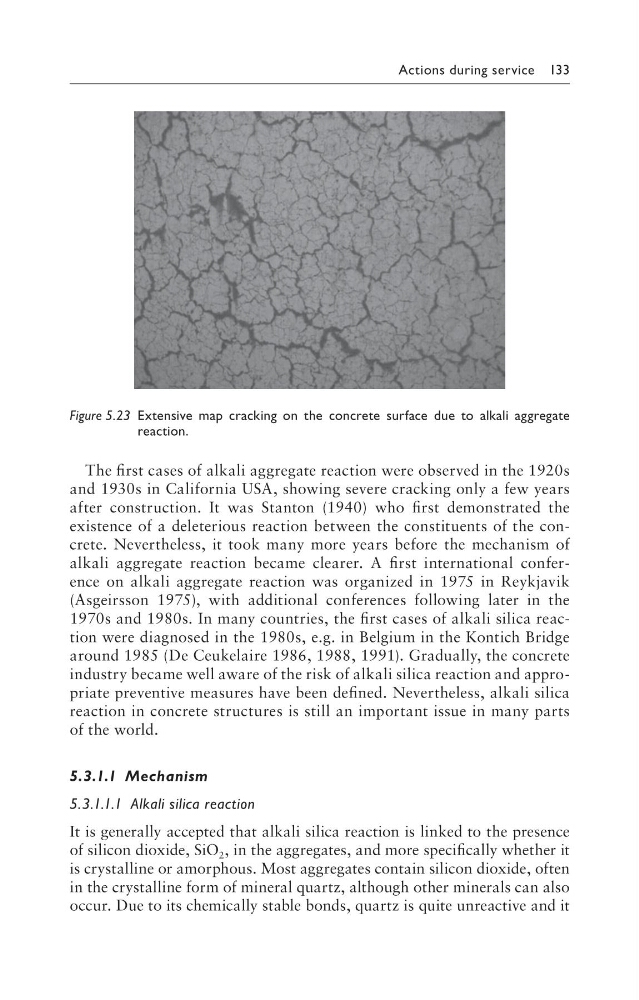
Figure 5.23 Extensive map cracking on the concrete surface due to alkali aggregate
reaction.
The first cases of alkali aggregate reaction were observed in the 1920s
and 1930s in California USA, showing severe cracking only a few years
after construction. It was Stanton (1940) who first demonstrated the
existence of a deleterious reaction between the constituents of the concrete. Nevertheless, it took many more years before the mechanism of
alkali aggregate reaction became clearer. A first international conference on alkali aggregate reaction was organized in 1975 in Reykjavik
(Asgeirsson 1975), with additional conferences following later in the
1970s and 1980s. In many countries, the first cases of alkali silica reaction were diagnosed in the 1980s, e.g. in Belgium in the Kontich Bridge
around 1985 (De Ceukelaire 1986, 1988, 1991). Gradually, the concrete
industry became well aware of the risk of alkali silica reaction and appropriate preventive measures have been defined. Nevertheless, alkali silica
reaction in concrete structures is still an important issue in many parts
of the world.
5.3.1.1 Mechanism
5.3.1.1.1 Alkali silica reaction
It is generally accepted that alkali silica reaction is linked to the presence
of silicon dioxide, SiO 2 , in the aggregates, and more specifically whether it
is crystalline or amorphous. Most aggregates contain silicon dioxide, often
in the crystalline form of mineral quartz, although other minerals can also
occur. Due to its chemically stable bonds, quartz is quite unreactive and it
Figure 5.23 Extensive map cracking on the concrete surface due to alkali aggregate
reaction.