

132 Damage to concrete structures
5.3 cheMIcal actIons
5.3.1 alkali silica reaction (asr)
Alkali aggregate reaction (AAR) is a heterogeneous chemical reaction
between a chemically instable solid phase present in aggregate particles,
and an alkali rich liquid phase formed by the pore solution present in the
concrete pores. The pore solution has a high alkalinity with a pH value of
12.5 or higher. In the presence of alkalis (sodium, Na, and potassium, K) in
the concrete, the pore solution mainly contains dissolved alkali hydroxides
(K + OH − and Na + OH − ) and minor quantities of other ions (Ca 2+ , SO 4
2− ).
In this environment, the chemically unstable aggregate phases show a reaction, possibly resulting in internal swelling and damage to the concrete. On
the concrete surface, alkali aggregate reaction yields a typical and extensive
map cracking, as illustrated in Figure 5.23. A gel can often be found in the
cracks and, in advanced cases, spalling of surface concrete can occur.
Depending on the unstable aggregate phases, two main types of alkali
aggregate reaction can be defined: alkali silica reaction (ASR) and alkali
carbonate reaction (ACR). While ACR is less common in practice, and thus
causes considerably fewer damage cases, ASR is very relevant in many parts
of the world and results in a high number of severely attacked structures
and important economical losses (Swamy 1992).
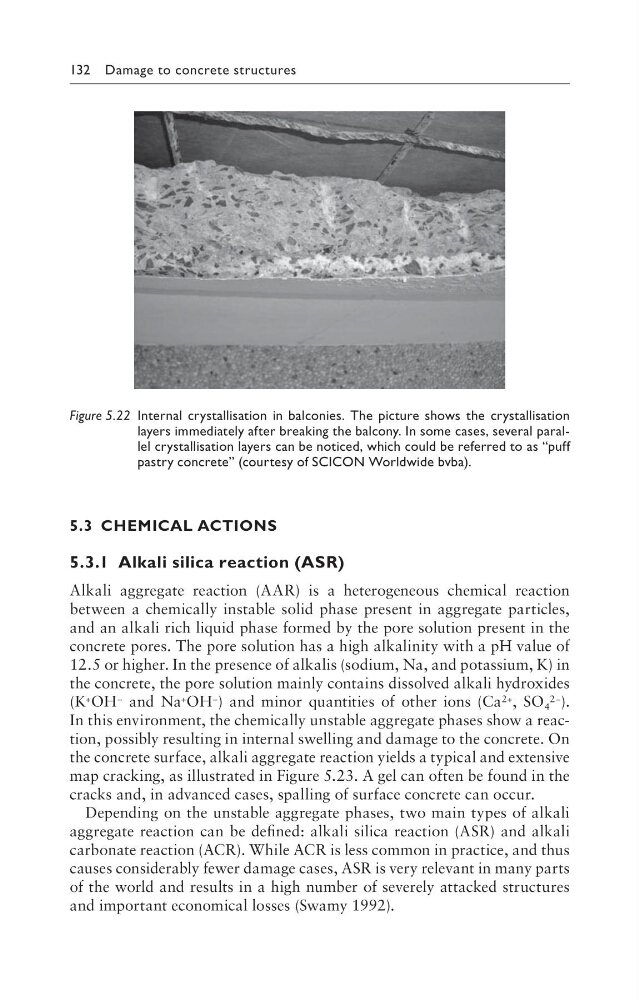
Figure 5.22 Internal crystallisation in balconies. The picture shows the crystallisation
layers immediately after breaking the balcony. In some cases, several parallel crystallisation layers can be noticed, which could be referred to as “puff
pastry concrete” (courtesy of SCICON Worldwide bvba).
5.3 cheMIcal actIons
5.3.1 alkali silica reaction (asr)
Alkali aggregate reaction (AAR) is a heterogeneous chemical reaction
between a chemically instable solid phase present in aggregate particles,
and an alkali rich liquid phase formed by the pore solution present in the
concrete pores. The pore solution has a high alkalinity with a pH value of
12.5 or higher. In the presence of alkalis (sodium, Na, and potassium, K) in
the concrete, the pore solution mainly contains dissolved alkali hydroxides
(K + OH − and Na + OH − ) and minor quantities of other ions (Ca 2+ , SO 4
2− ).
In this environment, the chemically unstable aggregate phases show a reaction, possibly resulting in internal swelling and damage to the concrete. On
the concrete surface, alkali aggregate reaction yields a typical and extensive
map cracking, as illustrated in Figure 5.23. A gel can often be found in the
cracks and, in advanced cases, spalling of surface concrete can occur.
Depending on the unstable aggregate phases, two main types of alkali
aggregate reaction can be defined: alkali silica reaction (ASR) and alkali
carbonate reaction (ACR). While ACR is less common in practice, and thus
causes considerably fewer damage cases, ASR is very relevant in many parts
of the world and results in a high number of severely attacked structures
and important economical losses (Swamy 1992).
Figure 5.22 Internal crystallisation in balconies. The picture shows the crystallisation
layers immediately after breaking the balcony. In some cases, several parallel crystallisation layers can be noticed, which could be referred to as “puff
pastry concrete” (courtesy of SCICON Worldwide bvba).