

Actions during service 125
temperatures. As a result of this thermal incompatibility, high stresses can
be initiated within the concrete. These stresses can be partly relaxed by
load-induced thermal strain (Annerel 2010).
In some cases, the interaction between cement paste and aggregates can
be of a chemical nature. As an example, in dolomite aggregate, a chemical
reaction can occur between magnesium phases present in the dolomite and
calcium hydroxide present in the cement paste. This reaction is expansive,
causing damage to the concrete.
5.2.5.3.3 Interaction between concrete and reinforcement
The thermal conductivity of concrete is substantially lower than of steel.
On the one hand, this is an important advantage because even in the case of
severe fire conditions only a small outer layer of concrete will be exposed to
temperatures above 300°C. This is the main reason why concrete structures
have a very good fire resistance in comparison with steel structures. The
steel reinforcement in a structural concrete element is somewhat protected
from the heat source by the concrete cover. On the other hand, the steel
reinforcement cage can heat much faster than the concrete in the core, due
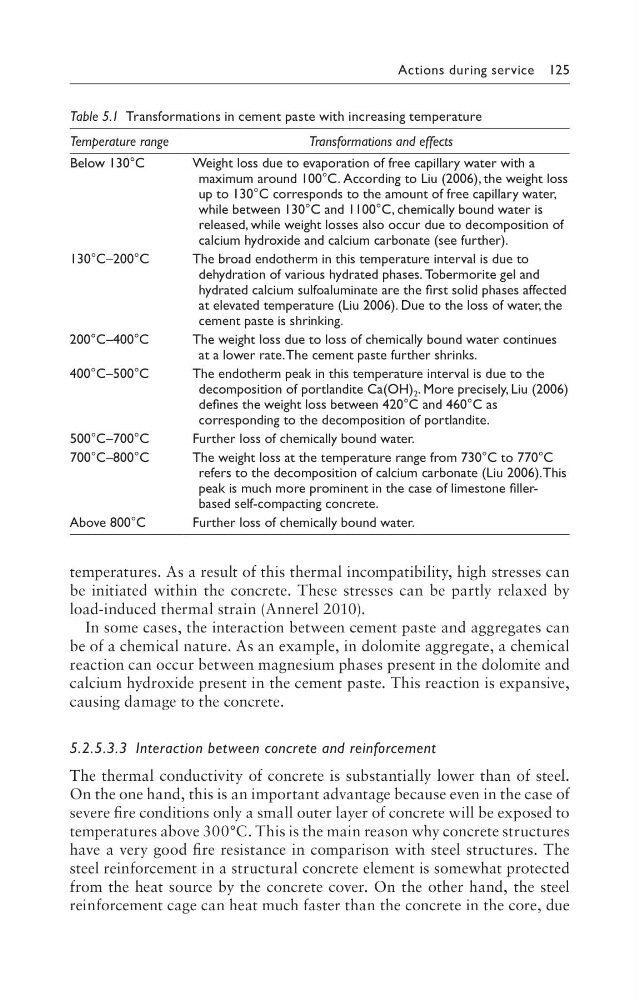
Table 5.1 Transformations in cement paste with increasing temperature
Temperature range
Transformations and effects
Below 130°C
Weight loss due to evaporation of free capillary water with a
maximum around 100°C. According to Liu (2006), the weight loss
up to 130°C corresponds to the amount of free capillary water,
while between 130°C and 1100°C, chemically bound water is
released, while weight losses also occur due to decomposition of
calcium hydroxide and calcium carbonate (see further).
130°C–200°C
The broad endotherm in this temperature interval is due to
dehydration of various hydrated phases. Tobermorite gel and
hydrated calcium sulfoaluminate are the first solid phases affected
at elevated temperature (Liu 2006). Due to the loss of water, the
cement paste is shrinking.
200°C–400°C
The weight loss due to loss of chemically bound water continues
at a lower rate. The cement paste further shrinks.
400°C–500°C
The endotherm peak in this temperature interval is due to the
decomposition of portlandite Ca(OH) 2 . More precisely, Liu (2006)
defines the weight loss between 420°C and 460°C as
corresponding to the decomposition of portlandite.
500°C–700°C
Further loss of chemically bound water.
700°C–800°C
The weight loss at the temperature range from 730°C to 770°C
refers to the decomposition of calcium carbonate (Liu 2006). This
peak is much more prominent in the case of limestone fillerbased self-compacting concrete.
Above 800°C
Further loss of chemically bound water.
temperatures. As a result of this thermal incompatibility, high stresses can
be initiated within the concrete. These stresses can be partly relaxed by
load-induced thermal strain (Annerel 2010).
In some cases, the interaction between cement paste and aggregates can
be of a chemical nature. As an example, in dolomite aggregate, a chemical
reaction can occur between magnesium phases present in the dolomite and
calcium hydroxide present in the cement paste. This reaction is expansive,
causing damage to the concrete.
5.2.5.3.3 Interaction between concrete and reinforcement
The thermal conductivity of concrete is substantially lower than of steel.
On the one hand, this is an important advantage because even in the case of
severe fire conditions only a small outer layer of concrete will be exposed to
temperatures above 300°C. This is the main reason why concrete structures
have a very good fire resistance in comparison with steel structures. The
steel reinforcement in a structural concrete element is somewhat protected
from the heat source by the concrete cover. On the other hand, the steel
reinforcement cage can heat much faster than the concrete in the core, due
Table 5.1 Transformations in cement paste with increasing temperature
Temperature range
Transformations and effects
Below 130°C
Weight loss due to evaporation of free capillary water with a
maximum around 100°C. According to Liu (2006), the weight loss
up to 130°C corresponds to the amount of free capillary water,
while between 130°C and 1100°C, chemically bound water is
released, while weight losses also occur due to decomposition of
calcium hydroxide and calcium carbonate (see further).
130°C–200°C
The broad endotherm in this temperature interval is due to
dehydration of various hydrated phases. Tobermorite gel and
hydrated calcium sulfoaluminate are the first solid phases affected
at elevated temperature (Liu 2006). Due to the loss of water, the
cement paste is shrinking.
200°C–400°C
The weight loss due to loss of chemically bound water continues
at a lower rate. The cement paste further shrinks.
400°C–500°C
The endotherm peak in this temperature interval is due to the
decomposition of portlandite Ca(OH) 2 . More precisely, Liu (2006)
defines the weight loss between 420°C and 460°C as
corresponding to the decomposition of portlandite.
500°C–700°C
Further loss of chemically bound water.
700°C–800°C
The weight loss at the temperature range from 730°C to 770°C
refers to the decomposition of calcium carbonate (Liu 2006). This
peak is much more prominent in the case of limestone fillerbased self-compacting concrete.
Above 800°C
Further loss of chemically bound water.