

Actions during service 113
the ice layer shows properties very similar to pure ice with a fairly high
strength. In this case, the ice layer will not fracture when the temperature
is further lowered and no significant scaling will occur. For a high concentration, the ice layer will not develop stiffness and strength within the
relevant temperature range, so no significant stresses will be generated in
the concrete. Maximum scaling damage will occur at a salt concentration
of about 3% (see Figure 5.11).
5.2.2.2.2 Ice layer thickness
The higher the ice layer thickness, the higher the frost scaling damage.
Indeed, when studying the thermal incompatibility between ice layer and
concrete, it is clear that higher forces will be present in an ice layer with
higher thickness. Upon the event of cracking, the crack will propagate
somewhat further into the concrete, causing more spalling.
5.2.2.2.3 Quality of the concrete
The concrete properties near the top surface determine whether a crack
forming in the ice layer will propagate into the concrete substrate. The
higher the concrete strength, the lower the probability that cracks will
propagate. As salt scaling is caused by a purely mechanical phenomenon,
the concrete strength indeed seems to be decisive here. Nevertheless, it is
also noticed that air entrainment is improving the resistance against salt
scaling, even while the concrete strength is somewhat reduced. The reasons
for the beneficial role of air entrainment in case of salt scaling have been
explained in Section 5.2.2.1.2.
Salt Scaling
≈ 3%
Salt Concentration
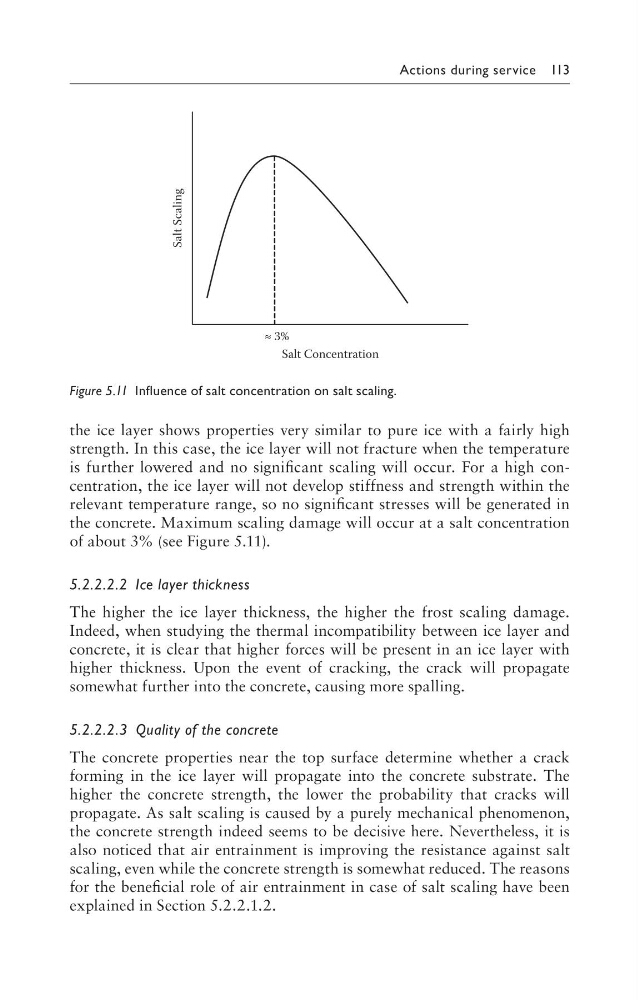
Figure 5.11 Influence of salt concentration on salt scaling.
the ice layer shows properties very similar to pure ice with a fairly high
strength. In this case, the ice layer will not fracture when the temperature
is further lowered and no significant scaling will occur. For a high concentration, the ice layer will not develop stiffness and strength within the
relevant temperature range, so no significant stresses will be generated in
the concrete. Maximum scaling damage will occur at a salt concentration
of about 3% (see Figure 5.11).
5.2.2.2.2 Ice layer thickness
The higher the ice layer thickness, the higher the frost scaling damage.
Indeed, when studying the thermal incompatibility between ice layer and
concrete, it is clear that higher forces will be present in an ice layer with
higher thickness. Upon the event of cracking, the crack will propagate
somewhat further into the concrete, causing more spalling.
5.2.2.2.3 Quality of the concrete
The concrete properties near the top surface determine whether a crack
forming in the ice layer will propagate into the concrete substrate. The
higher the concrete strength, the lower the probability that cracks will
propagate. As salt scaling is caused by a purely mechanical phenomenon,
the concrete strength indeed seems to be decisive here. Nevertheless, it is
also noticed that air entrainment is improving the resistance against salt
scaling, even while the concrete strength is somewhat reduced. The reasons
for the beneficial role of air entrainment in case of salt scaling have been
explained in Section 5.2.2.1.2.
Salt Scaling
≈ 3%
Salt Concentration
Figure 5.11 Influence of salt concentration on salt scaling.