

112 Damage to concrete structures
of moderate concentration will crack, and highly concentrated solutions do
not gain strength in the temperature range of interest (Valenza and Scherer
2007b).
Following the glue spalling theory, the beneficial role of air entrainment
is explained in two ways (Valenza and Scherer 2007b). First, air entrainment reduces the amount of bleeding, producing a stronger concrete top
surface. Furthermore, ice formation in the air voids forces the pore fluid
to move toward the air voids (due to thermodynamic disequilibrium, see
Section 5.2.1.1). This water movement from pores to larger voids leads to
a slight contraction of the porous matrix, which helps reduce the damage
caused by the thermal incompatibility between the ice layer on the concrete
surface and the concrete substrate.
5.2.2.2 Influencing parameters
All parameters influencing frost damage of concrete (see Section 5.2.1.2)
are typically considered to have a similar influence on frost salt scaling.
However, following the glue spalling theory as concluded by Valenza and
Scherer (2007b), ‘Susceptibility to salt scaling is not correlated with susceptibility to internal frost action’. According to the glue spalling theory,
the following parameters are of major importance for salt scaling.
5.2.2.2.1 Salt concentration
As already mentioned in Section 5.2.2.1, a pessimum exists at a solute
concentration of about 3%. The salt concentration is an important parameter for the mechanical properties of the ice layer. For a low concentration,
Ice layer
Concrete
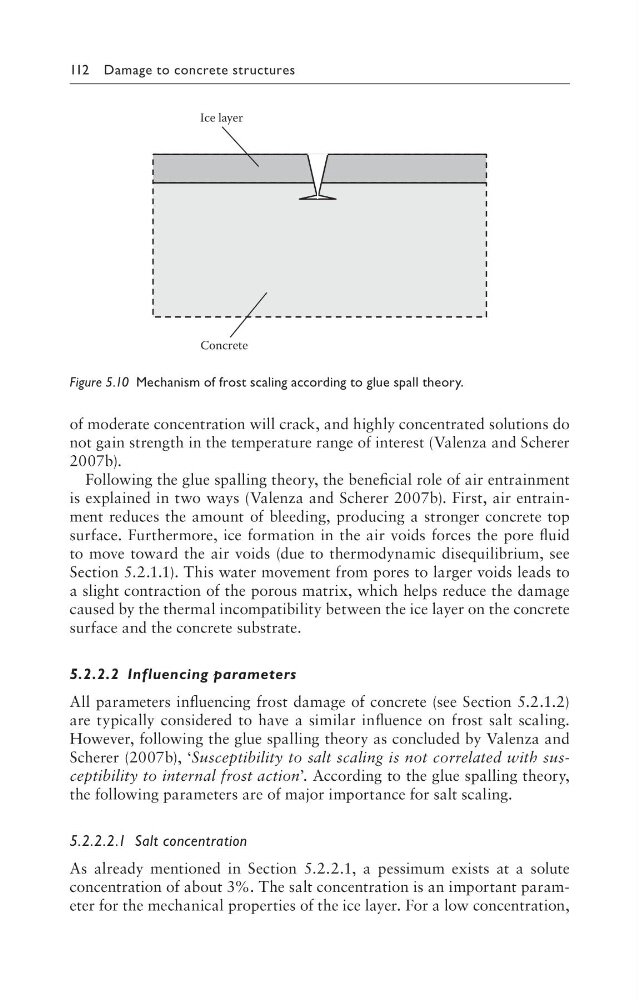
Figure 5.10 Mechanism of frost scaling according to glue spall theory.
of moderate concentration will crack, and highly concentrated solutions do
not gain strength in the temperature range of interest (Valenza and Scherer
2007b).
Following the glue spalling theory, the beneficial role of air entrainment
is explained in two ways (Valenza and Scherer 2007b). First, air entrainment reduces the amount of bleeding, producing a stronger concrete top
surface. Furthermore, ice formation in the air voids forces the pore fluid
to move toward the air voids (due to thermodynamic disequilibrium, see
Section 5.2.1.1). This water movement from pores to larger voids leads to
a slight contraction of the porous matrix, which helps reduce the damage
caused by the thermal incompatibility between the ice layer on the concrete
surface and the concrete substrate.
5.2.2.2 Influencing parameters
All parameters influencing frost damage of concrete (see Section 5.2.1.2)
are typically considered to have a similar influence on frost salt scaling.
However, following the glue spalling theory as concluded by Valenza and
Scherer (2007b), ‘Susceptibility to salt scaling is not correlated with susceptibility to internal frost action’. According to the glue spalling theory,
the following parameters are of major importance for salt scaling.
5.2.2.2.1 Salt concentration
As already mentioned in Section 5.2.2.1, a pessimum exists at a solute
concentration of about 3%. The salt concentration is an important parameter for the mechanical properties of the ice layer. For a low concentration,
Ice layer
Concrete
Figure 5.10 Mechanism of frost scaling according to glue spall theory.