

Actions during hardening 85
4.4.1.2 Early-age thermal cracking due to external restraint
Cracks of a different type can occur when the thermal deformation of the
hardening concrete element is restrained by a previously cast adjacent element or foundation. Also in this case, the heat of hydration is the driving force. Especially during the cooling phase, thermal stresses can lead to
severe through-going cracks, which can seriously affect the water tightness
of tunnel walls.
Consider a hardening concrete wall, cast on a previously cast floor or foundation, as illustrated in Figure 4.11. During the heating phase, the newly cast
wall shows a thermal expansion, which is at least partly restrained by the
already hardened floor or foundation. As a result, compressive stresses are
After demoulding
Air 10°C
20°C
45°C
45°C
45°C
55°C
20°C
20°C
50°C
Before demoulding
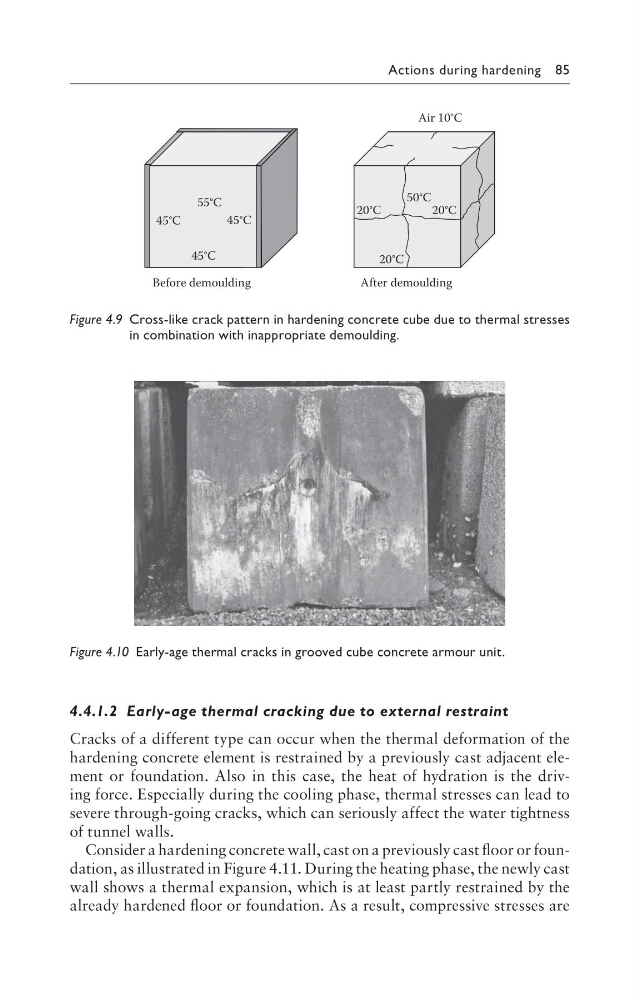
Figure 4.9 Cross-like crack pattern in hardening concrete cube due to thermal stresses
in combination with inappropriate demoulding.
Figure 4.10 Early-age thermal cracks in grooved cube concrete armour unit.
4.4.1.2 Early-age thermal cracking due to external restraint
Cracks of a different type can occur when the thermal deformation of the
hardening concrete element is restrained by a previously cast adjacent element or foundation. Also in this case, the heat of hydration is the driving force. Especially during the cooling phase, thermal stresses can lead to
severe through-going cracks, which can seriously affect the water tightness
of tunnel walls.
Consider a hardening concrete wall, cast on a previously cast floor or foundation, as illustrated in Figure 4.11. During the heating phase, the newly cast
wall shows a thermal expansion, which is at least partly restrained by the
already hardened floor or foundation. As a result, compressive stresses are
After demoulding
Air 10°C
20°C
45°C
45°C
45°C
55°C
20°C
20°C
50°C
Before demoulding
Figure 4.9 Cross-like crack pattern in hardening concrete cube due to thermal stresses
in combination with inappropriate demoulding.
Figure 4.10 Early-age thermal cracks in grooved cube concrete armour unit.