

64
J. H. das Pinto and M. M. C. Maceno
S5 -
Improvement
proposal
S4 - Results
analysis
S3 - Data collect
and Flowchart
S2 - Theorical
Background and
Focus of study
S1 - Study
problem
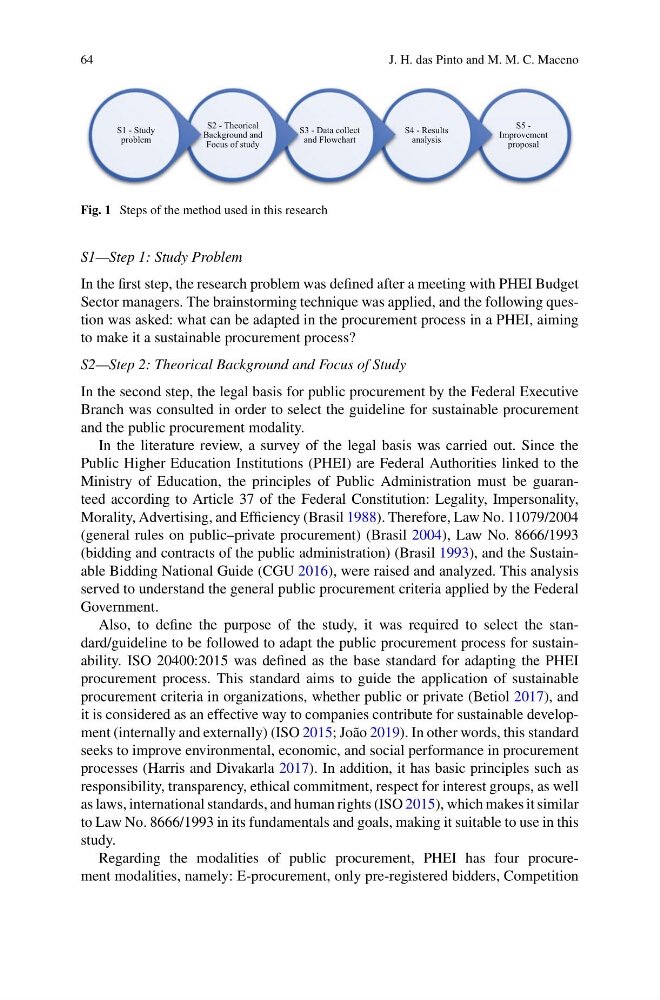
Fig. 1 Steps of the method used in this research
S1—Step 1: Study Problem
In the first step, the research problem was defined after a meeting with PHEI Budget
Sector managers. The brainstorming technique was applied, and the following question was asked: what can be adapted in the procurement process in a PHEI, aiming
to make it a sustainable procurement process?
S2—Step 2: Theorical Background and Focus of Study
In the second step, the legal basis for public procurement by the Federal Executive
Branch was consulted in order to select the guideline for sustainable procurement
and the public procurement modality.
In the literature review, a survey of the legal basis was carried out. Since the
Public Higher Education Institutions (PHEI) are Federal Authorities linked to the
Ministry of Education, the principles of Public Administration must be guaranteed according to Article 37 of the Federal Constitution: Legality, Impersonality,
Morality, Advertising, and Efficiency (Brasil 1988). Therefore, Law No. 11079/2004
(general rules on public–private procurement) (Brasil 2004), Law No. 8666/1993
(bidding and contracts of the public administration) (Brasil 1993), and the Sustainable Bidding National Guide (CGU 2016), were raised and analyzed. This analysis
served to understand the general public procurement criteria applied by the Federal
Government.
Also, to define the purpose of the study, it was required to select the standard/guideline to be followed to adapt the public procurement process for sustainability. ISO 20400:2015 was defined as the base standard for adapting the PHEI
procurement process. This standard aims to guide the application of sustainable
procurement criteria in organizations, whether public or private (Betiol 2017), and
it is considered as an effective way to companies contribute for sustainable development (internally and externally) (ISO 2015; João 2019). In other words, this standard
seeks to improve environmental, economic, and social performance in procurement
processes (Harris and Divakarla 2017). In addition, it has basic principles such as
responsibility, transparency, ethical commitment, respect for interest groups, as well
as laws, international standards, and human rights (ISO 2015), which makes it similar
to Law No. 8666/1993 in its fundamentals and goals, making it suitable to use in this
study.
Regarding the modalities of public procurement, PHEI has four procurement modalities, namely: E-procurement, only pre-registered bidders, Competition
J. H. das Pinto and M. M. C. Maceno
S5 -
Improvement
proposal
S4 - Results
analysis
S3 - Data collect
and Flowchart
S2 - Theorical
Background and
Focus of study
S1 - Study
problem
Fig. 1 Steps of the method used in this research
S1—Step 1: Study Problem
In the first step, the research problem was defined after a meeting with PHEI Budget
Sector managers. The brainstorming technique was applied, and the following question was asked: what can be adapted in the procurement process in a PHEI, aiming
to make it a sustainable procurement process?
S2—Step 2: Theorical Background and Focus of Study
In the second step, the legal basis for public procurement by the Federal Executive
Branch was consulted in order to select the guideline for sustainable procurement
and the public procurement modality.
In the literature review, a survey of the legal basis was carried out. Since the
Public Higher Education Institutions (PHEI) are Federal Authorities linked to the
Ministry of Education, the principles of Public Administration must be guaranteed according to Article 37 of the Federal Constitution: Legality, Impersonality,
Morality, Advertising, and Efficiency (Brasil 1988). Therefore, Law No. 11079/2004
(general rules on public–private procurement) (Brasil 2004), Law No. 8666/1993
(bidding and contracts of the public administration) (Brasil 1993), and the Sustainable Bidding National Guide (CGU 2016), were raised and analyzed. This analysis
served to understand the general public procurement criteria applied by the Federal
Government.
Also, to define the purpose of the study, it was required to select the standard/guideline to be followed to adapt the public procurement process for sustainability. ISO 20400:2015 was defined as the base standard for adapting the PHEI
procurement process. This standard aims to guide the application of sustainable
procurement criteria in organizations, whether public or private (Betiol 2017), and
it is considered as an effective way to companies contribute for sustainable development (internally and externally) (ISO 2015; João 2019). In other words, this standard
seeks to improve environmental, economic, and social performance in procurement
processes (Harris and Divakarla 2017). In addition, it has basic principles such as
responsibility, transparency, ethical commitment, respect for interest groups, as well
as laws, international standards, and human rights (ISO 2015), which makes it similar
to Law No. 8666/1993 in its fundamentals and goals, making it suitable to use in this
study.
Regarding the modalities of public procurement, PHEI has four procurement modalities, namely: E-procurement, only pre-registered bidders, Competition