

Architecture-Oriented Agile Approach for Sustainability Reporting
47
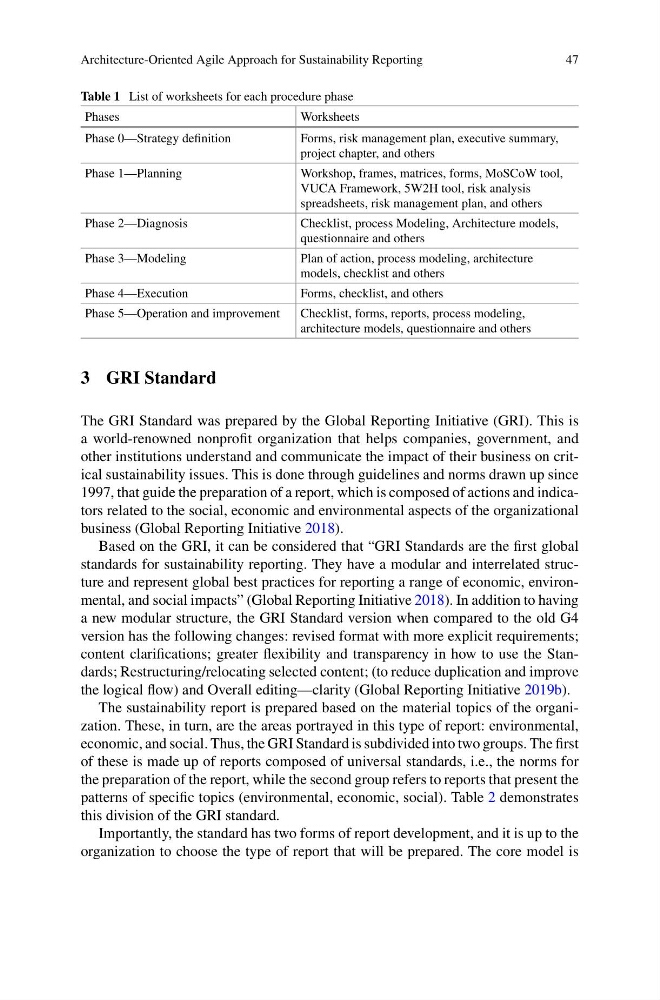
Table 1 List of worksheets for each procedure phase
Phases
Worksheets
Phase 0—Strategy definition
Forms, risk management plan, executive summary,
project chapter, and others
Phase 1—Planning
Workshop, frames, matrices, forms, MoSCoW tool,
VUCA Framework, 5W2H tool, risk analysis
spreadsheets, risk management plan, and others
Phase 2—Diagnosis
Checklist, process Modeling, Architecture models,
questionnaire and others
Phase 3—Modeling
Plan of action, process modeling, architecture
models, checklist and others
Phase 4—Execution
Forms, checklist, and others
Phase 5—Operation and improvement
Checklist, forms, reports, process modeling,
architecture models, questionnaire and others
3 GRI Standard
The GRI Standard was prepared by the Global Reporting Initiative (GRI). This is
a world-renowned nonprofit organization that helps companies, government, and
other institutions understand and communicate the impact of their business on critical sustainability issues. This is done through guidelines and norms drawn up since
1997, that guide the preparation of a report, which is composed of actions and indicators related to the social, economic and environmental aspects of the organizational
business (Global Reporting Initiative 2018).
Based on the GRI, it can be considered that “GRI Standards are the first global
standards for sustainability reporting. They have a modular and interrelated structure and represent global best practices for reporting a range of economic, environmental, and social impacts” (Global Reporting Initiative 2018). In addition to having
a new modular structure, the GRI Standard version when compared to the old G4
version has the following changes: revised format with more explicit requirements;
content clarifications; greater flexibility and transparency in how to use the Standards; Restructuring/relocating selected content; (to reduce duplication and improve
the logical flow) and Overall editing—clarity (Global Reporting Initiative 2019b).
The sustainability report is prepared based on the material topics of the organization. These, in turn, are the areas portrayed in this type of report: environmental,
economic, and social. Thus, the GRI Standard is subdivided into two groups. The first
of these is made up of reports composed of universal standards, i.e., the norms for
the preparation of the report, while the second group refers to reports that present the
patterns of specific topics (environmental, economic, social). Table 2 demonstrates
this division of the GRI standard.
Importantly, the standard has two forms of report development, and it is up to the
organization to choose the type of report that will be prepared. The core model is
47
Table 1 List of worksheets for each procedure phase
Phases
Worksheets
Phase 0—Strategy definition
Forms, risk management plan, executive summary,
project chapter, and others
Phase 1—Planning
Workshop, frames, matrices, forms, MoSCoW tool,
VUCA Framework, 5W2H tool, risk analysis
spreadsheets, risk management plan, and others
Phase 2—Diagnosis
Checklist, process Modeling, Architecture models,
questionnaire and others
Phase 3—Modeling
Plan of action, process modeling, architecture
models, checklist and others
Phase 4—Execution
Forms, checklist, and others
Phase 5—Operation and improvement
Checklist, forms, reports, process modeling,
architecture models, questionnaire and others
3 GRI Standard
The GRI Standard was prepared by the Global Reporting Initiative (GRI). This is
a world-renowned nonprofit organization that helps companies, government, and
other institutions understand and communicate the impact of their business on critical sustainability issues. This is done through guidelines and norms drawn up since
1997, that guide the preparation of a report, which is composed of actions and indicators related to the social, economic and environmental aspects of the organizational
business (Global Reporting Initiative 2018).
Based on the GRI, it can be considered that “GRI Standards are the first global
standards for sustainability reporting. They have a modular and interrelated structure and represent global best practices for reporting a range of economic, environmental, and social impacts” (Global Reporting Initiative 2018). In addition to having
a new modular structure, the GRI Standard version when compared to the old G4
version has the following changes: revised format with more explicit requirements;
content clarifications; greater flexibility and transparency in how to use the Standards; Restructuring/relocating selected content; (to reduce duplication and improve
the logical flow) and Overall editing—clarity (Global Reporting Initiative 2019b).
The sustainability report is prepared based on the material topics of the organization. These, in turn, are the areas portrayed in this type of report: environmental,
economic, and social. Thus, the GRI Standard is subdivided into two groups. The first
of these is made up of reports composed of universal standards, i.e., the norms for
the preparation of the report, while the second group refers to reports that present the
patterns of specific topics (environmental, economic, social). Table 2 demonstrates
this division of the GRI standard.
Importantly, the standard has two forms of report development, and it is up to the
organization to choose the type of report that will be prepared. The core model is