

556
I. N. Carlotto et al.
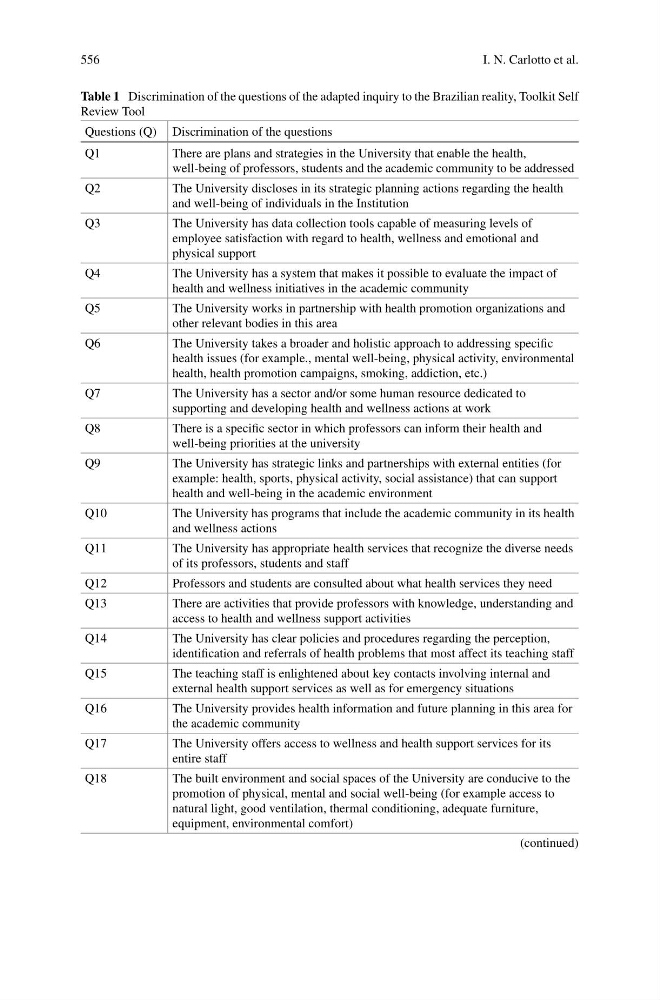
Table 1 Discrimination of the questions of the adapted inquiry to the Brazilian reality, Toolkit Self
Review Tool
Questions (Q) Discrimination of the questions
Q1
There are plans and strategies in the University that enable the health,
well-being of professors, students and the academic community to be addressed
Q2
The University discloses in its strategic planning actions regarding the health
and well-being of individuals in the Institution
Q3
The University has data collection tools capable of measuring levels of
employee satisfaction with regard to health, wellness and emotional and
physical support
Q4
The University has a system that makes it possible to evaluate the impact of
health and wellness initiatives in the academic community
Q5
The University works in partnership with health promotion organizations and
other relevant bodies in this area
Q6
The University takes a broader and holistic approach to addressing specific
health issues (for example., mental well-being, physical activity, environmental
health, health promotion campaigns, smoking, addiction, etc.)
Q7
The University has a sector and/or some human resource dedicated to
supporting and developing health and wellness actions at work
Q8
There is a specific sector in which professors can inform their health and
well-being priorities at the university
Q9
The University has strategic links and partnerships with external entities (for
example: health, sports, physical activity, social assistance) that can support
health and well-being in the academic environment
Q10
The University has programs that include the academic community in its health
and wellness actions
Q11
The University has appropriate health services that recognize the diverse needs
of its professors, students and staff
Q12
Professors and students are consulted about what health services they need
Q13
There are activities that provide professors with knowledge, understanding and
access to health and wellness support activities
Q14
The University has clear policies and procedures regarding the perception,
identification and referrals of health problems that most affect its teaching staff
Q15
The teaching staff is enlightened about key contacts involving internal and
external health support services as well as for emergency situations
Q16
The University provides health information and future planning in this area for
the academic community
Q17
The University offers access to wellness and health support services for its
entire staff
Q18
The built environment and social spaces of the University are conducive to the
promotion of physical, mental and social well-being (for example access to
natural light, good ventilation, thermal conditioning, adequate furniture,
equipment, environmental comfort)
(continued)
I. N. Carlotto et al.
Table 1 Discrimination of the questions of the adapted inquiry to the Brazilian reality, Toolkit Self
Review Tool
Questions (Q) Discrimination of the questions
Q1
There are plans and strategies in the University that enable the health,
well-being of professors, students and the academic community to be addressed
Q2
The University discloses in its strategic planning actions regarding the health
and well-being of individuals in the Institution
Q3
The University has data collection tools capable of measuring levels of
employee satisfaction with regard to health, wellness and emotional and
physical support
Q4
The University has a system that makes it possible to evaluate the impact of
health and wellness initiatives in the academic community
Q5
The University works in partnership with health promotion organizations and
other relevant bodies in this area
Q6
The University takes a broader and holistic approach to addressing specific
health issues (for example., mental well-being, physical activity, environmental
health, health promotion campaigns, smoking, addiction, etc.)
Q7
The University has a sector and/or some human resource dedicated to
supporting and developing health and wellness actions at work
Q8
There is a specific sector in which professors can inform their health and
well-being priorities at the university
Q9
The University has strategic links and partnerships with external entities (for
example: health, sports, physical activity, social assistance) that can support
health and well-being in the academic environment
Q10
The University has programs that include the academic community in its health
and wellness actions
Q11
The University has appropriate health services that recognize the diverse needs
of its professors, students and staff
Q12
Professors and students are consulted about what health services they need
Q13
There are activities that provide professors with knowledge, understanding and
access to health and wellness support activities
Q14
The University has clear policies and procedures regarding the perception,
identification and referrals of health problems that most affect its teaching staff
Q15
The teaching staff is enlightened about key contacts involving internal and
external health support services as well as for emergency situations
Q16
The University provides health information and future planning in this area for
the academic community
Q17
The University offers access to wellness and health support services for its
entire staff
Q18
The built environment and social spaces of the University are conducive to the
promotion of physical, mental and social well-being (for example access to
natural light, good ventilation, thermal conditioning, adequate furniture,
equipment, environmental comfort)
(continued)