

502
T. Frozza et al.
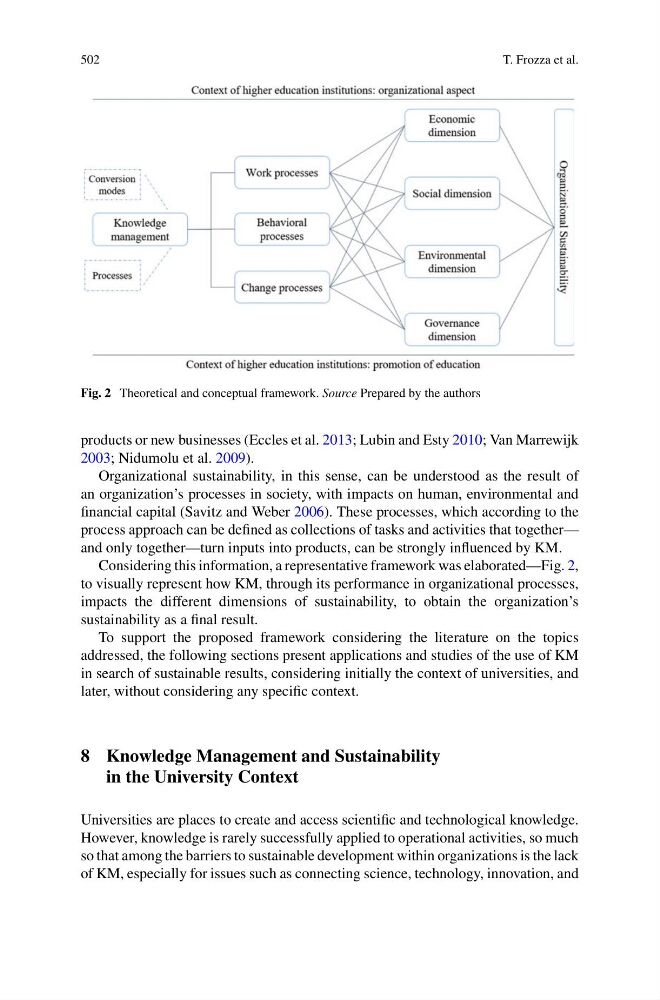
Fig. 2 Theoretical and conceptual framework. Source Prepared by the authors
products or new businesses (Eccles et al. 2013; Lubin and Esty 2010; Van Marrewijk
2003; Nidumolu et al. 2009).
Organizational sustainability, in this sense, can be understood as the result of
an organization’s processes in society, with impacts on human, environmental and
financial capital (Savitz and Weber 2006). These processes, which according to the
process approach can be defined as collections of tasks and activities that together—
and only together—turn inputs into products, can be strongly influenced by KM.
Considering this information, a representative framework was elaborated—Fig. 2,
to visually represent how KM, through its performance in organizational processes,
impacts the different dimensions of sustainability, to obtain the organization’s
sustainability as a final result.
To support the proposed framework considering the literature on the topics
addressed, the following sections present applications and studies of the use of KM
in search of sustainable results, considering initially the context of universities, and
later, without considering any specific context.
8 Knowledge Management and Sustainability
in the University Context
Universities are places to create and access scientific and technological knowledge.
However, knowledge is rarely successfully applied to operational activities, so much
so that among the barriers to sustainable development within organizations is the lack
of KM, especially for issues such as connecting science, technology, innovation, and
T. Frozza et al.
Fig. 2 Theoretical and conceptual framework. Source Prepared by the authors
products or new businesses (Eccles et al. 2013; Lubin and Esty 2010; Van Marrewijk
2003; Nidumolu et al. 2009).
Organizational sustainability, in this sense, can be understood as the result of
an organization’s processes in society, with impacts on human, environmental and
financial capital (Savitz and Weber 2006). These processes, which according to the
process approach can be defined as collections of tasks and activities that together—
and only together—turn inputs into products, can be strongly influenced by KM.
Considering this information, a representative framework was elaborated—Fig. 2,
to visually represent how KM, through its performance in organizational processes,
impacts the different dimensions of sustainability, to obtain the organization’s
sustainability as a final result.
To support the proposed framework considering the literature on the topics
addressed, the following sections present applications and studies of the use of KM
in search of sustainable results, considering initially the context of universities, and
later, without considering any specific context.
8 Knowledge Management and Sustainability
in the University Context
Universities are places to create and access scientific and technological knowledge.
However, knowledge is rarely successfully applied to operational activities, so much
so that among the barriers to sustainable development within organizations is the lack
of KM, especially for issues such as connecting science, technology, innovation, and