

490
F. T. T. Ribas and J. Macke
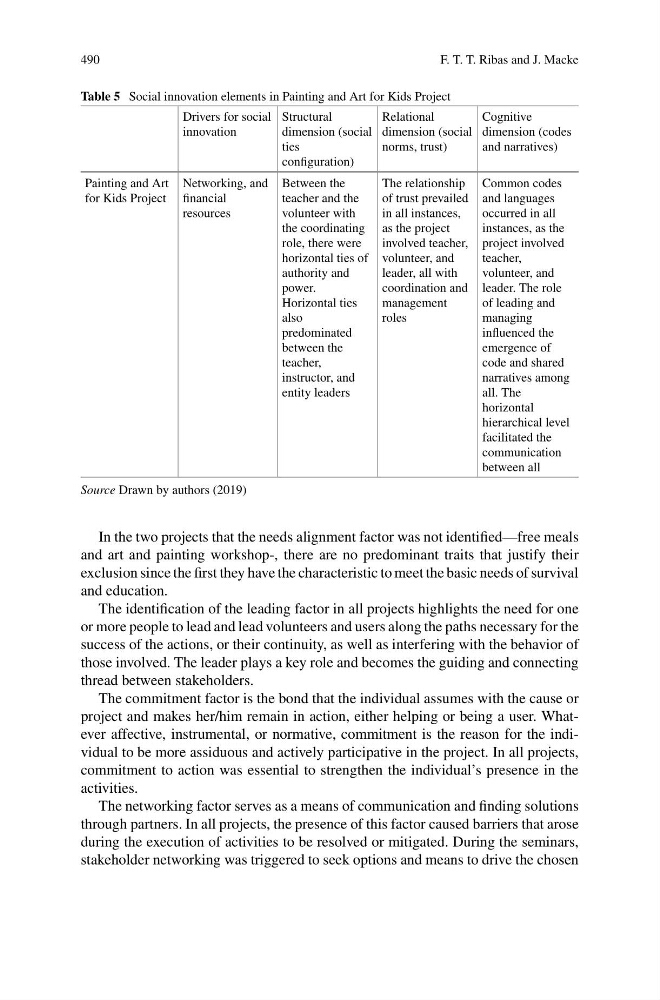
Table 5 Social innovation elements in Painting and Art for Kids Project
Drivers for social
innovation
Structural
dimension (social
ties
configuration)
Relational
dimension (social
norms, trust)
Cognitive
dimension (codes
and narratives)
Painting and Art
for Kids Project
Networking, and
financial
resources
Between the
teacher and the
volunteer with
the coordinating
role, there were
horizontal ties of
authority and
power.
Horizontal ties
also
predominated
between the
teacher,
instructor, and
entity leaders
The relationship
of trust prevailed
in all instances,
as the project
involved teacher,
volunteer, and
leader, all with
coordination and
management
roles
Common codes
and languages
occurred in all
instances, as the
project involved
teacher,
volunteer, and
leader. The role
of leading and
managing
influenced the
emergence of
code and shared
narratives among
all. The
horizontal
hierarchical level
facilitated the
communication
between all
Source Drawn by authors (2019)
In the two projects that the needs alignment factor was not identified—free meals
and art and painting workshop-, there are no predominant traits that justify their
exclusion since the first they have the characteristic to meet the basic needs of survival
and education.
The identification of the leading factor in all projects highlights the need for one
or more people to lead and lead volunteers and users along the paths necessary for the
success of the actions, or their continuity, as well as interfering with the behavior of
those involved. The leader plays a key role and becomes the guiding and connecting
thread between stakeholders.
The commitment factor is the bond that the individual assumes with the cause or
project and makes her/him remain in action, either helping or being a user. Whatever affective, instrumental, or normative, commitment is the reason for the individual to be more assiduous and actively participative in the project. In all projects,
commitment to action was essential to strengthen the individual’s presence in the
activities.
The networking factor serves as a means of communication and finding solutions
through partners. In all projects, the presence of this factor caused barriers that arose
during the execution of activities to be resolved or mitigated. During the seminars,
stakeholder networking was triggered to seek options and means to drive the chosen
F. T. T. Ribas and J. Macke
Table 5 Social innovation elements in Painting and Art for Kids Project
Drivers for social
innovation
Structural
dimension (social
ties
configuration)
Relational
dimension (social
norms, trust)
Cognitive
dimension (codes
and narratives)
Painting and Art
for Kids Project
Networking, and
financial
resources
Between the
teacher and the
volunteer with
the coordinating
role, there were
horizontal ties of
authority and
power.
Horizontal ties
also
predominated
between the
teacher,
instructor, and
entity leaders
The relationship
of trust prevailed
in all instances,
as the project
involved teacher,
volunteer, and
leader, all with
coordination and
management
roles
Common codes
and languages
occurred in all
instances, as the
project involved
teacher,
volunteer, and
leader. The role
of leading and
managing
influenced the
emergence of
code and shared
narratives among
all. The
horizontal
hierarchical level
facilitated the
communication
between all
Source Drawn by authors (2019)
In the two projects that the needs alignment factor was not identified—free meals
and art and painting workshop-, there are no predominant traits that justify their
exclusion since the first they have the characteristic to meet the basic needs of survival
and education.
The identification of the leading factor in all projects highlights the need for one
or more people to lead and lead volunteers and users along the paths necessary for the
success of the actions, or their continuity, as well as interfering with the behavior of
those involved. The leader plays a key role and becomes the guiding and connecting
thread between stakeholders.
The commitment factor is the bond that the individual assumes with the cause or
project and makes her/him remain in action, either helping or being a user. Whatever affective, instrumental, or normative, commitment is the reason for the individual to be more assiduous and actively participative in the project. In all projects,
commitment to action was essential to strengthen the individual’s presence in the
activities.
The networking factor serves as a means of communication and finding solutions
through partners. In all projects, the presence of this factor caused barriers that arose
during the execution of activities to be resolved or mitigated. During the seminars,
stakeholder networking was triggered to seek options and means to drive the chosen