

University-Society Integration Through Action Research Projects
489
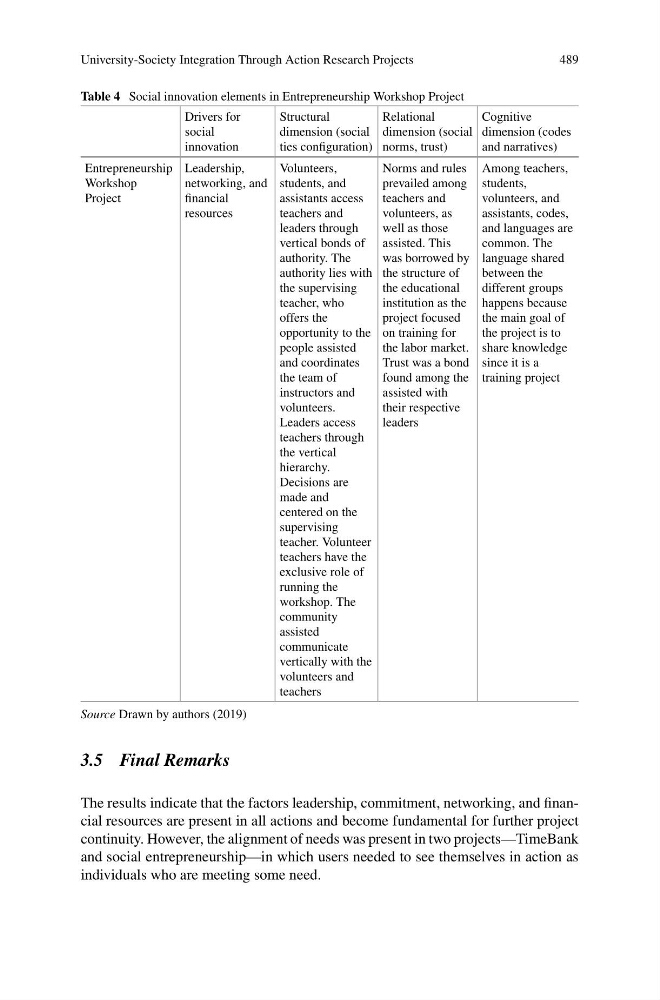
Table 4 Social innovation elements in Entrepreneurship Workshop Project
Drivers for
social
innovation
Structural
dimension (social
ties configuration)
Relational
dimension (social
norms, trust)
Cognitive
dimension (codes
and narratives)
Entrepreneurship
Workshop
Project
Leadership,
networking, and
financial
resources
Volunteers,
students, and
assistants access
teachers and
leaders through
vertical bonds of
authority. The
authority lies with
the supervising
teacher, who
offers the
opportunity to the
people assisted
and coordinates
the team of
instructors and
volunteers.
Leaders access
teachers through
the vertical
hierarchy.
Decisions are
made and
centered on the
supervising
teacher. Volunteer
teachers have the
exclusive role of
running the
workshop. The
community
assisted
communicate
vertically with the
volunteers and
teachers
Norms and rules
prevailed among
teachers and
volunteers, as
well as those
assisted. This
was borrowed by
the structure of
the educational
institution as the
project focused
on training for
the labor market.
Trust was a bond
found among the
assisted with
their respective
leaders
Among teachers,
students,
volunteers, and
assistants, codes,
and languages are
common. The
language shared
between the
different groups
happens because
the main goal of
the project is to
share knowledge
since it is a
training project
Source Drawn by authors (2019)
3.5 Final Remarks
The results indicate that the factors leadership, commitment, networking, and financial resources are present in all actions and become fundamental for further project
continuity. However, the alignment of needs was present in two projects—TimeBank
and social entrepreneurship—in which users needed to see themselves in action as
individuals who are meeting some need.
489
Table 4 Social innovation elements in Entrepreneurship Workshop Project
Drivers for
social
innovation
Structural
dimension (social
ties configuration)
Relational
dimension (social
norms, trust)
Cognitive
dimension (codes
and narratives)
Entrepreneurship
Workshop
Project
Leadership,
networking, and
financial
resources
Volunteers,
students, and
assistants access
teachers and
leaders through
vertical bonds of
authority. The
authority lies with
the supervising
teacher, who
offers the
opportunity to the
people assisted
and coordinates
the team of
instructors and
volunteers.
Leaders access
teachers through
the vertical
hierarchy.
Decisions are
made and
centered on the
supervising
teacher. Volunteer
teachers have the
exclusive role of
running the
workshop. The
community
assisted
communicate
vertically with the
volunteers and
teachers
Norms and rules
prevailed among
teachers and
volunteers, as
well as those
assisted. This
was borrowed by
the structure of
the educational
institution as the
project focused
on training for
the labor market.
Trust was a bond
found among the
assisted with
their respective
leaders
Among teachers,
students,
volunteers, and
assistants, codes,
and languages are
common. The
language shared
between the
different groups
happens because
the main goal of
the project is to
share knowledge
since it is a
training project
Source Drawn by authors (2019)
3.5 Final Remarks
The results indicate that the factors leadership, commitment, networking, and financial resources are present in all actions and become fundamental for further project
continuity. However, the alignment of needs was present in two projects—TimeBank
and social entrepreneurship—in which users needed to see themselves in action as
individuals who are meeting some need.