

486
F. T. T. Ribas and J. Macke
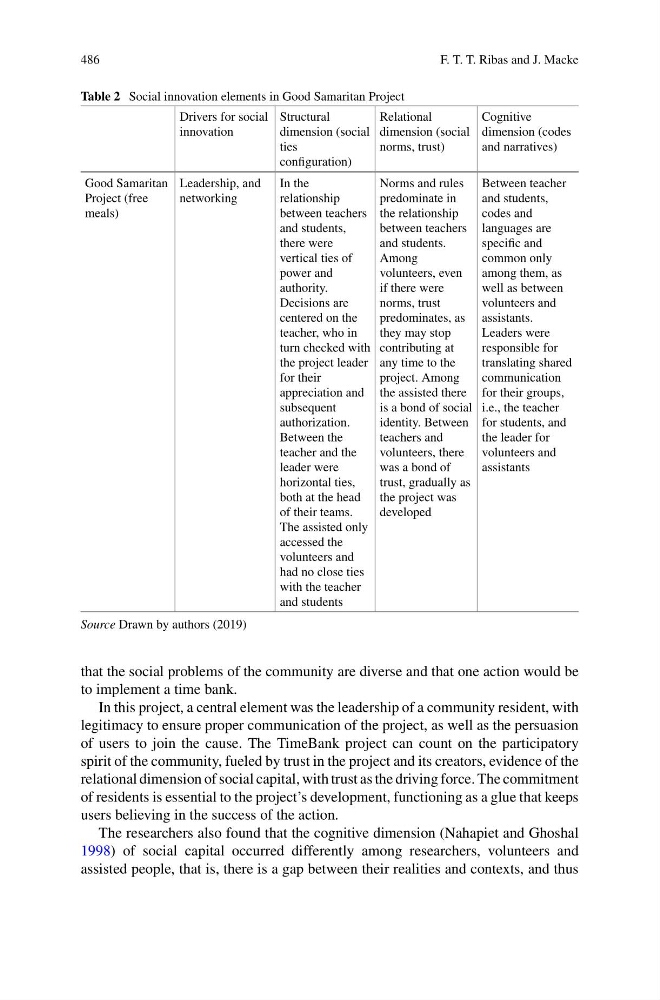
Table 2 Social innovation elements in Good Samaritan Project
Drivers for social
innovation
Structural
dimension (social
ties
configuration)
Relational
dimension (social
norms, trust)
Cognitive
dimension (codes
and narratives)
Good Samaritan
Project (free
meals)
Leadership, and
networking
In the
relationship
between teachers
and students,
there were
vertical ties of
power and
authority.
Decisions are
centered on the
teacher, who in
turn checked with
the project leader
for their
appreciation and
subsequent
authorization.
Between the
teacher and the
leader were
horizontal ties,
both at the head
of their teams.
The assisted only
accessed the
volunteers and
had no close ties
with the teacher
and students
Norms and rules
predominate in
the relationship
between teachers
and students.
Among
volunteers, even
if there were
norms, trust
predominates, as
they may stop
contributing at
any time to the
project. Among
the assisted there
is a bond of social
identity. Between
teachers and
volunteers, there
was a bond of
trust, gradually as
the project was
developed
Between teacher
and students,
codes and
languages are
specific and
common only
among them, as
well as between
volunteers and
assistants.
Leaders were
responsible for
translating shared
communication
for their groups,
i.e., the teacher
for students, and
the leader for
volunteers and
assistants
Source Drawn by authors (2019)
that the social problems of the community are diverse and that one action would be
to implement a time bank.
In this project, a central element was the leadership of a community resident, with
legitimacy to ensure proper communication of the project, as well as the persuasion
of users to join the cause. The TimeBank project can count on the participatory
spirit of the community, fueled by trust in the project and its creators, evidence of the
relational dimension of social capital, with trust as the driving force. The commitment
of residents is essential to the project’s development, functioning as a glue that keeps
users believing in the success of the action.
The researchers also found that the cognitive dimension (Nahapiet and Ghoshal
1998) of social capital occurred differently among researchers, volunteers and
assisted people, that is, there is a gap between their realities and contexts, and thus
F. T. T. Ribas and J. Macke
Table 2 Social innovation elements in Good Samaritan Project
Drivers for social
innovation
Structural
dimension (social
ties
configuration)
Relational
dimension (social
norms, trust)
Cognitive
dimension (codes
and narratives)
Good Samaritan
Project (free
meals)
Leadership, and
networking
In the
relationship
between teachers
and students,
there were
vertical ties of
power and
authority.
Decisions are
centered on the
teacher, who in
turn checked with
the project leader
for their
appreciation and
subsequent
authorization.
Between the
teacher and the
leader were
horizontal ties,
both at the head
of their teams.
The assisted only
accessed the
volunteers and
had no close ties
with the teacher
and students
Norms and rules
predominate in
the relationship
between teachers
and students.
Among
volunteers, even
if there were
norms, trust
predominates, as
they may stop
contributing at
any time to the
project. Among
the assisted there
is a bond of social
identity. Between
teachers and
volunteers, there
was a bond of
trust, gradually as
the project was
developed
Between teacher
and students,
codes and
languages are
specific and
common only
among them, as
well as between
volunteers and
assistants.
Leaders were
responsible for
translating shared
communication
for their groups,
i.e., the teacher
for students, and
the leader for
volunteers and
assistants
Source Drawn by authors (2019)
that the social problems of the community are diverse and that one action would be
to implement a time bank.
In this project, a central element was the leadership of a community resident, with
legitimacy to ensure proper communication of the project, as well as the persuasion
of users to join the cause. The TimeBank project can count on the participatory
spirit of the community, fueled by trust in the project and its creators, evidence of the
relational dimension of social capital, with trust as the driving force. The commitment
of residents is essential to the project’s development, functioning as a glue that keeps
users believing in the success of the action.
The researchers also found that the cognitive dimension (Nahapiet and Ghoshal
1998) of social capital occurred differently among researchers, volunteers and
assisted people, that is, there is a gap between their realities and contexts, and thus