

466
A. Schlickmann et al.
UN Higher Education
Sustainability Initiatives at Rio +20
Estocolmo Declaration (1972)
Talloires Declaration (1990)
Law nº 9795 de 1999 (Brasil)
United Nations Decade for
Sustainable Development (2005)
2012
1990
1970
1980
2012
1990
1970
1960
1950
EliƟsm
Social
Requirements
Social
movements
Market and Industry Demand
InformaƟon society and
knowledge economy
- The tradiƟonal
funcƟons of
universiƟes
(educaƟon,
research and
specialized
services)
- Access to higher
educaƟon as a
public law;
- Higher
educaƟon as a
Ɵcket to a good
life
- The crisis of
reputaƟon and
legiƟmacy;
- Campus
management;
- Student
Development
Theories
- Industry becomes one of the
main stakeholders;
- financial crises;
- ProporƟon, quality and
proficiency;
- Increasingly funds from industry;
- Accountability pressure
- Challenges of a complex and
increasingly knowledge-driven
global economy;
- Emergence of a "third
mission", technology transfer and
entrepreneurial behavior
The Development of Higher EducaƟon
- Sustainable
development
gradually enters
the field of
aƩenƟon and
vision of
universiƟes;
- Conferences
are held,
publishing many
relevant
documents for
sustainable
development.
- Driven by internaƟonal
events, especially the United
NaƟons Decade of EducaƟon
for Sustainable Development,
it is increasingly integrated
with universiƟes, making it
an essenƟal area of concern;
- Most universiƟes start
looking for a green campus;
- Most unibert iniƟates
systemaƟc acƟons to
advance sustainable
development
A new aƫtude of higher educaƟon towards
sustainable development
- AcƟons arrive on campus.
The university aims to
unleash societal
transformaƟons in search of
sustainability;
- Transdisciplinary research
insƟtutes are established in
response to growing
demands for knowledge
about sustainable
development;
- Knowledge is increasingly
produced through
intersectoral networks.
Sustainable Development in Higher EducaƟon
Sustainability in Higher EducaƟon
Human
environment
Environment and
Development
Sustainable
development
The Advancement of Sustainable Development in Higher
EducaƟon
- AƩenƟon to the
"human
environment" as a
starƟng point for
sustainable
development;
- World community
awareness of the
vital role of the
"environment" for
human survival
- Inadequate
development
paƩerns are the
main factor
aīecƟng the
human
environment;
- Simultaneous
aƩenƟon to
"environment and
development"
- The combinaƟon of
environmental
outcomes and
sustainable
development;
- Sustainable
development
becomes a central
global paradigm,
encompassing all
aspects of
sustainable
development.
The evoluƟon of sustainable development
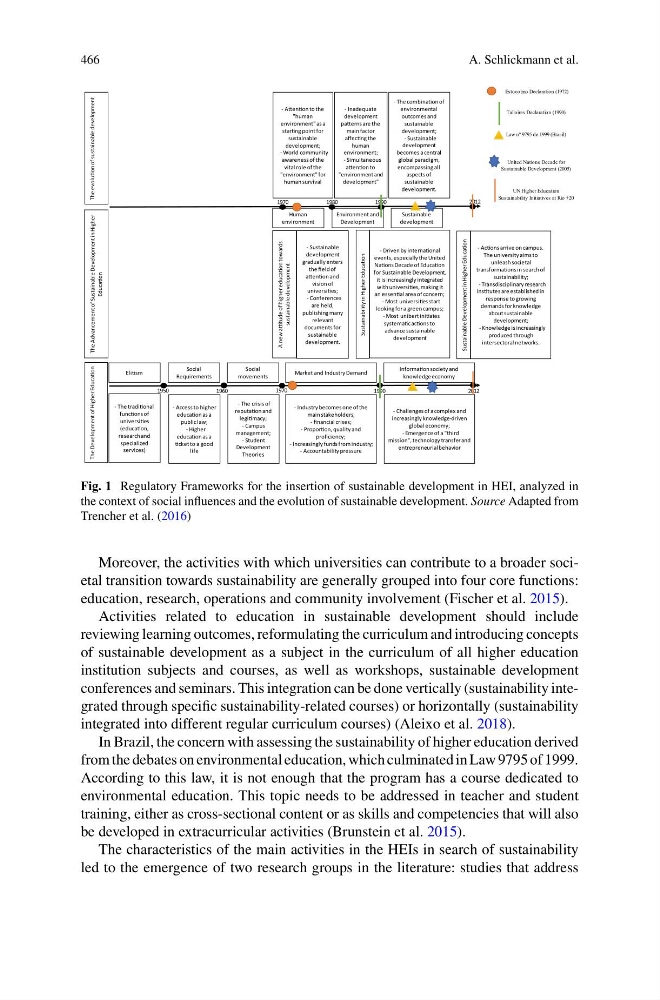
Fig. 1 Regulatory Frameworks for the insertion of sustainable development in HEI, analyzed in
the context of social influences and the evolution of sustainable development. Source Adapted from
Trencher et al. (2016)
Moreover, the activities with which universities can contribute to a broader societal transition towards sustainability are generally grouped into four core functions:
education, research, operations and community involvement (Fischer et al. 2015).
Activities related to education in sustainable development should include
reviewing learning outcomes, reformulating the curriculum and introducing concepts
of sustainable development as a subject in the curriculum of all higher education
institution subjects and courses, as well as workshops, sustainable development
conferences and seminars. This integration can be done vertically (sustainability integrated through specific sustainability-related courses) or horizontally (sustainability
integrated into different regular curriculum courses) (Aleixo et al. 2018).
In Brazil, the concern with assessing the sustainability of higher education derived
from the debates on environmental education, which culminated in Law 9795 of 1999.
According to this law, it is not enough that the program has a course dedicated to
environmental education. This topic needs to be addressed in teacher and student
training, either as cross-sectional content or as skills and competencies that will also
be developed in extracurricular activities (Brunstein et al. 2015).
The characteristics of the main activities in the HEIs in search of sustainability
led to the emergence of two research groups in the literature: studies that address
A. Schlickmann et al.
UN Higher Education
Sustainability Initiatives at Rio +20
Estocolmo Declaration (1972)
Talloires Declaration (1990)
Law nº 9795 de 1999 (Brasil)
United Nations Decade for
Sustainable Development (2005)
2012
1990
1970
1980
2012
1990
1970
1960
1950
EliƟsm
Social
Requirements
Social
movements
Market and Industry Demand
InformaƟon society and
knowledge economy
- The tradiƟonal
funcƟons of
universiƟes
(educaƟon,
research and
specialized
services)
- Access to higher
educaƟon as a
public law;
- Higher
educaƟon as a
Ɵcket to a good
life
- The crisis of
reputaƟon and
legiƟmacy;
- Campus
management;
- Student
Development
Theories
- Industry becomes one of the
main stakeholders;
- financial crises;
- ProporƟon, quality and
proficiency;
- Increasingly funds from industry;
- Accountability pressure
- Challenges of a complex and
increasingly knowledge-driven
global economy;
- Emergence of a "third
mission", technology transfer and
entrepreneurial behavior
The Development of Higher EducaƟon
- Sustainable
development
gradually enters
the field of
aƩenƟon and
vision of
universiƟes;
- Conferences
are held,
publishing many
relevant
documents for
sustainable
development.
- Driven by internaƟonal
events, especially the United
NaƟons Decade of EducaƟon
for Sustainable Development,
it is increasingly integrated
with universiƟes, making it
an essenƟal area of concern;
- Most universiƟes start
looking for a green campus;
- Most unibert iniƟates
systemaƟc acƟons to
advance sustainable
development
A new aƫtude of higher educaƟon towards
sustainable development
- AcƟons arrive on campus.
The university aims to
unleash societal
transformaƟons in search of
sustainability;
- Transdisciplinary research
insƟtutes are established in
response to growing
demands for knowledge
about sustainable
development;
- Knowledge is increasingly
produced through
intersectoral networks.
Sustainable Development in Higher EducaƟon
Sustainability in Higher EducaƟon
Human
environment
Environment and
Development
Sustainable
development
The Advancement of Sustainable Development in Higher
EducaƟon
- AƩenƟon to the
"human
environment" as a
starƟng point for
sustainable
development;
- World community
awareness of the
vital role of the
"environment" for
human survival
- Inadequate
development
paƩerns are the
main factor
aīecƟng the
human
environment;
- Simultaneous
aƩenƟon to
"environment and
development"
- The combinaƟon of
environmental
outcomes and
sustainable
development;
- Sustainable
development
becomes a central
global paradigm,
encompassing all
aspects of
sustainable
development.
The evoluƟon of sustainable development
Fig. 1 Regulatory Frameworks for the insertion of sustainable development in HEI, analyzed in
the context of social influences and the evolution of sustainable development. Source Adapted from
Trencher et al. (2016)
Moreover, the activities with which universities can contribute to a broader societal transition towards sustainability are generally grouped into four core functions:
education, research, operations and community involvement (Fischer et al. 2015).
Activities related to education in sustainable development should include
reviewing learning outcomes, reformulating the curriculum and introducing concepts
of sustainable development as a subject in the curriculum of all higher education
institution subjects and courses, as well as workshops, sustainable development
conferences and seminars. This integration can be done vertically (sustainability integrated through specific sustainability-related courses) or horizontally (sustainability
integrated into different regular curriculum courses) (Aleixo et al. 2018).
In Brazil, the concern with assessing the sustainability of higher education derived
from the debates on environmental education, which culminated in Law 9795 of 1999.
According to this law, it is not enough that the program has a course dedicated to
environmental education. This topic needs to be addressed in teacher and student
training, either as cross-sectional content or as skills and competencies that will also
be developed in extracurricular activities (Brunstein et al. 2015).
The characteristics of the main activities in the HEIs in search of sustainability
led to the emergence of two research groups in the literature: studies that address