

The Strategy of Social Responsibility at Universidad Pontificia Bolivariana …
447
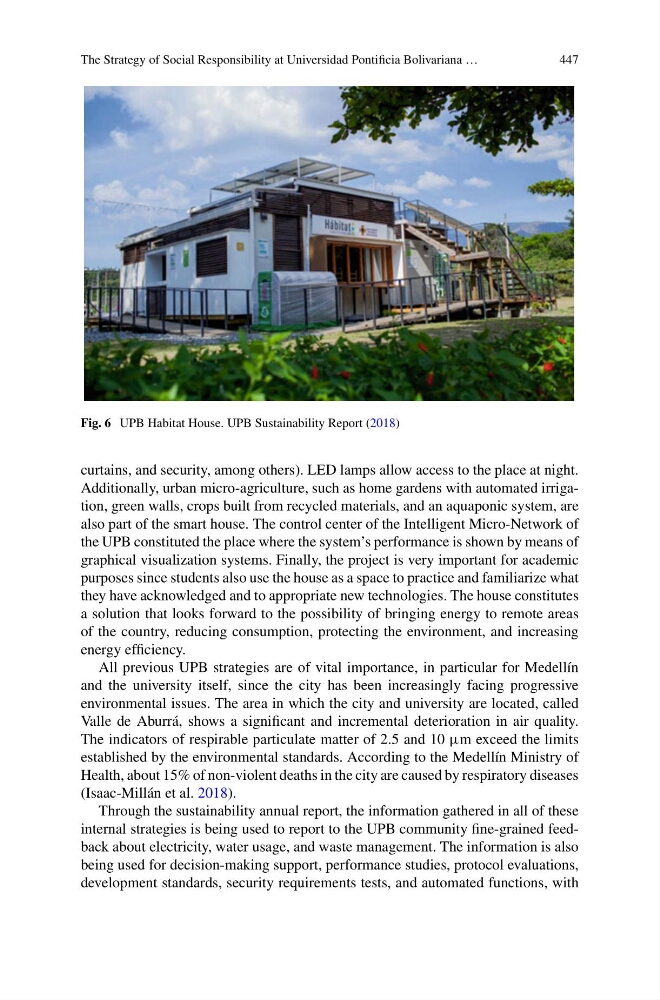
Fig. 6 UPB Habitat House. UPB Sustainability Report (2018)
curtains, and security, among others). LED lamps allow access to the place at night.
Additionally, urban micro-agriculture, such as home gardens with automated irrigation, green walls, crops built from recycled materials, and an aquaponic system, are
also part of the smart house. The control center of the Intelligent Micro-Network of
the UPB constituted the place where the system’s performance is shown by means of
graphical visualization systems. Finally, the project is very important for academic
purposes since students also use the house as a space to practice and familiarize what
they have acknowledged and to appropriate new technologies. The house constitutes
a solution that looks forward to the possibility of bringing energy to remote areas
of the country, reducing consumption, protecting the environment, and increasing
energy efficiency.
All previous UPB strategies are of vital importance, in particular for Medellín
and the university itself, since the city has been increasingly facing progressive
environmental issues. The area in which the city and university are located, called
Valle de Aburrá, shows a significant and incremental deterioration in air quality.
The indicators of respirable particulate matter of 2.5 and 10 µm exceed the limits
established by the environmental standards. According to the Medellín Ministry of
Health, about 15% of non-violent deaths in the city are caused by respiratory diseases
(Isaac-Millán et al. 2018).
Through the sustainability annual report, the information gathered in all of these
internal strategies is being used to report to the UPB community fine-grained feedback about electricity, water usage, and waste management. The information is also
being used for decision-making support, performance studies, protocol evaluations,
development standards, security requirements tests, and automated functions, with
447
Fig. 6 UPB Habitat House. UPB Sustainability Report (2018)
curtains, and security, among others). LED lamps allow access to the place at night.
Additionally, urban micro-agriculture, such as home gardens with automated irrigation, green walls, crops built from recycled materials, and an aquaponic system, are
also part of the smart house. The control center of the Intelligent Micro-Network of
the UPB constituted the place where the system’s performance is shown by means of
graphical visualization systems. Finally, the project is very important for academic
purposes since students also use the house as a space to practice and familiarize what
they have acknowledged and to appropriate new technologies. The house constitutes
a solution that looks forward to the possibility of bringing energy to remote areas
of the country, reducing consumption, protecting the environment, and increasing
energy efficiency.
All previous UPB strategies are of vital importance, in particular for Medellín
and the university itself, since the city has been increasingly facing progressive
environmental issues. The area in which the city and university are located, called
Valle de Aburrá, shows a significant and incremental deterioration in air quality.
The indicators of respirable particulate matter of 2.5 and 10 µm exceed the limits
established by the environmental standards. According to the Medellín Ministry of
Health, about 15% of non-violent deaths in the city are caused by respiratory diseases
(Isaac-Millán et al. 2018).
Through the sustainability annual report, the information gathered in all of these
internal strategies is being used to report to the UPB community fine-grained feedback about electricity, water usage, and waste management. The information is also
being used for decision-making support, performance studies, protocol evaluations,
development standards, security requirements tests, and automated functions, with