

400
M. A. L. Frandoloso and E. N. Scorsatto
Approach the community and its environment in order to
look for resources, possibilities and contributions. During this
exploratory phase, the goal is to bring students, teachers and the
community together, for a listening-diagnosis debate and raise
important community issues which are parallel to the issue of
housing and the city, such as the development of mental or thematic
maps;
Create spaces for discussion on specific themes involving
collective aspirations, through workshops and recreational activities.
Build a collective image of what is desired by evaluating what is a
priority. Instruments such as a physical model of the area where the
community is located could be used here;
Compile initial surveys by using tables, graphs, drawings, in
order to guide the integrated planning with the community, integrate
them carefully with guidelines (what) and strategies (how) based on
the set of raised demands. Establish possible actions and determine
their possibilities and limitations, in order to define practical paths
for such projects or actions;
Participate and/or monitor the implementation of each
project stage and/or actions planned by the community. Reflect on
necessary adjustments on the advances obtained in view of existing
expectations;
Seek to establish community relations with groups,
movements and similar experiences so that they can interact,
exchange knowledge and strengthen the practical and political
aspects involved in the occupation of urban land;
Produce articles and reports on the project and its
development. Share this formulation and initial presentation with the
community.
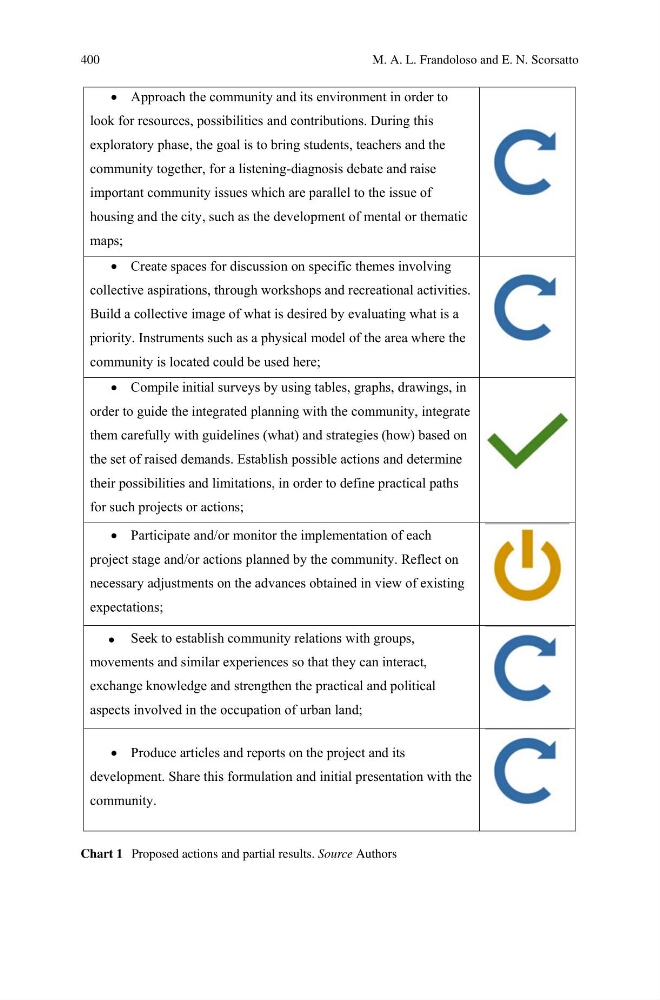
Chart 1 Proposed actions and partial results. Source Authors
M. A. L. Frandoloso and E. N. Scorsatto
Approach the community and its environment in order to
look for resources, possibilities and contributions. During this
exploratory phase, the goal is to bring students, teachers and the
community together, for a listening-diagnosis debate and raise
important community issues which are parallel to the issue of
housing and the city, such as the development of mental or thematic
maps;
Create spaces for discussion on specific themes involving
collective aspirations, through workshops and recreational activities.
Build a collective image of what is desired by evaluating what is a
priority. Instruments such as a physical model of the area where the
community is located could be used here;
Compile initial surveys by using tables, graphs, drawings, in
order to guide the integrated planning with the community, integrate
them carefully with guidelines (what) and strategies (how) based on
the set of raised demands. Establish possible actions and determine
their possibilities and limitations, in order to define practical paths
for such projects or actions;
Participate and/or monitor the implementation of each
project stage and/or actions planned by the community. Reflect on
necessary adjustments on the advances obtained in view of existing
expectations;
Seek to establish community relations with groups,
movements and similar experiences so that they can interact,
exchange knowledge and strengthen the practical and political
aspects involved in the occupation of urban land;
Produce articles and reports on the project and its
development. Share this formulation and initial presentation with the
community.
Chart 1 Proposed actions and partial results. Source Authors