

220
A. Mallqui et al.
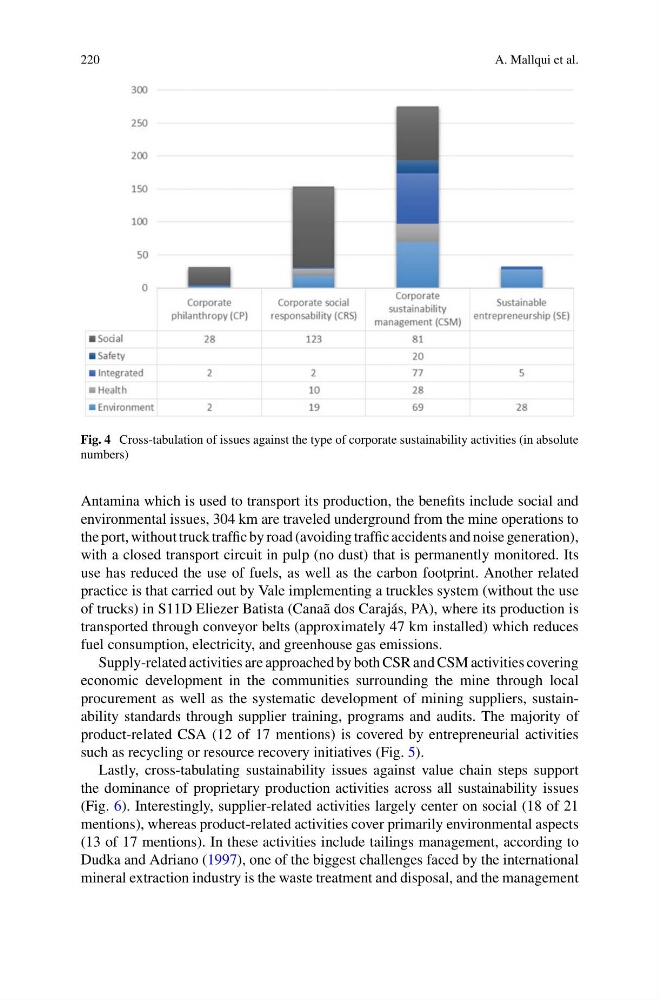
Fig. 4 Cross-tabulation of issues against the type of corporate sustainability activities (in absolute
numbers)
Antamina which is used to transport its production, the benefits include social and
environmental issues, 304 km are traveled underground from the mine operations to
the port, without truck traffic by road (avoiding traffic accidents and noise generation),
with a closed transport circuit in pulp (no dust) that is permanently monitored. Its
use has reduced the use of fuels, as well as the carbon footprint. Another related
practice is that carried out by Vale implementing a truckles system (without the use
of trucks) in S11D Eliezer Batista (Canaã dos Carajás, PA), where its production is
transported through conveyor belts (approximately 47 km installed) which reduces
fuel consumption, electricity, and greenhouse gas emissions.
Supply-related activities are approached by both CSR and CSM activities covering
economic development in the communities surrounding the mine through local
procurement as well as the systematic development of mining suppliers, sustainability standards through supplier training, programs and audits. The majority of
product-related CSA (12 of 17 mentions) is covered by entrepreneurial activities
such as recycling or resource recovery initiatives (Fig. 5).
Lastly, cross-tabulating sustainability issues against value chain steps support
the dominance of proprietary production activities across all sustainability issues
(Fig. 6). Interestingly, supplier-related activities largely center on social (18 of 21
mentions), whereas product-related activities cover primarily environmental aspects
(13 of 17 mentions). In these activities include tailings management, according to
Dudka and Adriano (1997), one of the biggest challenges faced by the international
mineral extraction industry is the waste treatment and disposal, and the management
A. Mallqui et al.
Fig. 4 Cross-tabulation of issues against the type of corporate sustainability activities (in absolute
numbers)
Antamina which is used to transport its production, the benefits include social and
environmental issues, 304 km are traveled underground from the mine operations to
the port, without truck traffic by road (avoiding traffic accidents and noise generation),
with a closed transport circuit in pulp (no dust) that is permanently monitored. Its
use has reduced the use of fuels, as well as the carbon footprint. Another related
practice is that carried out by Vale implementing a truckles system (without the use
of trucks) in S11D Eliezer Batista (Canaã dos Carajás, PA), where its production is
transported through conveyor belts (approximately 47 km installed) which reduces
fuel consumption, electricity, and greenhouse gas emissions.
Supply-related activities are approached by both CSR and CSM activities covering
economic development in the communities surrounding the mine through local
procurement as well as the systematic development of mining suppliers, sustainability standards through supplier training, programs and audits. The majority of
product-related CSA (12 of 17 mentions) is covered by entrepreneurial activities
such as recycling or resource recovery initiatives (Fig. 5).
Lastly, cross-tabulating sustainability issues against value chain steps support
the dominance of proprietary production activities across all sustainability issues
(Fig. 6). Interestingly, supplier-related activities largely center on social (18 of 21
mentions), whereas product-related activities cover primarily environmental aspects
(13 of 17 mentions). In these activities include tailings management, according to
Dudka and Adriano (1997), one of the biggest challenges faced by the international
mineral extraction industry is the waste treatment and disposal, and the management