

Temperature (ºC)
56
52
50
48
46
44
42
56
Figure legend
DNA damage
54
54
ATP machinery
T = −1.64 × In(t) + 50.1
52
R2 = 0.96
Cellular death
50
Cell membrance deformation
T = −1.61 × In(t) + 52.1
R2 = 0.99
48
Cellular survival + high CSR
T = −1.13 × In(t) + 55.6
46
R2 = 0.98
Cellular survival + moderate CSR
44
T = −1.72 × In(t) + 49.2
R2 = 0.99
Cellular survival + mild CSR
42
Cellular survival + no CSR
1
10
100
Exposure duration (min)
401
Terahertz Radiation
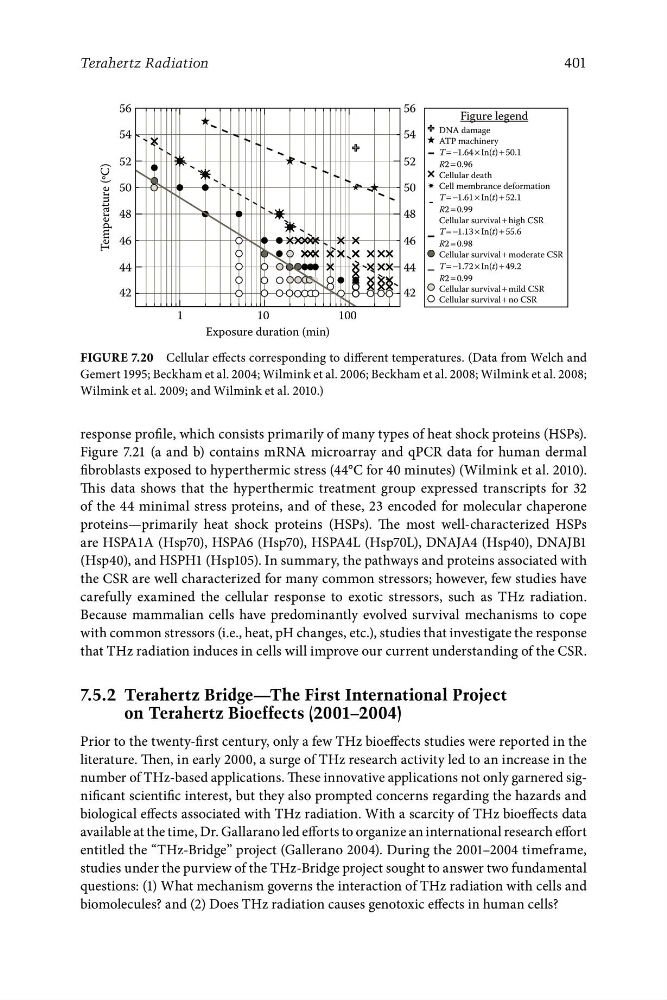
Figure 7.20 Cellular effects corresponding to different temperatures. (Data from Welch and
Gemert 1995; Beckham et al. 2004; Wilmink et al. 2006; Beckham et al. 2008; Wilmink et al. 2008;
Wilmink et al. 2009; and Wilmink et al. 2010.)
response profile, which consists primarily of many types of heat shock proteins (HSPs).
Figure 7.21 (a and b) contains mRNA microarray and qPCR data for human dermal
fibroblasts exposed to hyperthermic stress (44°C for 40 minutes) (Wilmink et al. 2010).
This data shows that the hyperthermic treatment group expressed transcripts for 32
of the 44 minimal stress proteins, and of these, 23 encoded for molecular chaperone
proteins—primarily heat shock proteins (HSPs). The most well-characterized HSPs
are HSPA1A (Hsp70), HSPA6 (Hsp70), HSPA4L (Hsp70L), DNAJA4 (Hsp40), DNAJB1
(Hsp40), and HSPH1 (Hsp105). In summary, the pathways and proteins associated with
the CSR are well characterized for many common stressors; however, few studies have
carefully examined the cellular response to exotic stressors, such as THz radiation.
Because mammalian cells have predominantly evolved survival mechanisms to cope
with common stressors (i.e., heat, pH changes, etc.), studies that investigate the response
that THz radiation induces in cells will improve our current understanding of the CSR.
7.5.2 Terahertz Bridge—The First International Project
on Terahertz Bioeffects (2001–2004)
Prior to the twenty-first century, only a few THz bioeffects studies were reported in the
literature. Then, in early 2000, a surge of THz research activity led to an increase in the
number of THz-based applications. These innovative applications not only garnered significant scientific interest, but they also prompted concerns regarding the hazards and
biological effects associated with THz radiation. With a scarcity of THz bioeffects data
available at the time, Dr. Gallarano led efforts to organize an international research effort
entitled the “THz-Bridge” project (Gallerano 2004). During the 2001–2004 timeframe,
studies under the purview of the THz-Bridge project sought to answer two fundamental
questions: (1) What mechanism governs the interaction of THz radiation with cells and
biomolecules? and (2) Does THz radiation causes genotoxic effects in human cells?
56
52
50
48
46
44
42
56
Figure legend
DNA damage
54
54
ATP machinery
T = −1.64 × In(t) + 50.1
52
R2 = 0.96
Cellular death
50
Cell membrance deformation
T = −1.61 × In(t) + 52.1
R2 = 0.99
48
Cellular survival + high CSR
T = −1.13 × In(t) + 55.6
46
R2 = 0.98
Cellular survival + moderate CSR
44
T = −1.72 × In(t) + 49.2
R2 = 0.99
Cellular survival + mild CSR
42
Cellular survival + no CSR
1
10
100
Exposure duration (min)
401
Terahertz Radiation
Figure 7.20 Cellular effects corresponding to different temperatures. (Data from Welch and
Gemert 1995; Beckham et al. 2004; Wilmink et al. 2006; Beckham et al. 2008; Wilmink et al. 2008;
Wilmink et al. 2009; and Wilmink et al. 2010.)
response profile, which consists primarily of many types of heat shock proteins (HSPs).
Figure 7.21 (a and b) contains mRNA microarray and qPCR data for human dermal
fibroblasts exposed to hyperthermic stress (44°C for 40 minutes) (Wilmink et al. 2010).
This data shows that the hyperthermic treatment group expressed transcripts for 32
of the 44 minimal stress proteins, and of these, 23 encoded for molecular chaperone
proteins—primarily heat shock proteins (HSPs). The most well-characterized HSPs
are HSPA1A (Hsp70), HSPA6 (Hsp70), HSPA4L (Hsp70L), DNAJA4 (Hsp40), DNAJB1
(Hsp40), and HSPH1 (Hsp105). In summary, the pathways and proteins associated with
the CSR are well characterized for many common stressors; however, few studies have
carefully examined the cellular response to exotic stressors, such as THz radiation.
Because mammalian cells have predominantly evolved survival mechanisms to cope
with common stressors (i.e., heat, pH changes, etc.), studies that investigate the response
that THz radiation induces in cells will improve our current understanding of the CSR.
7.5.2 Terahertz Bridge—The First International Project
on Terahertz Bioeffects (2001–2004)
Prior to the twenty-first century, only a few THz bioeffects studies were reported in the
literature. Then, in early 2000, a surge of THz research activity led to an increase in the
number of THz-based applications. These innovative applications not only garnered significant scientific interest, but they also prompted concerns regarding the hazards and
biological effects associated with THz radiation. With a scarcity of THz bioeffects data
available at the time, Dr. Gallarano led efforts to organize an international research effort
entitled the “THz-Bridge” project (Gallerano 2004). During the 2001–2004 timeframe,
studies under the purview of the THz-Bridge project sought to answer two fundamental
questions: (1) What mechanism governs the interaction of THz radiation with cells and
biomolecules? and (2) Does THz radiation causes genotoxic effects in human cells?