

Wavelength (μm)
3000
1000
300
100
30
Dose (W/cm
2
)
10
3
1
0.3
0.1
0.03
0.01
ED50 (measured JFEL)
ED50 model prediction
10
3
Extrapolated IR-B (ED50): H = 5.669−1.81d × t −0.794
1
ICNIRP (2006) (MPE): H = 2t
0.25 J/cm
2
EP & EU (MPE): H = 0.56t
0.25 J/cm
2
0.3
ANSI-Z136 (MPE): H = 0.56t 0.25 J/cm
2
0.1
0.03
IEEE (C95.1) ICNIRP (Guidelines 1997)
(PEL)
0.01
0.1
0.2 0.3
0.5
1
2
3
5
10
Frequency (THz)
399
Terahertz Radiation
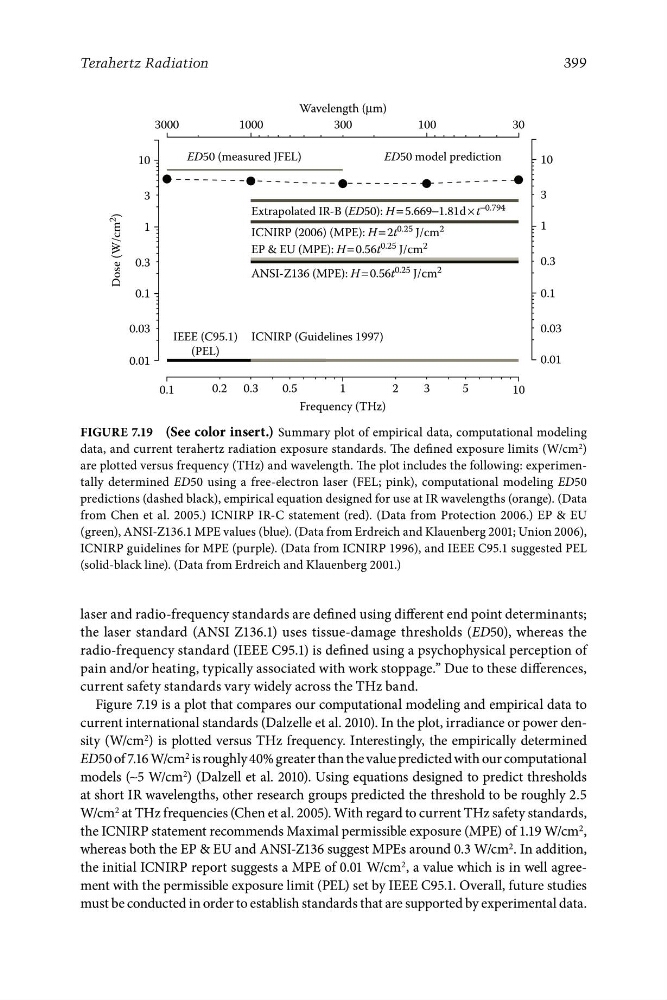
Figure 7.19 (See color insert.) Summary plot of empirical data, computational modeling
data, and current terahertz radiation exposure standards. The defined exposure limits (W/cm 2 )
are plotted versus frequency (THz) and wavelength. The plot includes the following: experimentally determined ED50 using a free-electron laser (FEL; pink), computational modeling ED50
predictions (dashed black), empirical equation designed for use at IR wavelengths (orange). (Data
from Chen et al. 2005.) ICNIRP IR-C statement (red). (Data from Protection 2006.) EP & EU
(green), ANSI-Z136.1 MPE values (blue). (Data from Erdreich and Klauenberg 2001; Union 2006),
ICNIRP guidelines for MPE (purple). (Data from ICNIRP 1996), and IEEE C95.1 suggested PEL
(solid-black line). (Data from Erdreich and Klauenberg 2001.)
laser and radio-frequency standards are defined using different end point determinants;
the laser standard (ANSI Z136.1) uses tissue-damage thresholds (ED50), whereas the
radio-frequency standard (IEEE C95.1) is defined using a psychophysical perception of
pain and/or heating, typically associated with work stoppage.” Due to these differences,
current safety standards vary widely across the THz band.
Figure 7.19 is a plot that compares our computational modeling and empirical data to
current international standards (Dalzelle et al. 2010). In the plot, irradiance or power density (W/cm 2 ) is plotted versus THz frequency. Interestingly, the empirically determined
ED50 of 7.16 W/cm 2 is roughly 40% greater than the value predicted with our computational
models (∼5 W/cm 2 ) (Dalzell et al. 2010). Using equations designed to predict thresholds
at short IR wavelengths, other research groups predicted the threshold to be roughly 2.5
W/cm 2 at THz frequencies (Chen et al. 2005). With regard to current THz safety standards,
the ICNIRP statement recommends Maximal permissible exposure (MPE) of 1.19 W/cm 2 ,
whereas both the EP & EU and ANSI-Z136 suggest MPEs around 0.3 W/cm 2 . In addition,
the initial ICNIRP report suggests a MPE of 0.01 W/cm 2 , a value which is in well agreement with the permissible exposure limit (PEL) set by IEEE C95.1. Overall, future studies
must be conducted in order to establish standards that are supported by experimental data.
3000
1000
300
100
30
Dose (W/cm
2
)
10
3
1
0.3
0.1
0.03
0.01
ED50 (measured JFEL)
ED50 model prediction
10
3
Extrapolated IR-B (ED50): H = 5.669−1.81d × t −0.794
1
ICNIRP (2006) (MPE): H = 2t
0.25 J/cm
2
EP & EU (MPE): H = 0.56t
0.25 J/cm
2
0.3
ANSI-Z136 (MPE): H = 0.56t 0.25 J/cm
2
0.1
0.03
IEEE (C95.1) ICNIRP (Guidelines 1997)
(PEL)
0.01
0.1
0.2 0.3
0.5
1
2
3
5
10
Frequency (THz)
399
Terahertz Radiation
Figure 7.19 (See color insert.) Summary plot of empirical data, computational modeling
data, and current terahertz radiation exposure standards. The defined exposure limits (W/cm 2 )
are plotted versus frequency (THz) and wavelength. The plot includes the following: experimentally determined ED50 using a free-electron laser (FEL; pink), computational modeling ED50
predictions (dashed black), empirical equation designed for use at IR wavelengths (orange). (Data
from Chen et al. 2005.) ICNIRP IR-C statement (red). (Data from Protection 2006.) EP & EU
(green), ANSI-Z136.1 MPE values (blue). (Data from Erdreich and Klauenberg 2001; Union 2006),
ICNIRP guidelines for MPE (purple). (Data from ICNIRP 1996), and IEEE C95.1 suggested PEL
(solid-black line). (Data from Erdreich and Klauenberg 2001.)
laser and radio-frequency standards are defined using different end point determinants;
the laser standard (ANSI Z136.1) uses tissue-damage thresholds (ED50), whereas the
radio-frequency standard (IEEE C95.1) is defined using a psychophysical perception of
pain and/or heating, typically associated with work stoppage.” Due to these differences,
current safety standards vary widely across the THz band.
Figure 7.19 is a plot that compares our computational modeling and empirical data to
current international standards (Dalzelle et al. 2010). In the plot, irradiance or power density (W/cm 2 ) is plotted versus THz frequency. Interestingly, the empirically determined
ED50 of 7.16 W/cm 2 is roughly 40% greater than the value predicted with our computational
models (∼5 W/cm 2 ) (Dalzell et al. 2010). Using equations designed to predict thresholds
at short IR wavelengths, other research groups predicted the threshold to be roughly 2.5
W/cm 2 at THz frequencies (Chen et al. 2005). With regard to current THz safety standards,
the ICNIRP statement recommends Maximal permissible exposure (MPE) of 1.19 W/cm 2 ,
whereas both the EP & EU and ANSI-Z136 suggest MPEs around 0.3 W/cm 2 . In addition,
the initial ICNIRP report suggests a MPE of 0.01 W/cm 2 , a value which is in well agreement with the permissible exposure limit (PEL) set by IEEE C95.1. Overall, future studies
must be conducted in order to establish standards that are supported by experimental data.