

28.0
6.5
6.0
27.5
5.5
0.1
1
10
Damage threshold
(W/cm
2
) ED50
Temperature rise
at threshold
27.0
10.0
10.0
Damage threshold
(W/cm
2
) ED50
5.0
26.5
4.5
26.0
4.0
25.5
3.5
1.0
1.0
Temperature rise
at threshold
25.0
3.0
0 0.5 1 1.5 2 2.5 3
Frequency (THz)
Exposure duration time (sec)
(a)
(b)
398
Electromagnetic Fields in Biological Systems
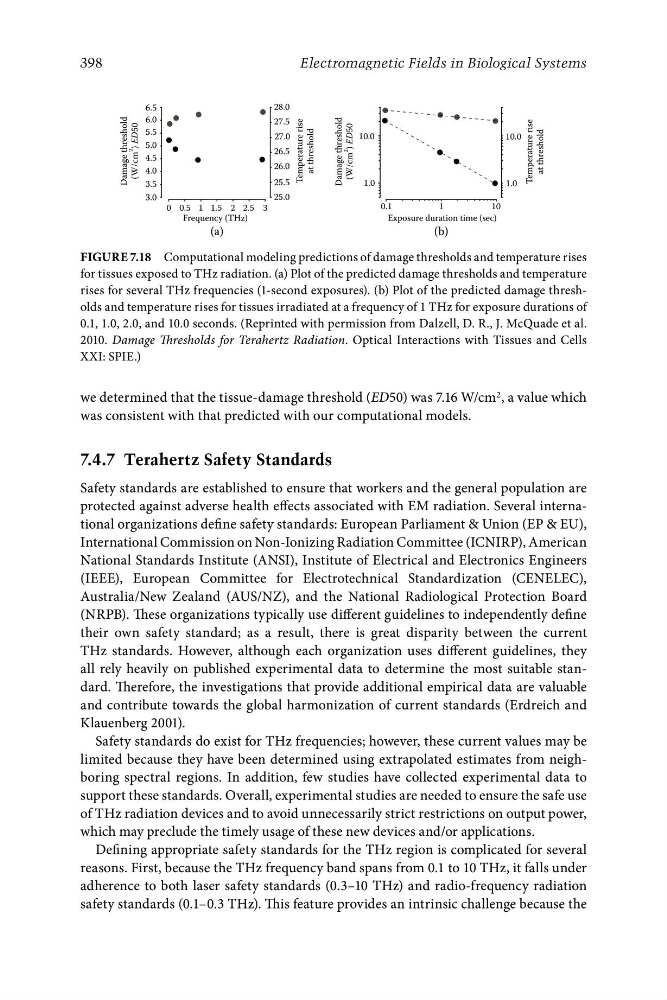
Figure 7.18 Computational modeling predictions of damage thresholds and temperature rises
for tissues exposed to THz radiation. (a) Plot of the predicted damage thresholds and temperature
rises for several THz frequencies (1-second exposures). (b) Plot of the predicted damage thresholds and temperature rises for tissues irradiated at a frequency of 1 THz for exposure durations of
0.1, 1.0, 2.0, and 10.0 seconds. (Reprinted with permission from Dalzell, D. R., J. McQuade et al.
2010. Damage Thresholds for Terahertz Radiation. Optical Interactions with Tissues and Cells
XXI: SPIE.)
we determined that the tissue-damage threshold (ED50) was 7.16 W/cm 2 , a value which
was consistent with that predicted with our computational models.
7.4.7 Terahertz Safety Standards
Safety standards are established to ensure that workers and the general population are
protected against adverse health effects associated with EM radiation. Several international organizations define safety standards: European Parliament & Union (EP & EU),
International Commission on Non-Ionizing Radiation Committee (ICNIRP), American
National Standards Institute (ANSI), Institute of Electrical and Electronics Engineers
(IEEE), European Committee for Electrotechnical Standardization (CENELEC),
Australia/New Zealand (AUS/NZ), and the National Radiological Protection Board
(NRPB). These organizations typically use different guidelines to independently define
their own safety standard; as a result, there is great disparity between the current
THz standards. However, although each organization uses different guidelines, they
all rely heavily on published experimental data to determine the most suitable standard. Therefore, the investigations that provide additional empirical data are valuable
and contribute towards the global harmonization of current standards (Erdreich and
Klauenberg 2001).
Safety standards do exist for THz frequencies; however, these current values may be
limited because they have been determined using extrapolated estimates from neighboring spectral regions. In addition, few studies have collected experimental data to
support these standards. Overall, experimental studies are needed to ensure the safe use
of THz radiation devices and to avoid unnecessarily strict restrictions on output power,
which may preclude the timely usage of these new devices and/or applications.
Defining appropriate safety standards for the THz region is complicated for several
reasons. First, because the THz frequency band spans from 0.1 to 10 THz, it falls under
adherence to both laser safety standards (0.3–10 THz) and radio-frequency radiation
safety standards (0.1–0.3 THz). This feature provides an intrinsic challenge because the
6.5
6.0
27.5
5.5
0.1
1
10
Damage threshold
(W/cm
2
) ED50
Temperature rise
at threshold
27.0
10.0
10.0
Damage threshold
(W/cm
2
) ED50
5.0
26.5
4.5
26.0
4.0
25.5
3.5
1.0
1.0
Temperature rise
at threshold
25.0
3.0
0 0.5 1 1.5 2 2.5 3
Frequency (THz)
Exposure duration time (sec)
(a)
(b)
398
Electromagnetic Fields in Biological Systems
Figure 7.18 Computational modeling predictions of damage thresholds and temperature rises
for tissues exposed to THz radiation. (a) Plot of the predicted damage thresholds and temperature
rises for several THz frequencies (1-second exposures). (b) Plot of the predicted damage thresholds and temperature rises for tissues irradiated at a frequency of 1 THz for exposure durations of
0.1, 1.0, 2.0, and 10.0 seconds. (Reprinted with permission from Dalzell, D. R., J. McQuade et al.
2010. Damage Thresholds for Terahertz Radiation. Optical Interactions with Tissues and Cells
XXI: SPIE.)
we determined that the tissue-damage threshold (ED50) was 7.16 W/cm 2 , a value which
was consistent with that predicted with our computational models.
7.4.7 Terahertz Safety Standards
Safety standards are established to ensure that workers and the general population are
protected against adverse health effects associated with EM radiation. Several international organizations define safety standards: European Parliament & Union (EP & EU),
International Commission on Non-Ionizing Radiation Committee (ICNIRP), American
National Standards Institute (ANSI), Institute of Electrical and Electronics Engineers
(IEEE), European Committee for Electrotechnical Standardization (CENELEC),
Australia/New Zealand (AUS/NZ), and the National Radiological Protection Board
(NRPB). These organizations typically use different guidelines to independently define
their own safety standard; as a result, there is great disparity between the current
THz standards. However, although each organization uses different guidelines, they
all rely heavily on published experimental data to determine the most suitable standard. Therefore, the investigations that provide additional empirical data are valuable
and contribute towards the global harmonization of current standards (Erdreich and
Klauenberg 2001).
Safety standards do exist for THz frequencies; however, these current values may be
limited because they have been determined using extrapolated estimates from neighboring spectral regions. In addition, few studies have collected experimental data to
support these standards. Overall, experimental studies are needed to ensure the safe use
of THz radiation devices and to avoid unnecessarily strict restrictions on output power,
which may preclude the timely usage of these new devices and/or applications.
Defining appropriate safety standards for the THz region is complicated for several
reasons. First, because the THz frequency band spans from 0.1 to 10 THz, it falls under
adherence to both laser safety standards (0.3–10 THz) and radio-frequency radiation
safety standards (0.1–0.3 THz). This feature provides an intrinsic challenge because the