

(a)
(b)
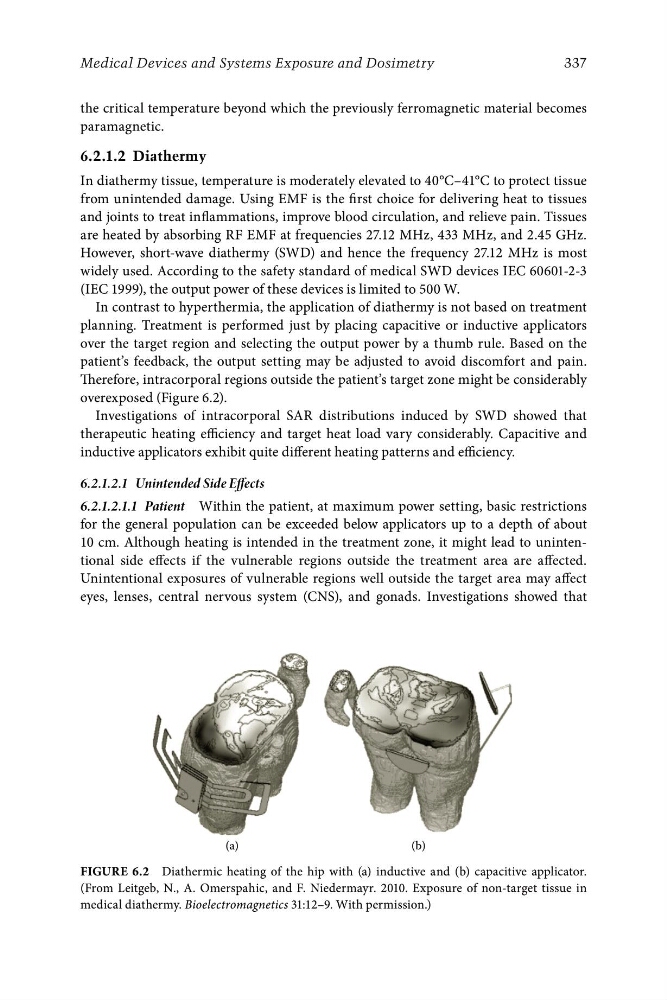
Figure 6.2 Diathermic heating of the hip with (a) inductive and (b) capacitive applicator.
(From Leitgeb, N., A. Omerspahic, and F. Niedermayr. 2010. Exposure of non-target tissue in
medical diathermy. Bioelectromagnetics 31:12–9. With permission.)
337
Medical Devices and Systems Exposure and Dosimetry
the critical temperature beyond which the previously ferromagnetic material becomes
paramagnetic.
6.2.1.2 Diathermy
In diathermy tissue, temperature is moderately elevated to 40°C–41°C to protect tissue
from unintended damage. Using EMF is the first choice for delivering heat to tissues
and joints to treat inflammations, improve blood circulation, and relieve pain. Tissues
are heated by absorbing RF EMF at frequencies 27.12 MHz, 433 MHz, and 2.45 GHz.
However, short-wave diathermy (SWD) and hence the frequency 27.12 MHz is most
widely used. According to the safety standard of medical SWD devices IEC 60601-2-3
(IEC 1999), the output power of these devices is limited to 500 W.
In contrast to hyperthermia, the application of diathermy is not based on treatment
planning. Treatment is performed just by placing capacitive or inductive applicators
over the target region and selecting the output power by a thumb rule. Based on the
patient’s feedback, the output setting may be adjusted to avoid discomfort and pain.
Therefore, intracorporal regions outside the patient’s target zone might be considerably
overexposed (Figure 6.2).
Investigations of intracorporal SAR distributions induced by SWD showed that
therapeutic heating efficiency and target heat load vary considerably. Capacitive and
inductive applicators exhibit quite different heating patterns and efficiency.
6.2.1.2.1 Unintended Side Effects
6.2.1.2.1.1 Patient Within the patient, at maximum power setting, basic restrictions
for the general population can be exceeded below applicators up to a depth of about
10 cm. Although heating is intended in the treatment zone, it might lead to unintentional side effects if the vulnerable regions outside the treatment area are affected.
Unintentional exposures of vulnerable regions well outside the target area may affect
eyes, lenses, central nervous system (CNS), and gonads. Investigations showed that