

μW
B ELF
RF
RF
dB/dt
B RF
B 0
B 0
B 0
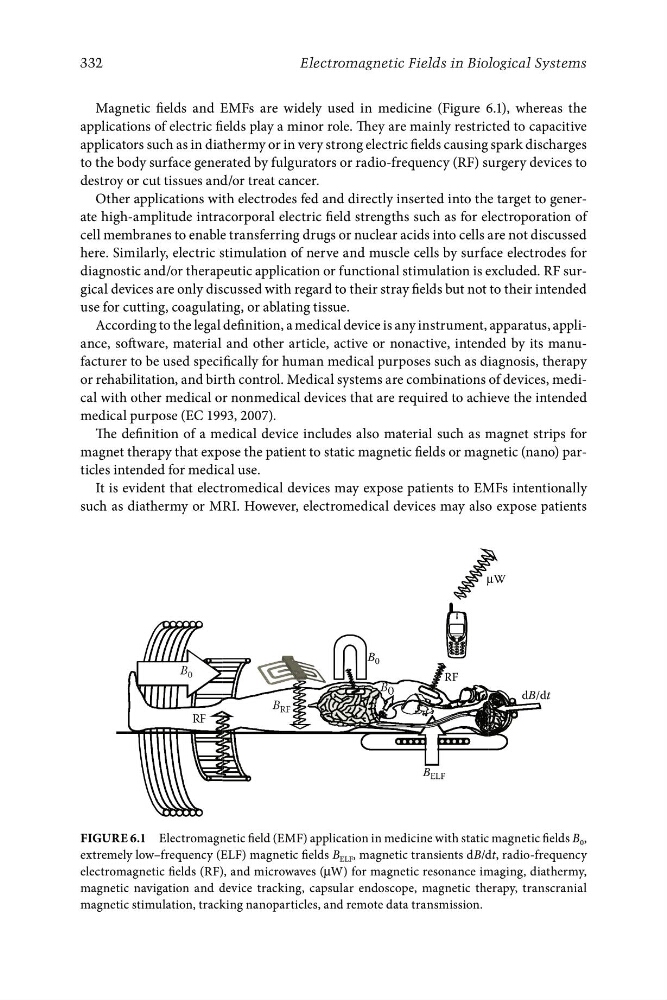
Figure 6.1 Electromagnetic field (EMF) application in medicine with static magnetic fields B 0 ,
extremely low–frequency (ELF) magnetic fields B ELF , magnetic transients dB/dt, radio-frequency
electromagnetic fields (RF), and microwaves (μW) for magnetic resonance imaging, diathermy,
magnetic navigation and device tracking, capsular endoscope, magnetic therapy, transcranial
magnetic stimulation, tracking nanoparticles, and remote data transmission.
332
Electromagnetic Fields in Biological Systems
Magnetic fields and EMFs are widely used in medicine (Figure 6.1), whereas the
applications of electric fields play a minor role. They are mainly restricted to capacitive
applicators such as in diathermy or in very strong electric fields causing spark discharges
to the body surface generated by fulgurators or radio-frequency (RF) surgery devices to
destroy or cut tissues and/or treat cancer.
Other applications with electrodes fed and directly inserted into the target to generate high-amplitude intracorporal electric field strengths such as for electroporation of
cell membranes to enable transferring drugs or nuclear acids into cells are not discussed
here. Similarly, electric stimulation of nerve and muscle cells by surface electrodes for
diagnostic and/or therapeutic application or functional stimulation is excluded. RF surgical devices are only discussed with regard to their stray fields but not to their intended
use for cutting, coagulating, or ablating tissue.
According to the legal definition, a medical device is any instrument, apparatus, appliance, software, material and other article, active or nonactive, intended by its manufacturer to be used specifically for human medical purposes such as diagnosis, therapy
or rehabilitation, and birth control. Medical systems are combinations of devices, medical with other medical or nonmedical devices that are required to achieve the intended
medical purpose (EC 1993, 2007).
The definition of a medical device includes also material such as magnet strips for
magnet therapy that expose the patient to static magnetic fields or magnetic (nano) particles intended for medical use.
It is evident that electromedical devices may expose patients to EMFs intentionally
such as diathermy or MRI. However, electromedical devices may also expose patients
B ELF
RF
RF
dB/dt
B RF
B 0
B 0
B 0
Figure 6.1 Electromagnetic field (EMF) application in medicine with static magnetic fields B 0 ,
extremely low–frequency (ELF) magnetic fields B ELF , magnetic transients dB/dt, radio-frequency
electromagnetic fields (RF), and microwaves (μW) for magnetic resonance imaging, diathermy,
magnetic navigation and device tracking, capsular endoscope, magnetic therapy, transcranial
magnetic stimulation, tracking nanoparticles, and remote data transmission.
332
Electromagnetic Fields in Biological Systems
Magnetic fields and EMFs are widely used in medicine (Figure 6.1), whereas the
applications of electric fields play a minor role. They are mainly restricted to capacitive
applicators such as in diathermy or in very strong electric fields causing spark discharges
to the body surface generated by fulgurators or radio-frequency (RF) surgery devices to
destroy or cut tissues and/or treat cancer.
Other applications with electrodes fed and directly inserted into the target to generate high-amplitude intracorporal electric field strengths such as for electroporation of
cell membranes to enable transferring drugs or nuclear acids into cells are not discussed
here. Similarly, electric stimulation of nerve and muscle cells by surface electrodes for
diagnostic and/or therapeutic application or functional stimulation is excluded. RF surgical devices are only discussed with regard to their stray fields but not to their intended
use for cutting, coagulating, or ablating tissue.
According to the legal definition, a medical device is any instrument, apparatus, appliance, software, material and other article, active or nonactive, intended by its manufacturer to be used specifically for human medical purposes such as diagnosis, therapy
or rehabilitation, and birth control. Medical systems are combinations of devices, medical with other medical or nonmedical devices that are required to achieve the intended
medical purpose (EC 1993, 2007).
The definition of a medical device includes also material such as magnet strips for
magnet therapy that expose the patient to static magnetic fields or magnetic (nano) particles intended for medical use.
It is evident that electromedical devices may expose patients to EMFs intentionally
such as diathermy or MRI. However, electromedical devices may also expose patients