

[V/m]
[V/m]
[mW/kg]
0.3
180
10
−1
160
140
10
−2
120
1.8
1.6
1.4
1.2
0.8
0.6
0.4
0.2
1
1.8
1.6
1.4
1.2
0.8
0.6
0.4
0.2
1
180
160
140
120
100
80
60
40
20
0
(cm)
60
40
10 −4
20
0 0 20 40
0
40
20
(cm)
(cm)
(cm)
100
10
−3
80
(a)
(b)
(c)
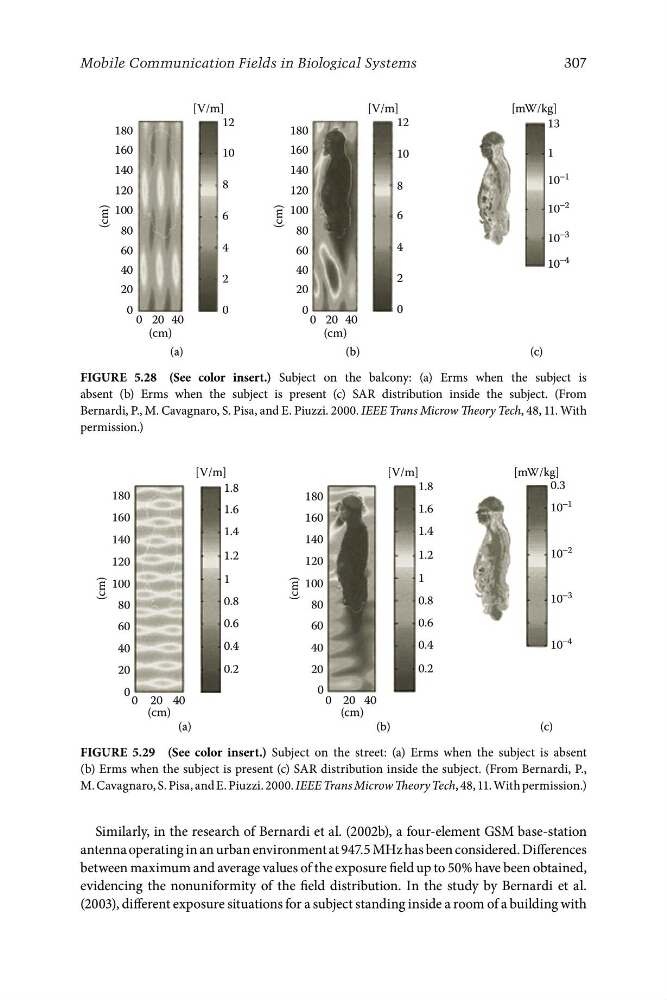
Figure 5.29 (See color insert.) Subject on the street: (a) Erms when the subject is absent
(b) Erms when the subject is present (c) SAR distribution inside the subject. (From Bernardi, P.,
M. Cavagnaro, S. Pisa, and E. Piuzzi. 2000. IEEE Trans Microw Theory Tech, 48, 11. With permission.)
[V/m]
[V/m]
[mW/kg]
12
12
13
180
180
160
160
10
10
1
140
140
10 −1
8
8
120
120
(cm)
100
(cm)
100
6
10
−2
80
10
−3
4
60
6
80
4
60
10 −4
40
40
2
2
20
20
0
0
0
0
0 20 40
0 20 40
(cm)
(cm)
(a)
(b)
(c)
307
Mobile Communication Fields in Biological Systems
Figure 5.28 (See color insert.) Subject on the balcony: (a) Erms when the subject is
absent (b) Erms when the subject is present (c) SAR distribution inside the subject. (From
Bernardi, P., M. Cavagnaro, S. Pisa, and E. Piuzzi. 2000. IEEE Trans Microw Theory Tech, 48, 11. With
permission.)
Similarly, in the research of Bernardi et al. (2002b), a four-element GSM base-station
antenna operating in an urban environment at 947.5 MHz has been considered. Differences
between maximum and average values of the exposure field up to 50% have been obtained,
evidencing the nonuniformity of the field distribution. In the study by Bernardi et al.
(2003), different exposure situations for a subject standing inside a room of a building with