

from the dairy wastewater (DW) as well as implement a modelling of the kinetic
parameters of the method. The experimentations were carried out in quadruple batch
type of reactors (volume is in the range of 250 mL) with a microbial seed material
from an upflow anaerobic sludge blanket (UASB) stirrer at 0.6 Æ 0.05 g COD g
VSS-1. To prevent methanogenic reaction, 1/20% chloroform (v/v) was injected
inside the working reactors. Investigations have shown that DW is undergone into
the fermentation steps easily on behalf of acidogenic microorganisms since it shows
larger short-chain CA creation rates in the initial 2 days of the experimentation.
Small concentrations of middle-chain CA point out that protein and fats were not the
chief constituents of the source of carbon for the fermentation of DW. The product
attained was 0.67 mg CA mg CODA-1, which corresponds to 0.83 mg CODCA mg
CODA-1. Investigation of the kinetic model reveals the fact that the first-order
model of the exponential phase can be easily described. It is also reveals that the
Fitzhugh models are suitable for the simulation of the carboxylic acid production.
After all, DW appears to be an encouraging and favorable substrate for the study on
the carbon platform.
Li et al. (2020) carried out tests to produce biogas from silage of the straw of corn
(CSS) as one of the principal solid organic wastes. The goal of the team was to
scrutinize the probability and the optimum control approach for the anaerobic
digestion of CSS (EA). Four leach bed reactors (LBR) were functioned at diverse
pH standards. The extreme concentration of volatile fatty acids (VFA) of 19.33 g/L
was attained at pH 8.1 with vinegar as well as propionic acids as the leading VFA.
Later bacteriological analyses showed that the plentiful bacteria were
Proteobacteria, Firmicutes, as well as Bacteroidetes. The UASB is integrated as a
methane conversion reactor in the case of the LBR. The organic compound load
(OLR) might touch to 8.0 g COD/l • d if converted effectively into AGV.
Acetotrophic methanoates as well as hydrogenotrophic methanobacteria have
acted a significant character in the process of methanogenesis. Throughout the
procedure, the outcomes exhibited that a yield of methane which is 144.4 mL
CH4/g volatile solid (VS) was attained. Two-phase OLR controls and pH were
possible for the manufacture of gaseous methane from CSS.
Mukhuba et al. (2020) examined serious environmental problems such as emission of the greenhouse gas caused by the uncontrolled overproduction of fruit and
vegetable waste. The team examined the connection among the construction of the
bacteriological community as well as the production of biogas with mixed fruit as
well as vegetable residues (MFVW) and cow dung as in the form of substrates.
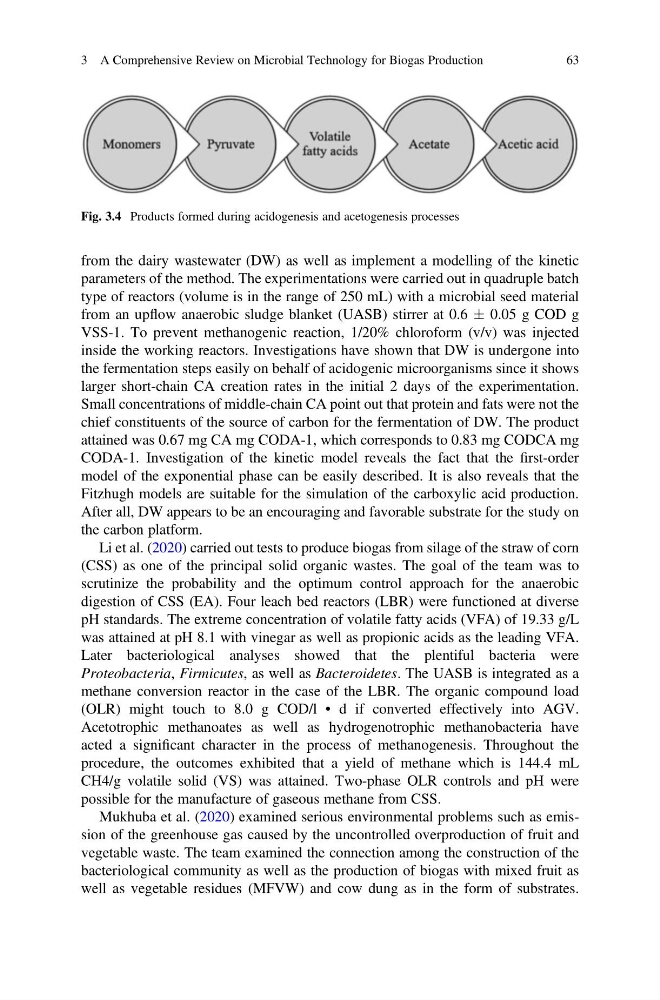
Fig. 3.4 Products formed during acidogenesis and acetogenesis processes
3 A Comprehensive Review on Microbial Technology for Biogas Production
63
parameters of the method. The experimentations were carried out in quadruple batch
type of reactors (volume is in the range of 250 mL) with a microbial seed material
from an upflow anaerobic sludge blanket (UASB) stirrer at 0.6 Æ 0.05 g COD g
VSS-1. To prevent methanogenic reaction, 1/20% chloroform (v/v) was injected
inside the working reactors. Investigations have shown that DW is undergone into
the fermentation steps easily on behalf of acidogenic microorganisms since it shows
larger short-chain CA creation rates in the initial 2 days of the experimentation.
Small concentrations of middle-chain CA point out that protein and fats were not the
chief constituents of the source of carbon for the fermentation of DW. The product
attained was 0.67 mg CA mg CODA-1, which corresponds to 0.83 mg CODCA mg
CODA-1. Investigation of the kinetic model reveals the fact that the first-order
model of the exponential phase can be easily described. It is also reveals that the
Fitzhugh models are suitable for the simulation of the carboxylic acid production.
After all, DW appears to be an encouraging and favorable substrate for the study on
the carbon platform.
Li et al. (2020) carried out tests to produce biogas from silage of the straw of corn
(CSS) as one of the principal solid organic wastes. The goal of the team was to
scrutinize the probability and the optimum control approach for the anaerobic
digestion of CSS (EA). Four leach bed reactors (LBR) were functioned at diverse
pH standards. The extreme concentration of volatile fatty acids (VFA) of 19.33 g/L
was attained at pH 8.1 with vinegar as well as propionic acids as the leading VFA.
Later bacteriological analyses showed that the plentiful bacteria were
Proteobacteria, Firmicutes, as well as Bacteroidetes. The UASB is integrated as a
methane conversion reactor in the case of the LBR. The organic compound load
(OLR) might touch to 8.0 g COD/l • d if converted effectively into AGV.
Acetotrophic methanoates as well as hydrogenotrophic methanobacteria have
acted a significant character in the process of methanogenesis. Throughout the
procedure, the outcomes exhibited that a yield of methane which is 144.4 mL
CH4/g volatile solid (VS) was attained. Two-phase OLR controls and pH were
possible for the manufacture of gaseous methane from CSS.
Mukhuba et al. (2020) examined serious environmental problems such as emission of the greenhouse gas caused by the uncontrolled overproduction of fruit and
vegetable waste. The team examined the connection among the construction of the
bacteriological community as well as the production of biogas with mixed fruit as
well as vegetable residues (MFVW) and cow dung as in the form of substrates.
Fig. 3.4 Products formed during acidogenesis and acetogenesis processes
3 A Comprehensive Review on Microbial Technology for Biogas Production
63