

8.6 Conclusion
The green synthesis method has been established as one of the most promising and
environment-friendly methods for the synthesis of metallic nanoparticles. This
article reviewed the green synthesis of metallic NPs using various biological entities,
namely, bacteria, fungi, algae, plants, and agricultural wastes, and also discussed the
challenges encountered during the development of green technology. We hope that
individuals involved in nanotechnology and material science will make use of this
review to further their knowledge in their respective fields.
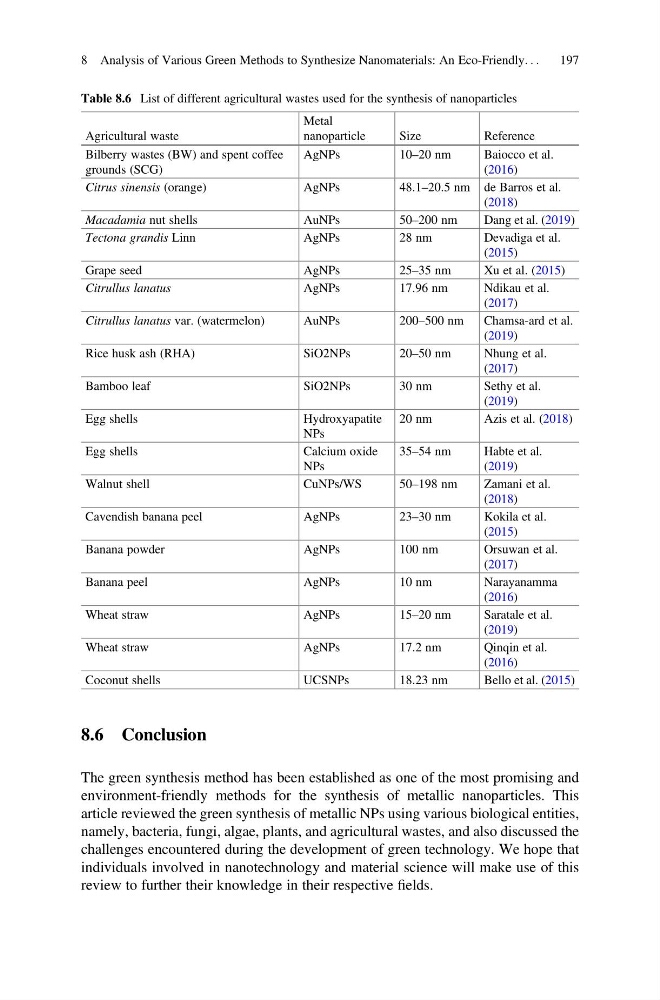
Table 8.6 List of different agricultural wastes used for the synthesis of nanoparticles
Agricultural waste
Metal
nanoparticle
Size
Reference
Bilberry wastes (BW) and spent coffee
grounds (SCG)
AgNPs
10–20 nm
Baiocco et al.
(2016)
Citrus sinensis (orange)
AgNPs
48.1–20.5 nm de Barros et al.
(2018)
Macadamia nut shells
AuNPs
50–200 nm
Dang et al. (2019)
Tectona grandis Linn
AgNPs
28 nm
Devadiga et al.
(2015)
Grape seed
AgNPs
25–35 nm
Xu et al. (2015)
Citrullus lanatus
AgNPs
17.96 nm
Ndikau et al.
(2017)
Citrullus lanatus var. (watermelon)
AuNPs
200–500 nm
Chamsa-ard et al.
(2019)
Rice husk ash (RHA)
SiO2NPs
20–50 nm
Nhung et al.
(2017)
Bamboo leaf
SiO2NPs
30 nm
Sethy et al.
(2019)
Egg shells
Hydroxyapatite
NPs
20 nm
Azis et al. (2018)
Egg shells
Calcium oxide
NPs
35–54 nm
Habte et al.
(2019)
Walnut shell
CuNPs/WS
50–198 nm
Zamani et al.
(2018)
Cavendish banana peel
AgNPs
23–30 nm
Kokila et al.
(2015)
Banana powder
AgNPs
100 nm
Orsuwan et al.
(2017)
Banana peel
AgNPs
10 nm
Narayanamma
(2016)
Wheat straw
AgNPs
15–20 nm
Saratale et al.
(2019)
Wheat straw
AgNPs
17.2 nm
Qinqin et al.
(2016)
Coconut shells
UCSNPs
18.23 nm
Bello et al. (2015)
8 Analysis of Various Green Methods to Synthesize Nanomaterials: An Eco-Friendly. . .
197
The green synthesis method has been established as one of the most promising and
environment-friendly methods for the synthesis of metallic nanoparticles. This
article reviewed the green synthesis of metallic NPs using various biological entities,
namely, bacteria, fungi, algae, plants, and agricultural wastes, and also discussed the
challenges encountered during the development of green technology. We hope that
individuals involved in nanotechnology and material science will make use of this
review to further their knowledge in their respective fields.
Table 8.6 List of different agricultural wastes used for the synthesis of nanoparticles
Agricultural waste
Metal
nanoparticle
Size
Reference
Bilberry wastes (BW) and spent coffee
grounds (SCG)
AgNPs
10–20 nm
Baiocco et al.
(2016)
Citrus sinensis (orange)
AgNPs
48.1–20.5 nm de Barros et al.
(2018)
Macadamia nut shells
AuNPs
50–200 nm
Dang et al. (2019)
Tectona grandis Linn
AgNPs
28 nm
Devadiga et al.
(2015)
Grape seed
AgNPs
25–35 nm
Xu et al. (2015)
Citrullus lanatus
AgNPs
17.96 nm
Ndikau et al.
(2017)
Citrullus lanatus var. (watermelon)
AuNPs
200–500 nm
Chamsa-ard et al.
(2019)
Rice husk ash (RHA)
SiO2NPs
20–50 nm
Nhung et al.
(2017)
Bamboo leaf
SiO2NPs
30 nm
Sethy et al.
(2019)
Egg shells
Hydroxyapatite
NPs
20 nm
Azis et al. (2018)
Egg shells
Calcium oxide
NPs
35–54 nm
Habte et al.
(2019)
Walnut shell
CuNPs/WS
50–198 nm
Zamani et al.
(2018)
Cavendish banana peel
AgNPs
23–30 nm
Kokila et al.
(2015)
Banana powder
AgNPs
100 nm
Orsuwan et al.
(2017)
Banana peel
AgNPs
10 nm
Narayanamma
(2016)
Wheat straw
AgNPs
15–20 nm
Saratale et al.
(2019)
Wheat straw
AgNPs
17.2 nm
Qinqin et al.
(2016)
Coconut shells
UCSNPs
18.23 nm
Bello et al. (2015)
8 Analysis of Various Green Methods to Synthesize Nanomaterials: An Eco-Friendly. . .
197