

8.4.5 Agricultural Wastes
Nanotechnology is being actively utilized these days and its variety of applications
in agriculture is increasing by the day. Implementation of this technology to agrowaste synthesis would be a tough but important initiative toward sustainable development. In addition to reducing the cost of synthesis, agricultural waste also
minimizes the amount of energy required in comparison to methods involving
physical or chemical synthesis and the requirement of harmful chemicals or
by-products as well as stimulates “green synthesis.” Dang et al., in 2019, demonstrated a novel eco-friendly procedure for biosynthesizing gold (Au) nanoparticles
extracted from waste Macadamia nut shells that could be conducted at room
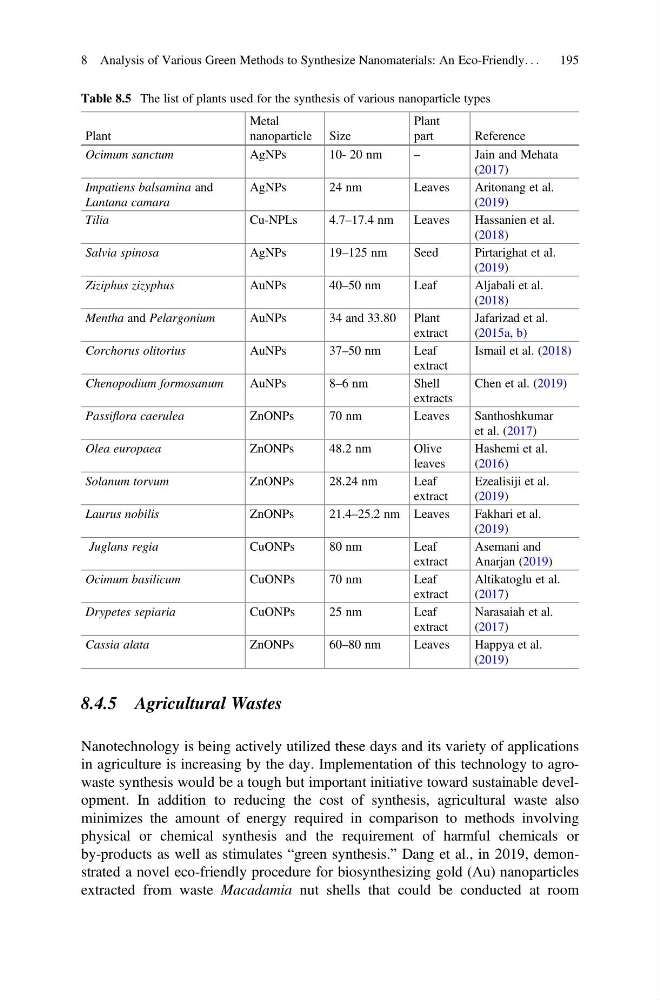
Table 8.5 The list of plants used for the synthesis of various nanoparticle types
Plant
Metal
nanoparticle Size
Plant
part
Reference
Ocimum sanctum
AgNPs
10- 20 nm
–
Jain and Mehata
(2017)
Impatiens balsamina and
Lantana camara
AgNPs
24 nm
Leaves
Aritonang et al.
(2019)
Tilia
Cu-NPLs
4.7–17.4 nm
Leaves
Hassanien et al.
(2018)
Salvia spinosa
AgNPs
19–125 nm
Seed
Pirtarighat et al.
(2019)
Ziziphus zizyphus
AuNPs
40–50 nm
Leaf
Aljabali et al.
(2018)
Mentha and Pelargonium
AuNPs
34 and 33.80 Plant
extract
Jafarizad et al.
(2015a, b)
Corchorus olitorius
AuNPs
37–50 nm
Leaf
extract
Ismail et al. (2018)
Chenopodium formosanum
AuNPs
8–6 nm
Shell
extracts
Chen et al. (2019)
Passiflora caerulea
ZnONPs
70 nm
Leaves
Santhoshkumar
et al. (2017)
Olea europaea
ZnONPs
48.2 nm
Olive
leaves
Hashemi et al.
(2016)
Solanum torvum
ZnONPs
28.24 nm
Leaf
extract
Ezealisiji et al.
(2019)
Laurus nobilis
ZnONPs
21.4–25.2 nm Leaves
Fakhari et al.
(2019)
Juglans regia
CuONPs
80 nm
Leaf
extract
Asemani and
Anarjan (2019)
Ocimum basilicum
CuONPs
70 nm
Leaf
extract
Altikatoglu et al.
(2017)
Drypetes sepiaria
CuONPs
25 nm
Leaf
extract
Narasaiah et al.
(2017)
Cassia alata
ZnONPs
60–80 nm
Leaves
Happya et al.
(2019)
8 Analysis of Various Green Methods to Synthesize Nanomaterials: An Eco-Friendly. . .
195
Nanotechnology is being actively utilized these days and its variety of applications
in agriculture is increasing by the day. Implementation of this technology to agrowaste synthesis would be a tough but important initiative toward sustainable development. In addition to reducing the cost of synthesis, agricultural waste also
minimizes the amount of energy required in comparison to methods involving
physical or chemical synthesis and the requirement of harmful chemicals or
by-products as well as stimulates “green synthesis.” Dang et al., in 2019, demonstrated a novel eco-friendly procedure for biosynthesizing gold (Au) nanoparticles
extracted from waste Macadamia nut shells that could be conducted at room
Table 8.5 The list of plants used for the synthesis of various nanoparticle types
Plant
Metal
nanoparticle Size
Plant
part
Reference
Ocimum sanctum
AgNPs
10- 20 nm
–
Jain and Mehata
(2017)
Impatiens balsamina and
Lantana camara
AgNPs
24 nm
Leaves
Aritonang et al.
(2019)
Tilia
Cu-NPLs
4.7–17.4 nm
Leaves
Hassanien et al.
(2018)
Salvia spinosa
AgNPs
19–125 nm
Seed
Pirtarighat et al.
(2019)
Ziziphus zizyphus
AuNPs
40–50 nm
Leaf
Aljabali et al.
(2018)
Mentha and Pelargonium
AuNPs
34 and 33.80 Plant
extract
Jafarizad et al.
(2015a, b)
Corchorus olitorius
AuNPs
37–50 nm
Leaf
extract
Ismail et al. (2018)
Chenopodium formosanum
AuNPs
8–6 nm
Shell
extracts
Chen et al. (2019)
Passiflora caerulea
ZnONPs
70 nm
Leaves
Santhoshkumar
et al. (2017)
Olea europaea
ZnONPs
48.2 nm
Olive
leaves
Hashemi et al.
(2016)
Solanum torvum
ZnONPs
28.24 nm
Leaf
extract
Ezealisiji et al.
(2019)
Laurus nobilis
ZnONPs
21.4–25.2 nm Leaves
Fakhari et al.
(2019)
Juglans regia
CuONPs
80 nm
Leaf
extract
Asemani and
Anarjan (2019)
Ocimum basilicum
CuONPs
70 nm
Leaf
extract
Altikatoglu et al.
(2017)
Drypetes sepiaria
CuONPs
25 nm
Leaf
extract
Narasaiah et al.
(2017)
Cassia alata
ZnONPs
60–80 nm
Leaves
Happya et al.
(2019)
8 Analysis of Various Green Methods to Synthesize Nanomaterials: An Eco-Friendly. . .
195