

4 Anthropogenic Water Reservoirs in Poland
67
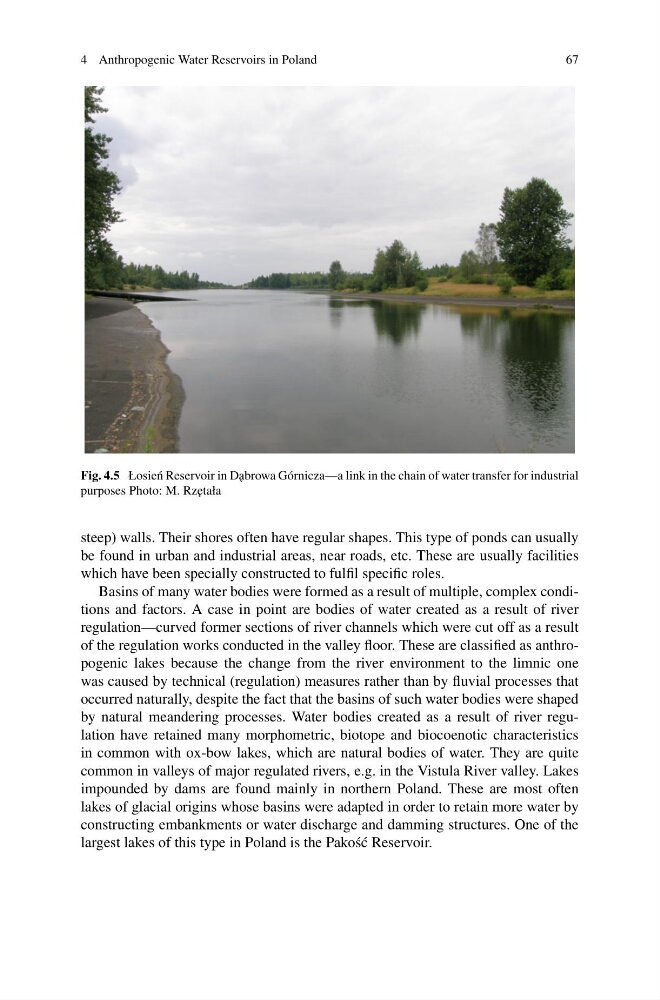
Fig. 4.5 Łosie´ n Reservoir in D˛ abrowa Górnicza—a link in the chain of water transfer for industrial
purposes Photo: M. Rz˛ etała
steep) walls. Their shores often have regular shapes. This type of ponds can usually
be found in urban and industrial areas, near roads, etc. These are usually facilities
which have been specially constructed to fulfil specific roles.
Basins of many water bodies were formed as a result of multiple, complex conditions and factors. A case in point are bodies of water created as a result of river
regulation—curved former sections of river channels which were cut off as a result
of the regulation works conducted in the valley floor. These are classified as anthropogenic lakes because the change from the river environment to the limnic one
was caused by technical (regulation) measures rather than by fluvial processes that
occurred naturally, despite the fact that the basins of such water bodies were shaped
by natural meandering processes. Water bodies created as a result of river regulation have retained many morphometric, biotope and biocoenotic characteristics
in common with ox-bow lakes, which are natural bodies of water. They are quite
common in valleys of major regulated rivers, e.g. in the Vistula River valley. Lakes
impounded by dams are found mainly in northern Poland. These are most often
lakes of glacial origins whose basins were adapted in order to retain more water by
constructing embankments or water discharge and damming structures. One of the
largest lakes of this type in Poland is the Pako´ s´ c Reservoir.
67
Fig. 4.5 Łosie´ n Reservoir in D˛ abrowa Górnicza—a link in the chain of water transfer for industrial
purposes Photo: M. Rz˛ etała
steep) walls. Their shores often have regular shapes. This type of ponds can usually
be found in urban and industrial areas, near roads, etc. These are usually facilities
which have been specially constructed to fulfil specific roles.
Basins of many water bodies were formed as a result of multiple, complex conditions and factors. A case in point are bodies of water created as a result of river
regulation—curved former sections of river channels which were cut off as a result
of the regulation works conducted in the valley floor. These are classified as anthropogenic lakes because the change from the river environment to the limnic one
was caused by technical (regulation) measures rather than by fluvial processes that
occurred naturally, despite the fact that the basins of such water bodies were shaped
by natural meandering processes. Water bodies created as a result of river regulation have retained many morphometric, biotope and biocoenotic characteristics
in common with ox-bow lakes, which are natural bodies of water. They are quite
common in valleys of major regulated rivers, e.g. in the Vistula River valley. Lakes
impounded by dams are found mainly in northern Poland. These are most often
lakes of glacial origins whose basins were adapted in order to retain more water by
constructing embankments or water discharge and damming structures. One of the
largest lakes of this type in Poland is the Pako´ s´ c Reservoir.