

17 Water Problems in Urban Areas
403
0
100
200
300
400
500
600
0
5
10
15
20
25
30
1 5 9 13 17 21 25 29 33 37 41 45 49
q (L/s/ km 2
)
P (mm/h)
duration (h)
P
urban catchment
forested-agricultural catchment
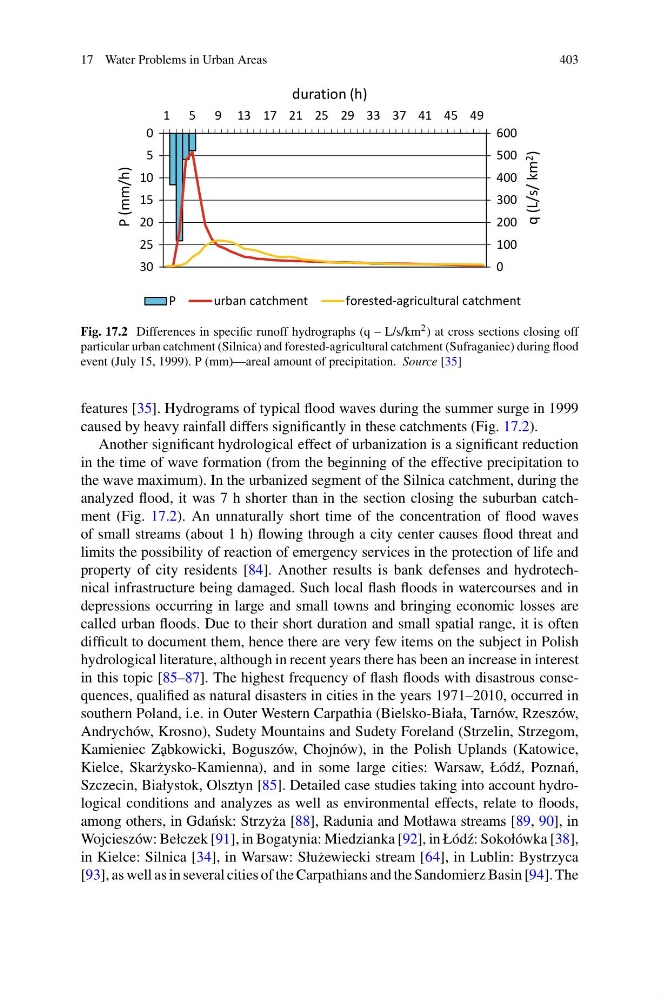
Fig. 17.2 Differences in specific runoff hydrographs (q – L/s/km 2 ) at cross sections closing off
particular urban catchment (Silnica) and forested-agricultural catchment (Sufraganiec) during flood
event (July 15, 1999). P (mm)—areal amount of precipitation. Source [35]
features [35]. Hydrograms of typical flood waves during the summer surge in 1999
caused by heavy rainfall differs significantly in these catchments (Fig. 17.2).
Another significant hydrological effect of urbanization is a significant reduction
in the time of wave formation (from the beginning of the effective precipitation to
the wave maximum). In the urbanized segment of the Silnica catchment, during the
analyzed flood, it was 7 h shorter than in the section closing the suburban catchment (Fig. 17.2). An unnaturally short time of the concentration of flood waves
of small streams (about 1 h) flowing through a city center causes flood threat and
limits the possibility of reaction of emergency services in the protection of life and
property of city residents [84]. Another results is bank defenses and hydrotechnical infrastructure being damaged. Such local flash floods in watercourses and in
depressions occurring in large and small towns and bringing economic losses are
called urban floods. Due to their short duration and small spatial range, it is often
difficult to document them, hence there are very few items on the subject in Polish
hydrological literature, although in recent years there has been an increase in interest
in this topic [85–87]. The highest frequency of flash floods with disastrous consequences, qualified as natural disasters in cities in the years 1971–2010, occurred in
southern Poland, i.e. in Outer Western Carpathia (Bielsko-Biała, Tarnów, Rzeszów,
Andrychów, Krosno), Sudety Mountains and Sudety Foreland (Strzelin, Strzegom,
Kamieniec Z˛ abkowicki, Boguszów, Chojnów), in the Polish Uplands (Katowice,
Kielce, Skar˙ zysko-Kamienna), and in some large cities: Warsaw, Łód´ z, Pozna´ n,
Szczecin, Białystok, Olsztyn [85]. Detailed case studies taking into account hydrological conditions and analyzes as well as environmental effects, relate to floods,
among others, in Gda´ nsk: Strzy˙ za [88], Radunia and Motława streams [89, 90], in
Wojcieszów: Bełczek [91], in Bogatynia: Miedzianka [92], in Łód´ z: Sokołówka [38],
in Kielce: Silnica [34], in Warsaw: Słu˙ zewiecki stream [64], in Lublin: Bystrzyca
[93], as well as in several cities of the Carpathians and the Sandomierz Basin [94]. The
403
0
100
200
300
400
500
600
0
5
10
15
20
25
30
1 5 9 13 17 21 25 29 33 37 41 45 49
q (L/s/ km 2
)
P (mm/h)
duration (h)
P
urban catchment
forested-agricultural catchment
Fig. 17.2 Differences in specific runoff hydrographs (q – L/s/km 2 ) at cross sections closing off
particular urban catchment (Silnica) and forested-agricultural catchment (Sufraganiec) during flood
event (July 15, 1999). P (mm)—areal amount of precipitation. Source [35]
features [35]. Hydrograms of typical flood waves during the summer surge in 1999
caused by heavy rainfall differs significantly in these catchments (Fig. 17.2).
Another significant hydrological effect of urbanization is a significant reduction
in the time of wave formation (from the beginning of the effective precipitation to
the wave maximum). In the urbanized segment of the Silnica catchment, during the
analyzed flood, it was 7 h shorter than in the section closing the suburban catchment (Fig. 17.2). An unnaturally short time of the concentration of flood waves
of small streams (about 1 h) flowing through a city center causes flood threat and
limits the possibility of reaction of emergency services in the protection of life and
property of city residents [84]. Another results is bank defenses and hydrotechnical infrastructure being damaged. Such local flash floods in watercourses and in
depressions occurring in large and small towns and bringing economic losses are
called urban floods. Due to their short duration and small spatial range, it is often
difficult to document them, hence there are very few items on the subject in Polish
hydrological literature, although in recent years there has been an increase in interest
in this topic [85–87]. The highest frequency of flash floods with disastrous consequences, qualified as natural disasters in cities in the years 1971–2010, occurred in
southern Poland, i.e. in Outer Western Carpathia (Bielsko-Biała, Tarnów, Rzeszów,
Andrychów, Krosno), Sudety Mountains and Sudety Foreland (Strzelin, Strzegom,
Kamieniec Z˛ abkowicki, Boguszów, Chojnów), in the Polish Uplands (Katowice,
Kielce, Skar˙ zysko-Kamienna), and in some large cities: Warsaw, Łód´ z, Pozna´ n,
Szczecin, Białystok, Olsztyn [85]. Detailed case studies taking into account hydrological conditions and analyzes as well as environmental effects, relate to floods,
among others, in Gda´ nsk: Strzy˙ za [88], Radunia and Motława streams [89, 90], in
Wojcieszów: Bełczek [91], in Bogatynia: Miedzianka [92], in Łód´ z: Sokołówka [38],
in Kielce: Silnica [34], in Warsaw: Słu˙ zewiecki stream [64], in Lublin: Bystrzyca
[93], as well as in several cities of the Carpathians and the Sandomierz Basin [94]. The