

15 Monitoring of Small Catchments in …
359
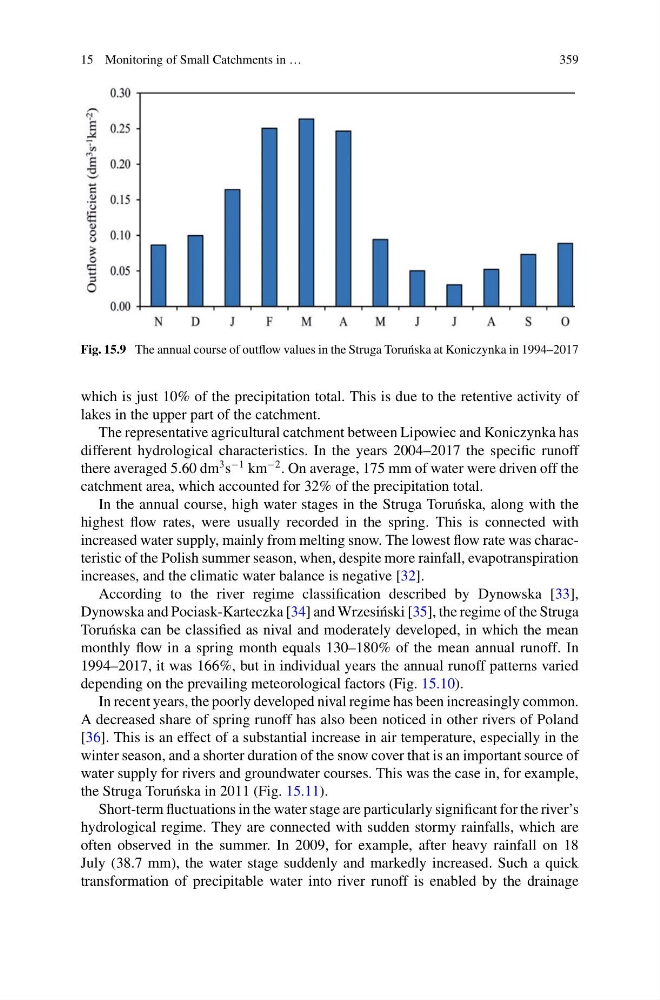
Fig. 15.9 The annual course of outflow values in the Struga Toru´ nska at Koniczynka in 1994–2017
which is just 10% of the precipitation total. This is due to the retentive activity of
lakes in the upper part of the catchment.
The representative agricultural catchment between Lipowiec and Koniczynka has
different hydrological characteristics. In the years 2004–2017 the specific runoff
there averaged 5.60 dm
3 s
−1 km
−2 . On average, 175 mm of water were driven off the
catchment area, which accounted for 32% of the precipitation total.
In the annual course, high water stages in the Struga Toru´ nska, along with the
highest flow rates, were usually recorded in the spring. This is connected with
increased water supply, mainly from melting snow. The lowest flow rate was characteristic of the Polish summer season, when, despite more rainfall, evapotranspiration
increases, and the climatic water balance is negative [32].
According to the river regime classification described by Dynowska [33],
Dynowska and Pociask-Karteczka [34] and Wrzesi´ nski [35], the regime of the Struga
Toru´ nska can be classified as nival and moderately developed, in which the mean
monthly flow in a spring month equals 130–180% of the mean annual runoff. In
1994–2017, it was 166%, but in individual years the annual runoff patterns varied
depending on the prevailing meteorological factors (Fig. 15.10).
In recent years, the poorly developed nival regime has been increasingly common.
A decreased share of spring runoff has also been noticed in other rivers of Poland
[36]. This is an effect of a substantial increase in air temperature, especially in the
winter season, and a shorter duration of the snow cover that is an important source of
water supply for rivers and groundwater courses. This was the case in, for example,
the Struga Toru´ nska in 2011 (Fig. 15.11).
Short-term fluctuations in the water stage are particularly significant for the river’s
hydrological regime. They are connected with sudden stormy rainfalls, which are
often observed in the summer. In 2009, for example, after heavy rainfall on 18
July (38.7 mm), the water stage suddenly and markedly increased. Such a quick
transformation of precipitable water into river runoff is enabled by the drainage
359
Fig. 15.9 The annual course of outflow values in the Struga Toru´ nska at Koniczynka in 1994–2017
which is just 10% of the precipitation total. This is due to the retentive activity of
lakes in the upper part of the catchment.
The representative agricultural catchment between Lipowiec and Koniczynka has
different hydrological characteristics. In the years 2004–2017 the specific runoff
there averaged 5.60 dm
3 s
−1 km
−2 . On average, 175 mm of water were driven off the
catchment area, which accounted for 32% of the precipitation total.
In the annual course, high water stages in the Struga Toru´ nska, along with the
highest flow rates, were usually recorded in the spring. This is connected with
increased water supply, mainly from melting snow. The lowest flow rate was characteristic of the Polish summer season, when, despite more rainfall, evapotranspiration
increases, and the climatic water balance is negative [32].
According to the river regime classification described by Dynowska [33],
Dynowska and Pociask-Karteczka [34] and Wrzesi´ nski [35], the regime of the Struga
Toru´ nska can be classified as nival and moderately developed, in which the mean
monthly flow in a spring month equals 130–180% of the mean annual runoff. In
1994–2017, it was 166%, but in individual years the annual runoff patterns varied
depending on the prevailing meteorological factors (Fig. 15.10).
In recent years, the poorly developed nival regime has been increasingly common.
A decreased share of spring runoff has also been noticed in other rivers of Poland
[36]. This is an effect of a substantial increase in air temperature, especially in the
winter season, and a shorter duration of the snow cover that is an important source of
water supply for rivers and groundwater courses. This was the case in, for example,
the Struga Toru´ nska in 2011 (Fig. 15.11).
Short-term fluctuations in the water stage are particularly significant for the river’s
hydrological regime. They are connected with sudden stormy rainfalls, which are
often observed in the summer. In 2009, for example, after heavy rainfall on 18
July (38.7 mm), the water stage suddenly and markedly increased. Such a quick
transformation of precipitable water into river runoff is enabled by the drainage