

352
M. Kejna et al.
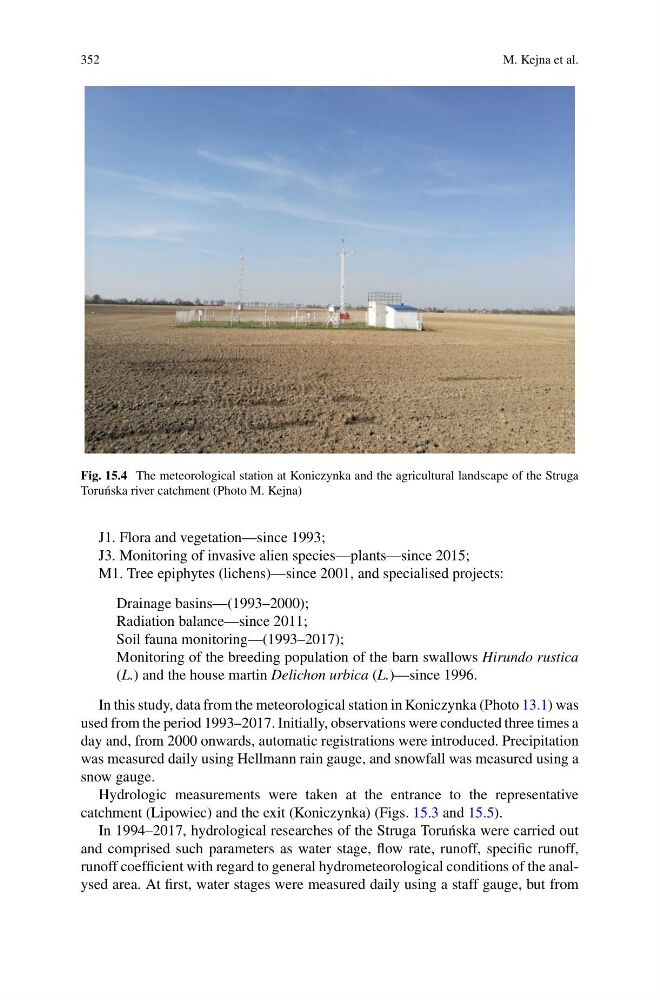
Fig. 15.4 The meteorological station at Koniczynka and the agricultural landscape of the Struga
Toru´ nska river catchment (Photo M. Kejna)
J1. Flora and vegetation—since 1993;
J3. Monitoring of invasive alien species—plants—since 2015;
M1. Tree epiphytes (lichens)—since 2001, and specialised projects:
Drainage basins—(1993–2000);
Radiation balance—since 2011;
Soil fauna monitoring—(1993–2017);
Monitoring of the breeding population of the barn swallows Hirundo rustica
(L.) and the house martin Delichon urbica (L.)—since 1996.
In this study, data from the meteorological station in Koniczynka (Photo 13.1) was
used from the period 1993–2017. Initially, observations were conducted three times a
day and, from 2000 onwards, automatic registrations were introduced. Precipitation
was measured daily using Hellmann rain gauge, and snowfall was measured using a
snow gauge.
Hydrologic measurements were taken at the entrance to the representative
catchment (Lipowiec) and the exit (Koniczynka) (Figs. 15.3 and 15.5).
In 1994–2017, hydrological researches of the Struga Toru´ nska were carried out
and comprised such parameters as water stage, flow rate, runoff, specific runoff,
runoff coefficient with regard to general hydrometeorological conditions of the analysed area. At first, water stages were measured daily using a staff gauge, but from
M. Kejna et al.
Fig. 15.4 The meteorological station at Koniczynka and the agricultural landscape of the Struga
Toru´ nska river catchment (Photo M. Kejna)
J1. Flora and vegetation—since 1993;
J3. Monitoring of invasive alien species—plants—since 2015;
M1. Tree epiphytes (lichens)—since 2001, and specialised projects:
Drainage basins—(1993–2000);
Radiation balance—since 2011;
Soil fauna monitoring—(1993–2017);
Monitoring of the breeding population of the barn swallows Hirundo rustica
(L.) and the house martin Delichon urbica (L.)—since 1996.
In this study, data from the meteorological station in Koniczynka (Photo 13.1) was
used from the period 1993–2017. Initially, observations were conducted three times a
day and, from 2000 onwards, automatic registrations were introduced. Precipitation
was measured daily using Hellmann rain gauge, and snowfall was measured using a
snow gauge.
Hydrologic measurements were taken at the entrance to the representative
catchment (Lipowiec) and the exit (Koniczynka) (Figs. 15.3 and 15.5).
In 1994–2017, hydrological researches of the Struga Toru´ nska were carried out
and comprised such parameters as water stage, flow rate, runoff, specific runoff,
runoff coefficient with regard to general hydrometeorological conditions of the analysed area. At first, water stages were measured daily using a staff gauge, but from