

14 Surface Water Eutrophication in Poland: Assessment and Prevention
341
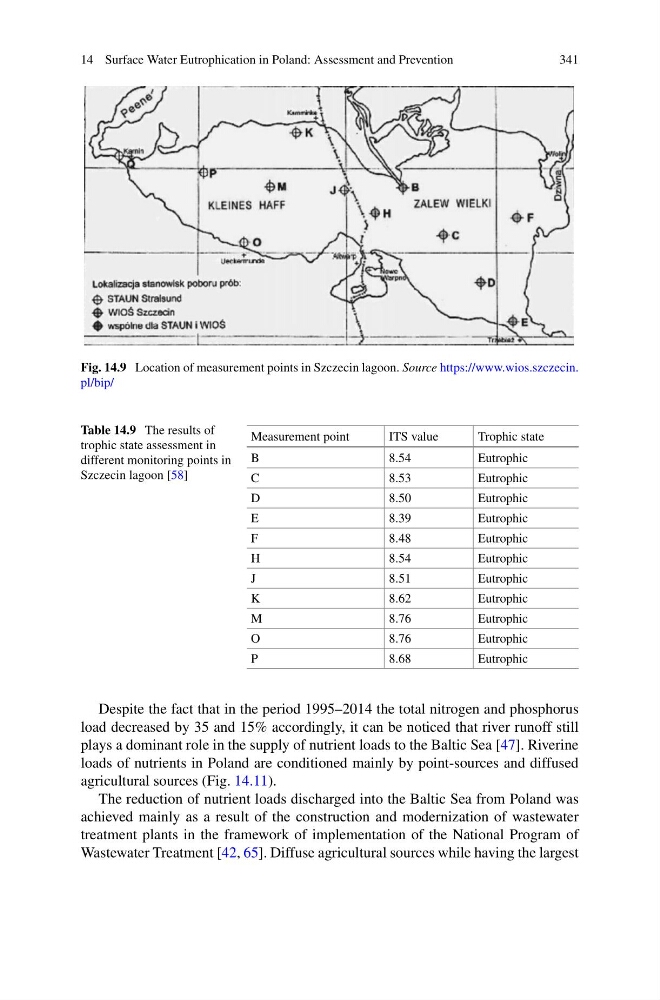
Fig. 14.9 Location of measurement points in Szczecin lagoon. Source https://www.wios.szczecin.
pl/bip/
Table 14.9 The results of
trophic state assessment in
different monitoring points in
Szczecin lagoon [58]
Measurement point
ITS value
Trophic state
B
8.54
Eutrophic
C
8.53
Eutrophic
D
8.50
Eutrophic
E
8.39
Eutrophic
F
8.48
Eutrophic
H
8.54
Eutrophic
J
8.51
Eutrophic
K
8.62
Eutrophic
M
8.76
Eutrophic
O
8.76
Eutrophic
P
8.68
Eutrophic
Despite the fact that in the period 1995–2014 the total nitrogen and phosphorus
load decreased by 35 and 15% accordingly, it can be noticed that river runoff still
plays a dominant role in the supply of nutrient loads to the Baltic Sea [47]. Riverine
loads of nutrients in Poland are conditioned mainly by point-sources and diffused
agricultural sources (Fig. 14.11).
The reduction of nutrient loads discharged into the Baltic Sea from Poland was
achieved mainly as a result of the construction and modernization of wastewater
treatment plants in the framework of implementation of the National Program of
Wastewater Treatment [42, 65]. Diffuse agricultural sources while having the largest
341
Fig. 14.9 Location of measurement points in Szczecin lagoon. Source https://www.wios.szczecin.
pl/bip/
Table 14.9 The results of
trophic state assessment in
different monitoring points in
Szczecin lagoon [58]
Measurement point
ITS value
Trophic state
B
8.54
Eutrophic
C
8.53
Eutrophic
D
8.50
Eutrophic
E
8.39
Eutrophic
F
8.48
Eutrophic
H
8.54
Eutrophic
J
8.51
Eutrophic
K
8.62
Eutrophic
M
8.76
Eutrophic
O
8.76
Eutrophic
P
8.68
Eutrophic
Despite the fact that in the period 1995–2014 the total nitrogen and phosphorus
load decreased by 35 and 15% accordingly, it can be noticed that river runoff still
plays a dominant role in the supply of nutrient loads to the Baltic Sea [47]. Riverine
loads of nutrients in Poland are conditioned mainly by point-sources and diffused
agricultural sources (Fig. 14.11).
The reduction of nutrient loads discharged into the Baltic Sea from Poland was
achieved mainly as a result of the construction and modernization of wastewater
treatment plants in the framework of implementation of the National Program of
Wastewater Treatment [42, 65]. Diffuse agricultural sources while having the largest