

336
E. Neverova-Dziopak
0%
10% 20% 30% 40% 50% 60% 70% 80% 90% 100%
Rivers and dam reservoirs
Lakes
Transitional waters
Coastal waters
Good
Bad
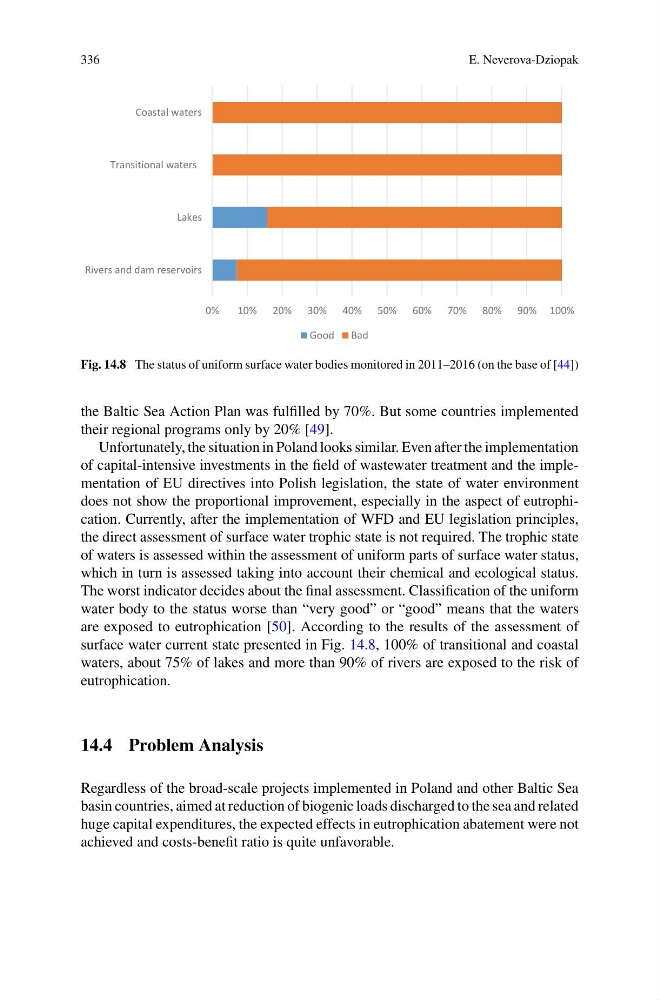
Fig. 14.8 The status of uniform surface water bodies monitored in 2011–2016 (on the base of [44])
the Baltic Sea Action Plan was fulfilled by 70%. But some countries implemented
their regional programs only by 20% [49].
Unfortunately, the situation in Poland looks similar. Even after the implementation
of capital-intensive investments in the field of wastewater treatment and the implementation of EU directives into Polish legislation, the state of water environment
does not show the proportional improvement, especially in the aspect of eutrophication. Currently, after the implementation of WFD and EU legislation principles,
the direct assessment of surface water trophic state is not required. The trophic state
of waters is assessed within the assessment of uniform parts of surface water status,
which in turn is assessed taking into account their chemical and ecological status.
The worst indicator decides about the final assessment. Classification of the uniform
water body to the status worse than “very good” or “good” means that the waters
are exposed to eutrophication [50]. According to the results of the assessment of
surface water current state presented in Fig. 14.8, 100% of transitional and coastal
waters, about 75% of lakes and more than 90% of rivers are exposed to the risk of
eutrophication.
14.4 Problem Analysis
Regardless of the broad-scale projects implemented in Poland and other Baltic Sea
basin countries, aimed at reduction of biogenic loads discharged to the sea and related
huge capital expenditures, the expected effects in eutrophication abatement were not
achieved and costs-benefit ratio is quite unfavorable.
E. Neverova-Dziopak
0%
10% 20% 30% 40% 50% 60% 70% 80% 90% 100%
Rivers and dam reservoirs
Lakes
Transitional waters
Coastal waters
Good
Bad
Fig. 14.8 The status of uniform surface water bodies monitored in 2011–2016 (on the base of [44])
the Baltic Sea Action Plan was fulfilled by 70%. But some countries implemented
their regional programs only by 20% [49].
Unfortunately, the situation in Poland looks similar. Even after the implementation
of capital-intensive investments in the field of wastewater treatment and the implementation of EU directives into Polish legislation, the state of water environment
does not show the proportional improvement, especially in the aspect of eutrophication. Currently, after the implementation of WFD and EU legislation principles,
the direct assessment of surface water trophic state is not required. The trophic state
of waters is assessed within the assessment of uniform parts of surface water status,
which in turn is assessed taking into account their chemical and ecological status.
The worst indicator decides about the final assessment. Classification of the uniform
water body to the status worse than “very good” or “good” means that the waters
are exposed to eutrophication [50]. According to the results of the assessment of
surface water current state presented in Fig. 14.8, 100% of transitional and coastal
waters, about 75% of lakes and more than 90% of rivers are exposed to the risk of
eutrophication.
14.4 Problem Analysis
Regardless of the broad-scale projects implemented in Poland and other Baltic Sea
basin countries, aimed at reduction of biogenic loads discharged to the sea and related
huge capital expenditures, the expected effects in eutrophication abatement were not
achieved and costs-benefit ratio is quite unfavorable.