

308
J. P. Siwek
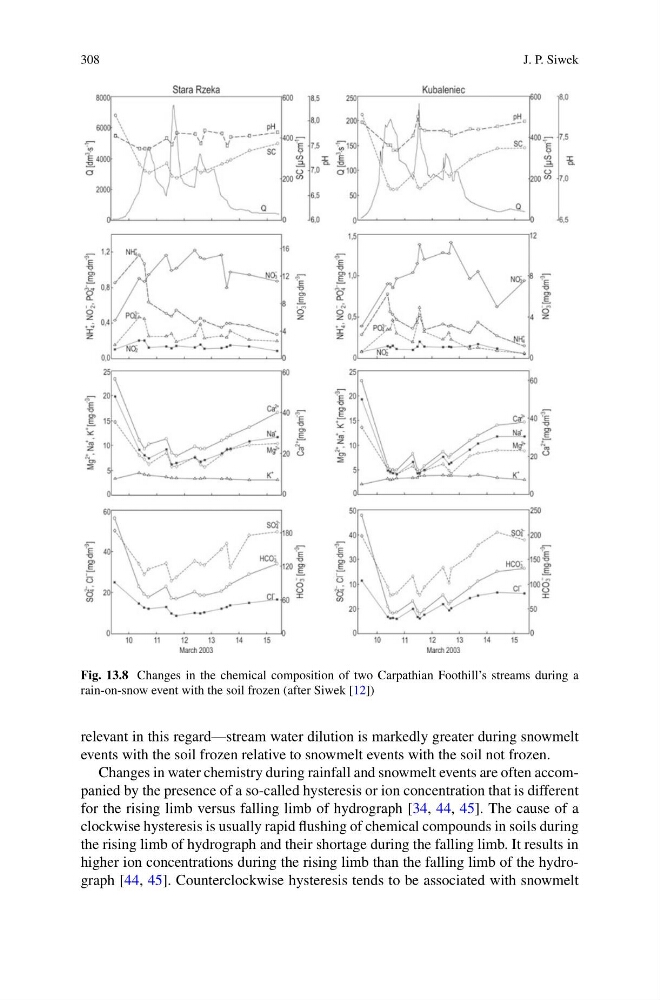
Fig. 13.8 Changes in the chemical composition of two Carpathian Foothill’s streams during a
rain-on-snow event with the soil frozen (after Siwek [12])
relevant in this regard—stream water dilution is markedly greater during snowmelt
events with the soil frozen relative to snowmelt events with the soil not frozen.
Changes in water chemistry during rainfall and snowmelt events are often accompanied by the presence of a so-called hysteresis or ion concentration that is different
for the rising limb versus falling limb of hydrograph [34, 44, 45]. The cause of a
clockwise hysteresis is usually rapid flushing of chemical compounds in soils during
the rising limb of hydrograph and their shortage during the falling limb. It results in
higher ion concentrations during the rising limb than the falling limb of the hydrograph [44, 45]. Counterclockwise hysteresis tends to be associated with snowmelt
J. P. Siwek
Fig. 13.8 Changes in the chemical composition of two Carpathian Foothill’s streams during a
rain-on-snow event with the soil frozen (after Siwek [12])
relevant in this regard—stream water dilution is markedly greater during snowmelt
events with the soil frozen relative to snowmelt events with the soil not frozen.
Changes in water chemistry during rainfall and snowmelt events are often accompanied by the presence of a so-called hysteresis or ion concentration that is different
for the rising limb versus falling limb of hydrograph [34, 44, 45]. The cause of a
clockwise hysteresis is usually rapid flushing of chemical compounds in soils during
the rising limb of hydrograph and their shortage during the falling limb. It results in
higher ion concentrations during the rising limb than the falling limb of the hydrograph [44, 45]. Counterclockwise hysteresis tends to be associated with snowmelt