

234
I. Jamorska
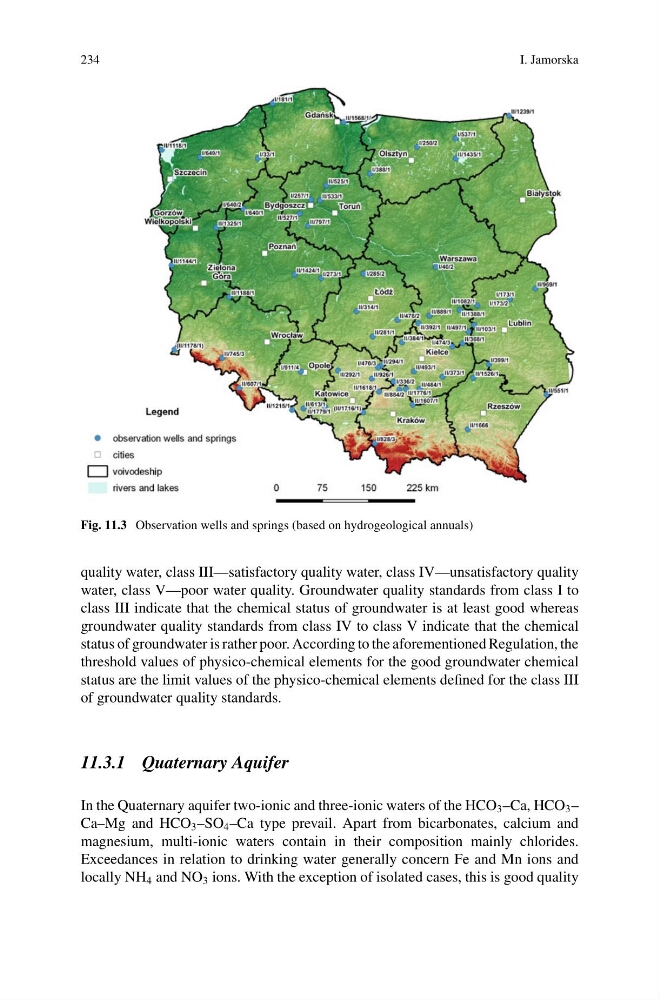
Fig. 11.3 Observation wells and springs (based on hydrogeological annuals)
quality water, class III—satisfactory quality water, class IV—unsatisfactory quality
water, class V—poor water quality. Groundwater quality standards from class I to
class III indicate that the chemical status of groundwater is at least good whereas
groundwater quality standards from class IV to class V indicate that the chemical
status of groundwater is rather poor. According to the aforementioned Regulation, the
threshold values of physico-chemical elements for the good groundwater chemical
status are the limit values of the physico-chemical elements defined for the class III
of groundwater quality standards.
11.3.1 Quaternary Aquifer
In the Quaternary aquifer two-ionic and three-ionic waters of the HCO 3 –Ca, HCO 3 –
Ca–Mg and HCO 3 –SO 4 –Ca type prevail. Apart from bicarbonates, calcium and
magnesium, multi-ionic waters contain in their composition mainly chlorides.
Exceedances in relation to drinking water generally concern Fe and Mn ions and
locally NH 4 and NO 3 ions. With the exception of isolated cases, this is good quality
I. Jamorska
Fig. 11.3 Observation wells and springs (based on hydrogeological annuals)
quality water, class III—satisfactory quality water, class IV—unsatisfactory quality
water, class V—poor water quality. Groundwater quality standards from class I to
class III indicate that the chemical status of groundwater is at least good whereas
groundwater quality standards from class IV to class V indicate that the chemical
status of groundwater is rather poor. According to the aforementioned Regulation, the
threshold values of physico-chemical elements for the good groundwater chemical
status are the limit values of the physico-chemical elements defined for the class III
of groundwater quality standards.
11.3.1 Quaternary Aquifer
In the Quaternary aquifer two-ionic and three-ionic waters of the HCO 3 –Ca, HCO 3 –
Ca–Mg and HCO 3 –SO 4 –Ca type prevail. Apart from bicarbonates, calcium and
magnesium, multi-ionic waters contain in their composition mainly chlorides.
Exceedances in relation to drinking water generally concern Fe and Mn ions and
locally NH 4 and NO 3 ions. With the exception of isolated cases, this is good quality