

11 Monitoring of Groundwater Quality in Poland
233
Quality
monitoring
diagnostic
operational
research
protected
area
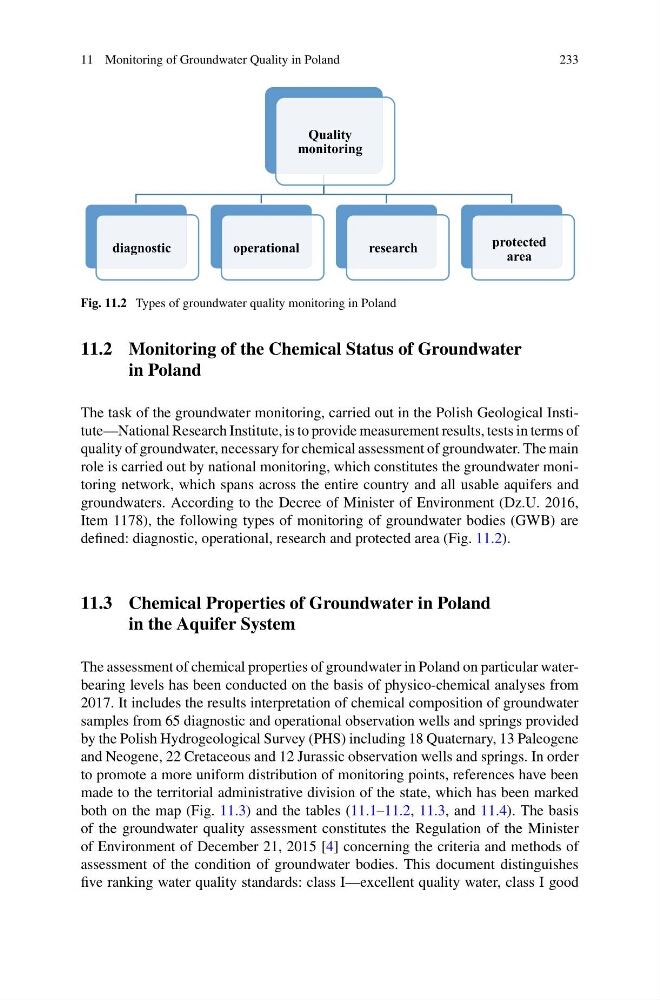
Fig. 11.2 Types of groundwater quality monitoring in Poland
11.2 Monitoring of the Chemical Status of Groundwater
in Poland
The task of the groundwater monitoring, carried out in the Polish Geological Institute—National Research Institute, is to provide measurement results, tests in terms of
quality of groundwater, necessary for chemical assessment of groundwater. The main
role is carried out by national monitoring, which constitutes the groundwater monitoring network, which spans across the entire country and all usable aquifers and
groundwaters. According to the Decree of Minister of Environment (Dz.U. 2016,
Item 1178), the following types of monitoring of groundwater bodies (GWB) are
defined: diagnostic, operational, research and protected area (Fig. 11.2).
11.3 Chemical Properties of Groundwater in Poland
in the Aquifer System
The assessment of chemical properties of groundwater in Poland on particular waterbearing levels has been conducted on the basis of physico-chemical analyses from
2017. It includes the results interpretation of chemical composition of groundwater
samples from 65 diagnostic and operational observation wells and springs provided
by the Polish Hydrogeological Survey (PHS) including 18 Quaternary, 13 Paleogene
and Neogene, 22 Cretaceous and 12 Jurassic observation wells and springs. In order
to promote a more uniform distribution of monitoring points, references have been
made to the territorial administrative division of the state, which has been marked
both on the map (Fig. 11.3) and the tables (11.1–11.2, 11.3, and 11.4). The basis
of the groundwater quality assessment constitutes the Regulation of the Minister
of Environment of December 21, 2015 [4] concerning the criteria and methods of
assessment of the condition of groundwater bodies. This document distinguishes
five ranking water quality standards: class I—excellent quality water, class I good
233
Quality
monitoring
diagnostic
operational
research
protected
area
Fig. 11.2 Types of groundwater quality monitoring in Poland
11.2 Monitoring of the Chemical Status of Groundwater
in Poland
The task of the groundwater monitoring, carried out in the Polish Geological Institute—National Research Institute, is to provide measurement results, tests in terms of
quality of groundwater, necessary for chemical assessment of groundwater. The main
role is carried out by national monitoring, which constitutes the groundwater monitoring network, which spans across the entire country and all usable aquifers and
groundwaters. According to the Decree of Minister of Environment (Dz.U. 2016,
Item 1178), the following types of monitoring of groundwater bodies (GWB) are
defined: diagnostic, operational, research and protected area (Fig. 11.2).
11.3 Chemical Properties of Groundwater in Poland
in the Aquifer System
The assessment of chemical properties of groundwater in Poland on particular waterbearing levels has been conducted on the basis of physico-chemical analyses from
2017. It includes the results interpretation of chemical composition of groundwater
samples from 65 diagnostic and operational observation wells and springs provided
by the Polish Hydrogeological Survey (PHS) including 18 Quaternary, 13 Paleogene
and Neogene, 22 Cretaceous and 12 Jurassic observation wells and springs. In order
to promote a more uniform distribution of monitoring points, references have been
made to the territorial administrative division of the state, which has been marked
both on the map (Fig. 11.3) and the tables (11.1–11.2, 11.3, and 11.4). The basis
of the groundwater quality assessment constitutes the Regulation of the Minister
of Environment of December 21, 2015 [4] concerning the criteria and methods of
assessment of the condition of groundwater bodies. This document distinguishes
five ranking water quality standards: class I—excellent quality water, class I good