

224
A. Krawiec
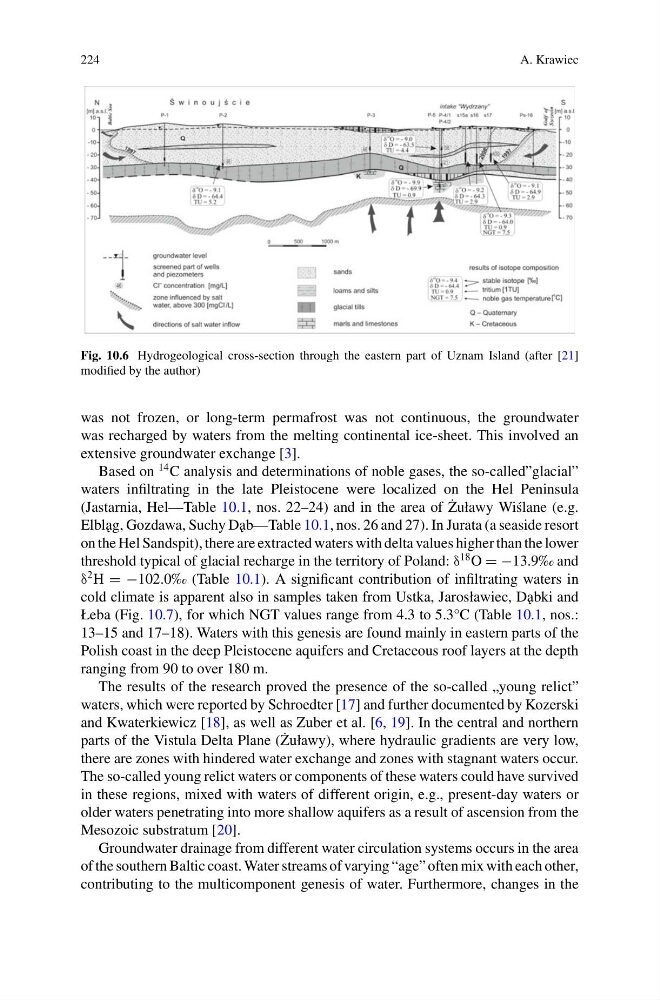
Fig. 10.6 Hydrogeological cross-section through the eastern part of Uznam Island (after [21]
modified by the author)
was not frozen, or long-term permafrost was not continuous, the groundwater
was recharged by waters from the melting continental ice-sheet. This involved an
extensive groundwater exchange [3].
Based on
14 C analysis and determinations of noble gases, the so-called”glacial”
waters infiltrating in the late Pleistocene were localized on the Hel Peninsula
(Jastarnia, Hel—Table 10.1, nos. 22–24) and in the area of ˙
Zuławy Wi´ slane (e.g.
Elbl˛ ag, Gozdawa, Suchy D˛ ab—Table 10.1, nos. 26 and 27). In Jurata (a seaside resort
on the Hel Sandspit), there are extracted waters with delta values higher than the lower
threshold typical of glacial recharge in the territory of Poland: δ
18 O = −13.9‰ and
δ
2 H = −102.0‰ (Table 10.1). A significant contribution of infiltrating waters in
cold climate is apparent also in samples taken from Ustka, Jarosławiec, D˛ abki and
Łeba (Fig. 10.7), for which NGT values range from 4.3 to 5.3°C (Table 10.1, nos.:
13–15 and 17–18). Waters with this genesis are found mainly in eastern parts of the
Polish coast in the deep Pleistocene aquifers and Cretaceous roof layers at the depth
ranging from 90 to over 180 m.
The results of the research proved the presence of the so-called „young relict”
waters, which were reported by Schroedter [17] and further documented by Kozerski
and Kwaterkiewicz [18], as well as Zuber et al. [6, 19]. In the central and northern
parts of the Vistula Delta Plane ( ˙
Zuławy), where hydraulic gradients are very low,
there are zones with hindered water exchange and zones with stagnant waters occur.
The so-called young relict waters or components of these waters could have survived
in these regions, mixed with waters of different origin, e.g., present-day waters or
older waters penetrating into more shallow aquifers as a result of ascension from the
Mesozoic substratum [20].
Groundwater drainage from different water circulation systems occurs in the area
of the southern Baltic coast. Water streams of varying “age” often mix with each other,
contributing to the multicomponent genesis of water. Furthermore, changes in the
A. Krawiec
Fig. 10.6 Hydrogeological cross-section through the eastern part of Uznam Island (after [21]
modified by the author)
was not frozen, or long-term permafrost was not continuous, the groundwater
was recharged by waters from the melting continental ice-sheet. This involved an
extensive groundwater exchange [3].
Based on
14 C analysis and determinations of noble gases, the so-called”glacial”
waters infiltrating in the late Pleistocene were localized on the Hel Peninsula
(Jastarnia, Hel—Table 10.1, nos. 22–24) and in the area of ˙
Zuławy Wi´ slane (e.g.
Elbl˛ ag, Gozdawa, Suchy D˛ ab—Table 10.1, nos. 26 and 27). In Jurata (a seaside resort
on the Hel Sandspit), there are extracted waters with delta values higher than the lower
threshold typical of glacial recharge in the territory of Poland: δ
18 O = −13.9‰ and
δ
2 H = −102.0‰ (Table 10.1). A significant contribution of infiltrating waters in
cold climate is apparent also in samples taken from Ustka, Jarosławiec, D˛ abki and
Łeba (Fig. 10.7), for which NGT values range from 4.3 to 5.3°C (Table 10.1, nos.:
13–15 and 17–18). Waters with this genesis are found mainly in eastern parts of the
Polish coast in the deep Pleistocene aquifers and Cretaceous roof layers at the depth
ranging from 90 to over 180 m.
The results of the research proved the presence of the so-called „young relict”
waters, which were reported by Schroedter [17] and further documented by Kozerski
and Kwaterkiewicz [18], as well as Zuber et al. [6, 19]. In the central and northern
parts of the Vistula Delta Plane ( ˙
Zuławy), where hydraulic gradients are very low,
there are zones with hindered water exchange and zones with stagnant waters occur.
The so-called young relict waters or components of these waters could have survived
in these regions, mixed with waters of different origin, e.g., present-day waters or
older waters penetrating into more shallow aquifers as a result of ascension from the
Mesozoic substratum [20].
Groundwater drainage from different water circulation systems occurs in the area
of the southern Baltic coast. Water streams of varying “age” often mix with each other,
contributing to the multicomponent genesis of water. Furthermore, changes in the