

216
A. Krawiec
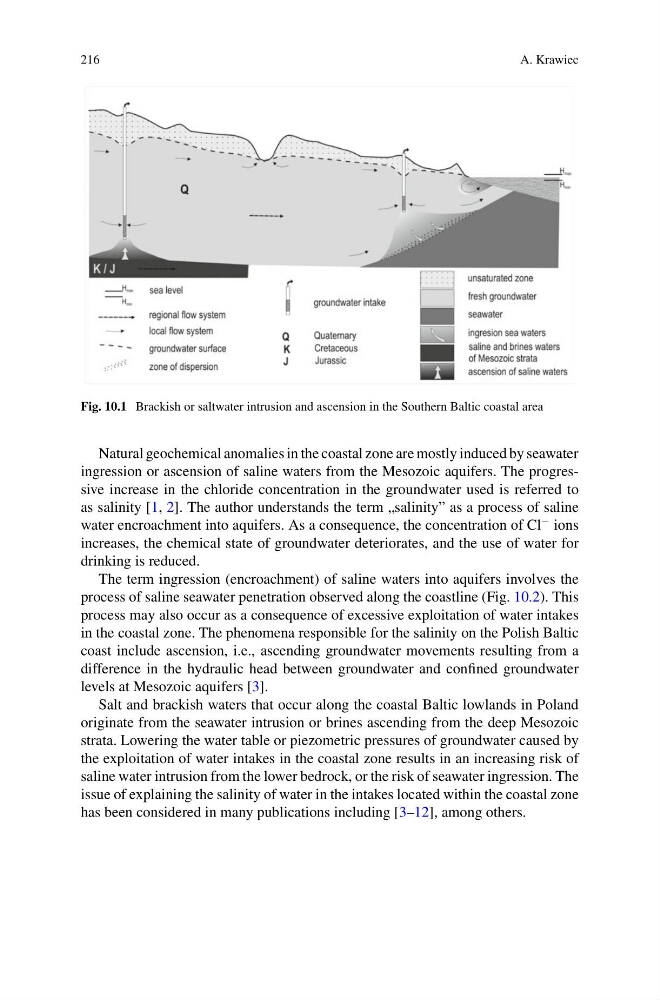
Fig. 10.1 Brackish or saltwater intrusion and ascension in the Southern Baltic coastal area
Natural geochemical anomalies in the coastal zone are mostly induced by seawater
ingression or ascension of saline waters from the Mesozoic aquifers. The progressive increase in the chloride concentration in the groundwater used is referred to
as salinity [1, 2]. The author understands the term „salinity” as a process of saline
water encroachment into aquifers. As a consequence, the concentration of Cl
− ions
increases, the chemical state of groundwater deteriorates, and the use of water for
drinking is reduced.
The term ingression (encroachment) of saline waters into aquifers involves the
process of saline seawater penetration observed along the coastline (Fig. 10.2). This
process may also occur as a consequence of excessive exploitation of water intakes
in the coastal zone. The phenomena responsible for the salinity on the Polish Baltic
coast include ascension, i.e., ascending groundwater movements resulting from a
difference in the hydraulic head between groundwater and confined groundwater
levels at Mesozoic aquifers [3].
Salt and brackish waters that occur along the coastal Baltic lowlands in Poland
originate from the seawater intrusion or brines ascending from the deep Mesozoic
strata. Lowering the water table or piezometric pressures of groundwater caused by
the exploitation of water intakes in the coastal zone results in an increasing risk of
saline water intrusion from the lower bedrock, or the risk of seawater ingression. The
issue of explaining the salinity of water in the intakes located within the coastal zone
has been considered in many publications including [3–12], among others.
A. Krawiec
Fig. 10.1 Brackish or saltwater intrusion and ascension in the Southern Baltic coastal area
Natural geochemical anomalies in the coastal zone are mostly induced by seawater
ingression or ascension of saline waters from the Mesozoic aquifers. The progressive increase in the chloride concentration in the groundwater used is referred to
as salinity [1, 2]. The author understands the term „salinity” as a process of saline
water encroachment into aquifers. As a consequence, the concentration of Cl
− ions
increases, the chemical state of groundwater deteriorates, and the use of water for
drinking is reduced.
The term ingression (encroachment) of saline waters into aquifers involves the
process of saline seawater penetration observed along the coastline (Fig. 10.2). This
process may also occur as a consequence of excessive exploitation of water intakes
in the coastal zone. The phenomena responsible for the salinity on the Polish Baltic
coast include ascension, i.e., ascending groundwater movements resulting from a
difference in the hydraulic head between groundwater and confined groundwater
levels at Mesozoic aquifers [3].
Salt and brackish waters that occur along the coastal Baltic lowlands in Poland
originate from the seawater intrusion or brines ascending from the deep Mesozoic
strata. Lowering the water table or piezometric pressures of groundwater caused by
the exploitation of water intakes in the coastal zone results in an increasing risk of
saline water intrusion from the lower bedrock, or the risk of seawater ingression. The
issue of explaining the salinity of water in the intakes located within the coastal zone
has been considered in many publications including [3–12], among others.