

138
A. Solarczyk
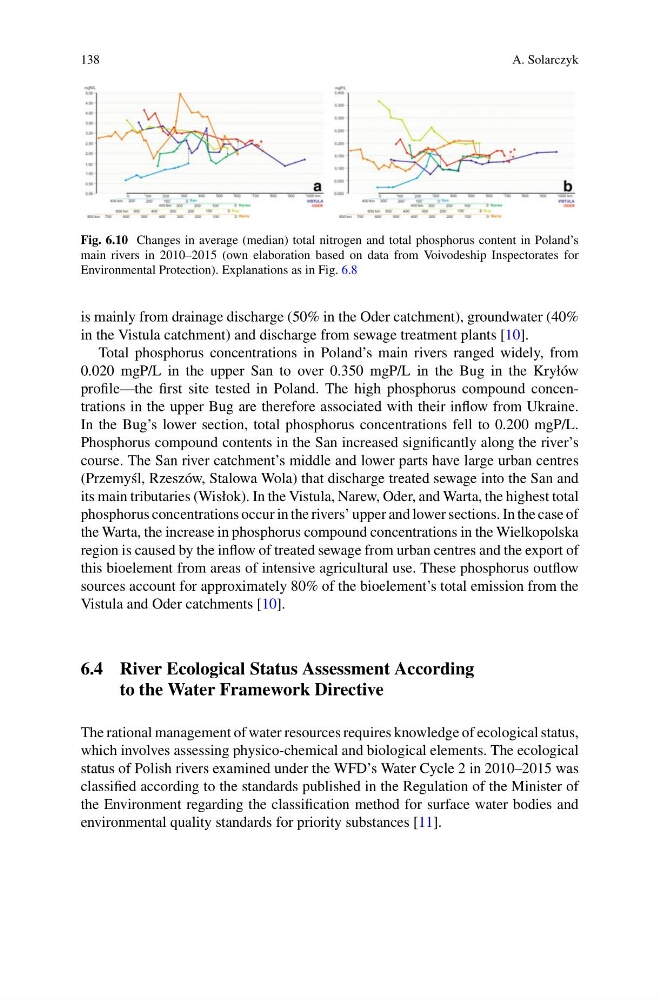
Fig. 6.10 Changes in average (median) total nitrogen and total phosphorus content in Poland’s
main rivers in 2010–2015 (own elaboration based on data from Voivodeship Inspectorates for
Environmental Protection). Explanations as in Fig. 6.8
is mainly from drainage discharge (50% in the Oder catchment), groundwater (40%
in the Vistula catchment) and discharge from sewage treatment plants [10].
Total phosphorus concentrations in Poland’s main rivers ranged widely, from
0.020 mgP/L in the upper San to over 0.350 mgP/L in the Bug in the Kryłów
profile—the first site tested in Poland. The high phosphorus compound concentrations in the upper Bug are therefore associated with their inflow from Ukraine.
In the Bug’s lower section, total phosphorus concentrations fell to 0.200 mgP/L.
Phosphorus compound contents in the San increased significantly along the river’s
course. The San river catchment’s middle and lower parts have large urban centres
(Przemy´ sl, Rzeszów, Stalowa Wola) that discharge treated sewage into the San and
its main tributaries (Wisłok). In the Vistula, Narew, Oder, and Warta, the highest total
phosphorus concentrations occur in the rivers’ upper and lower sections. In the case of
the Warta, the increase in phosphorus compound concentrations in the Wielkopolska
region is caused by the inflow of treated sewage from urban centres and the export of
this bioelement from areas of intensive agricultural use. These phosphorus outflow
sources account for approximately 80% of the bioelement’s total emission from the
Vistula and Oder catchments [10].
6.4 River Ecological Status Assessment According
to the Water Framework Directive
The rational management of water resources requires knowledge of ecological status,
which involves assessing physico-chemical and biological elements. The ecological
status of Polish rivers examined under the WFD’s Water Cycle 2 in 2010–2015 was
classified according to the standards published in the Regulation of the Minister of
the Environment regarding the classification method for surface water bodies and
environmental quality standards for priority substances [11].
A. Solarczyk
Fig. 6.10 Changes in average (median) total nitrogen and total phosphorus content in Poland’s
main rivers in 2010–2015 (own elaboration based on data from Voivodeship Inspectorates for
Environmental Protection). Explanations as in Fig. 6.8
is mainly from drainage discharge (50% in the Oder catchment), groundwater (40%
in the Vistula catchment) and discharge from sewage treatment plants [10].
Total phosphorus concentrations in Poland’s main rivers ranged widely, from
0.020 mgP/L in the upper San to over 0.350 mgP/L in the Bug in the Kryłów
profile—the first site tested in Poland. The high phosphorus compound concentrations in the upper Bug are therefore associated with their inflow from Ukraine.
In the Bug’s lower section, total phosphorus concentrations fell to 0.200 mgP/L.
Phosphorus compound contents in the San increased significantly along the river’s
course. The San river catchment’s middle and lower parts have large urban centres
(Przemy´ sl, Rzeszów, Stalowa Wola) that discharge treated sewage into the San and
its main tributaries (Wisłok). In the Vistula, Narew, Oder, and Warta, the highest total
phosphorus concentrations occur in the rivers’ upper and lower sections. In the case of
the Warta, the increase in phosphorus compound concentrations in the Wielkopolska
region is caused by the inflow of treated sewage from urban centres and the export of
this bioelement from areas of intensive agricultural use. These phosphorus outflow
sources account for approximately 80% of the bioelement’s total emission from the
Vistula and Oder catchments [10].
6.4 River Ecological Status Assessment According
to the Water Framework Directive
The rational management of water resources requires knowledge of ecological status,
which involves assessing physico-chemical and biological elements. The ecological
status of Polish rivers examined under the WFD’s Water Cycle 2 in 2010–2015 was
classified according to the standards published in the Regulation of the Minister of
the Environment regarding the classification method for surface water bodies and
environmental quality standards for priority substances [11].