

5 Irrigation and Drainage in Polish Agriculture …
105
0.0
0.2
0.4
0.6
0.8
1.0
1.2
1.4
1.6
1.8
2.0
WZ
Provinces
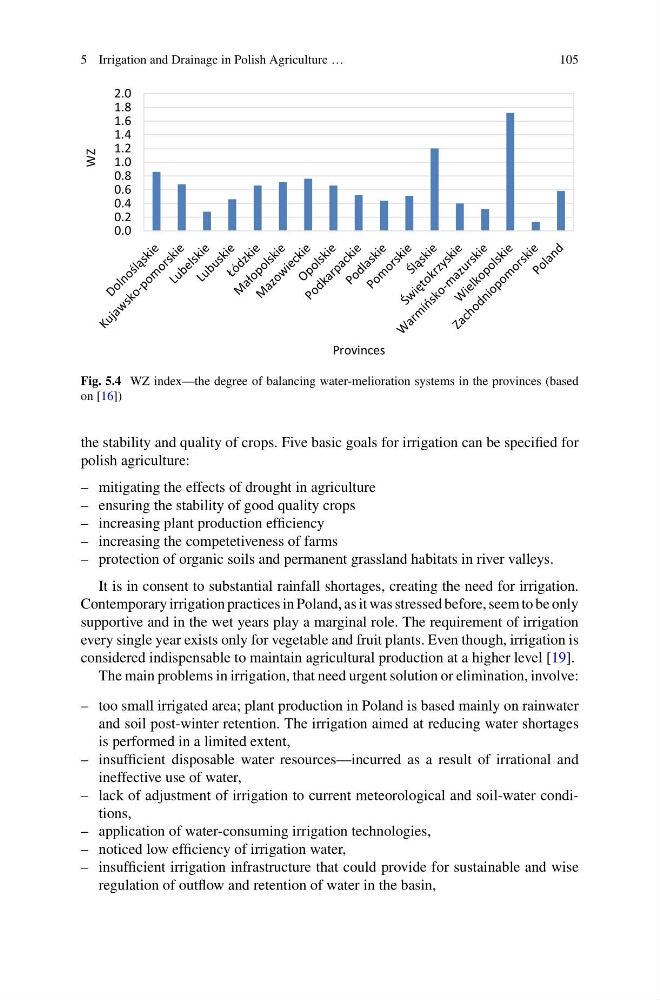
Fig. 5.4 WZ index—the degree of balancing water-melioration systems in the provinces (based
on [16])
the stability and quality of crops. Five basic goals for irrigation can be specified for
polish agriculture:
– mitigating the effects of drought in agriculture
– ensuring the stability of good quality crops
– increasing plant production efficiency
– increasing the competetiveness of farms
– protection of organic soils and permanent grassland habitats in river valleys.
It is in consent to substantial rainfall shortages, creating the need for irrigation.
Contemporary irrigation practices in Poland, as it was stressed before, seem to be only
supportive and in the wet years play a marginal role. The requirement of irrigation
every single year exists only for vegetable and fruit plants. Even though, irrigation is
considered indispensable to maintain agricultural production at a higher level [19].
The main problems in irrigation, that need urgent solution or elimination, involve:
– too small irrigated area; plant production in Poland is based mainly on rainwater
and soil post-winter retention. The irrigation aimed at reducing water shortages
is performed in a limited extent,
– insufficient disposable water resources—incurred as a result of irrational and
ineffective use of water,
– lack of adjustment of irrigation to current meteorological and soil-water conditions,
– application of water-consuming irrigation technologies,
– noticed low efficiency of irrigation water,
– insufficient irrigation infrastructure that could provide for sustainable and wise
regulation of outflow and retention of water in the basin,
105
0.0
0.2
0.4
0.6
0.8
1.0
1.2
1.4
1.6
1.8
2.0
WZ
Provinces
Fig. 5.4 WZ index—the degree of balancing water-melioration systems in the provinces (based
on [16])
the stability and quality of crops. Five basic goals for irrigation can be specified for
polish agriculture:
– mitigating the effects of drought in agriculture
– ensuring the stability of good quality crops
– increasing plant production efficiency
– increasing the competetiveness of farms
– protection of organic soils and permanent grassland habitats in river valleys.
It is in consent to substantial rainfall shortages, creating the need for irrigation.
Contemporary irrigation practices in Poland, as it was stressed before, seem to be only
supportive and in the wet years play a marginal role. The requirement of irrigation
every single year exists only for vegetable and fruit plants. Even though, irrigation is
considered indispensable to maintain agricultural production at a higher level [19].
The main problems in irrigation, that need urgent solution or elimination, involve:
– too small irrigated area; plant production in Poland is based mainly on rainwater
and soil post-winter retention. The irrigation aimed at reducing water shortages
is performed in a limited extent,
– insufficient disposable water resources—incurred as a result of irrational and
ineffective use of water,
– lack of adjustment of irrigation to current meteorological and soil-water conditions,
– application of water-consuming irrigation technologies,
– noticed low efficiency of irrigation water,
– insufficient irrigation infrastructure that could provide for sustainable and wise
regulation of outflow and retention of water in the basin,