

quality, using pressure–state models; (2) reconstruction of historical archives of
water quality since the 1880s; (3) reconstruction of past contamination from sedimentary archives; (4) the construction of a unique and still growing set of data on the
river and its internal and external control factors (climate and hydrology, land use,
population, wastewater treatment, aquifers, urbanization and industrialization, material flow, water quality, river habitat, fish population, etc.) at fine resolutions and
over 50–150 years; (5) the study of river institutions and water regulations over the
past 150 years; and more (as in Box 4).
Box 4
The compared responses of four major European cities, Paris, Berlin, Milan
and Brussels, to basic water quality issues faced during their urban expansion
(1850–2015).
Each city has developed its own management strategy depending on water
availability, policy choice, politics (when Berlin was split into two parts during
the Cold War) and administrative division (the Zenne basin is managed today
by three different Belgian regions). Berlin can be regarded as a precursor in
terms of safeguarding its local water resources, lakes and surficial aquifers. At
the end of the nineteenth century, the same water service was managing both
the drinking water supply and sewage collection and treatment, both for the
city and its suburban area, unlike other cities. A wide network of sewage
collectors was built, and wastewater was treated on farmland around the city,
which in turn was benefitting from the nutrient inputs. Three wastewater
(continued)
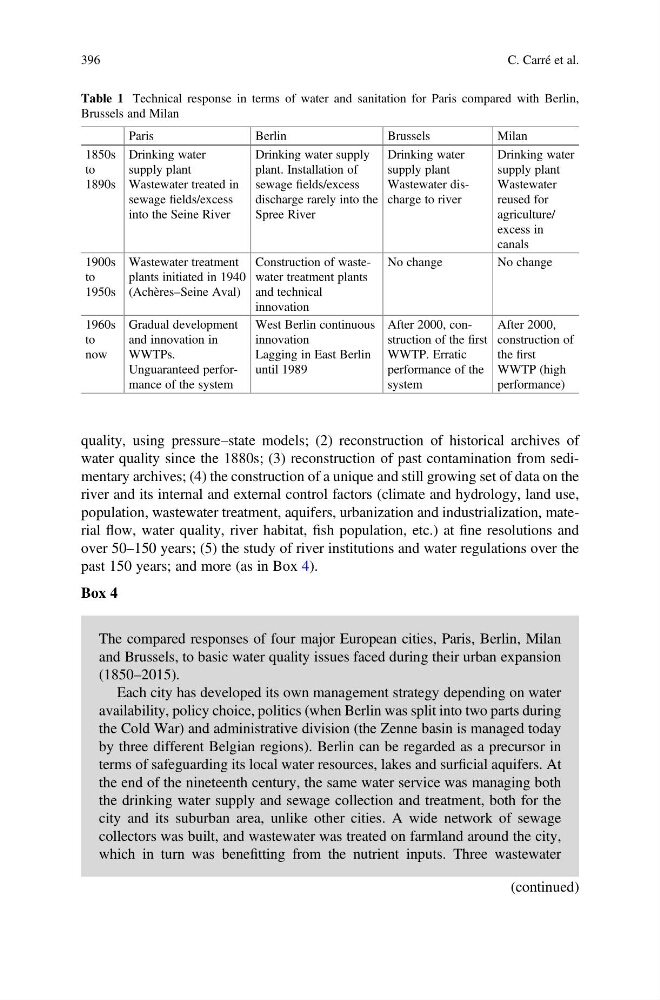
Table 1 Technical response in terms of water and sanitation for Paris compared with Berlin,
Brussels and Milan
Paris
Berlin
Brussels
Milan
1850s
to
1890s
Drinking water
supply plant
Wastewater treated in
sewage fields/excess
into the Seine River
Drinking water supply
plant. Installation of
sewage fields/excess
discharge rarely into the
Spree River
Drinking water
supply plant
Wastewater discharge to river
Drinking water
supply plant
Wastewater
reused for
agriculture/
excess in
canals
1900s
to
1950s
Wastewater treatment
plants initiated in 1940
(Achères–Seine Aval)
Construction of wastewater treatment plants
and technical
innovation
No change
No change
1960s
to
now
Gradual development
and innovation in
WWTPs.
Unguaranteed performance of the system
West Berlin continuous
innovation
Lagging in East Berlin
until 1989
After 2000, construction of the first
WWTP. Erratic
performance of the
system
After 2000,
construction of
the first
WWTP (high
performance)
396
C. Carré et al.
water quality since the 1880s; (3) reconstruction of past contamination from sedimentary archives; (4) the construction of a unique and still growing set of data on the
river and its internal and external control factors (climate and hydrology, land use,
population, wastewater treatment, aquifers, urbanization and industrialization, material flow, water quality, river habitat, fish population, etc.) at fine resolutions and
over 50–150 years; (5) the study of river institutions and water regulations over the
past 150 years; and more (as in Box 4).
Box 4
The compared responses of four major European cities, Paris, Berlin, Milan
and Brussels, to basic water quality issues faced during their urban expansion
(1850–2015).
Each city has developed its own management strategy depending on water
availability, policy choice, politics (when Berlin was split into two parts during
the Cold War) and administrative division (the Zenne basin is managed today
by three different Belgian regions). Berlin can be regarded as a precursor in
terms of safeguarding its local water resources, lakes and surficial aquifers. At
the end of the nineteenth century, the same water service was managing both
the drinking water supply and sewage collection and treatment, both for the
city and its suburban area, unlike other cities. A wide network of sewage
collectors was built, and wastewater was treated on farmland around the city,
which in turn was benefitting from the nutrient inputs. Three wastewater
(continued)
Table 1 Technical response in terms of water and sanitation for Paris compared with Berlin,
Brussels and Milan
Paris
Berlin
Brussels
Milan
1850s
to
1890s
Drinking water
supply plant
Wastewater treated in
sewage fields/excess
into the Seine River
Drinking water supply
plant. Installation of
sewage fields/excess
discharge rarely into the
Spree River
Drinking water
supply plant
Wastewater discharge to river
Drinking water
supply plant
Wastewater
reused for
agriculture/
excess in
canals
1900s
to
1950s
Wastewater treatment
plants initiated in 1940
(Achères–Seine Aval)
Construction of wastewater treatment plants
and technical
innovation
No change
No change
1960s
to
now
Gradual development
and innovation in
WWTPs.
Unguaranteed performance of the system
West Berlin continuous
innovation
Lagging in East Berlin
until 1989
After 2000, construction of the first
WWTP. Erratic
performance of the
system
After 2000,
construction of
the first
WWTP (high
performance)
396
C. Carré et al.