

This link with other river basins has been evidenced for the nitrogen and
phosphorus circulation; it is also obvious for heavy metals, as there are no mines
of non-ferrous metal in the basin. The strong impact of the Seine basin on the
eutrophication of the Bay of Seine to the English Channel, and of the North Sea,
has also been well documented [41], representing an example of the interest in
considering the land-to-sea continuum, from headwaters to the coastal zone and
eventually to oceans. These studies also showed the growing role of society in the
control of rivers during the Anthropocene era [49]. These controlling factors are
detailed in the following section.
3.2 Multiple Long-Term Trajectories of River Control
Factors
For nearly 150 years, the social response to manage the uses of the river (navigation,
flood control, and recreational purposes) or of its waters (drinking or agricultural
water resources, dilution of the residual pollution from wastewater treatment plants)
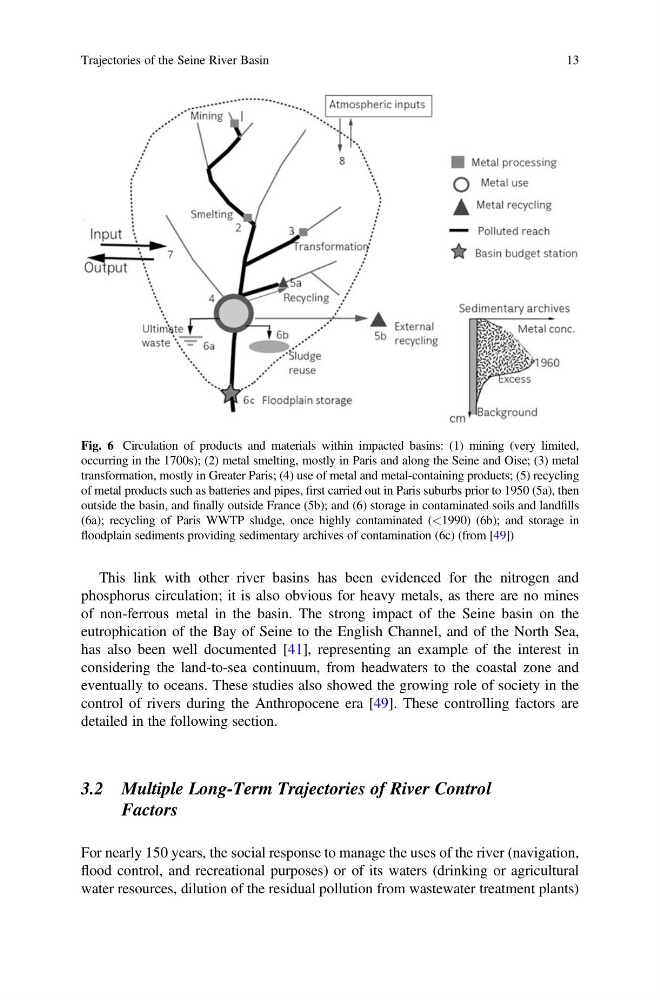
Fig. 6 Circulation of products and materials within impacted basins: (1) mining (very limited,
occurring in the 1700s); (2) metal smelting, mostly in Paris and along the Seine and Oise; (3) metal
transformation, mostly in Greater Paris; (4) use of metal and metal-containing products; (5) recycling
of metal products such as batteries and pipes, first carried out in Paris suburbs prior to 1950 (5a), then
outside the basin, and finally outside France (5b); and (6) storage in contaminated soils and landfills
(6a); recycling of Paris WWTP sludge, once highly contaminated (<1990) (6b); and storage in
floodplain sediments providing sedimentary archives of contamination (6c) (from [49])
Trajectories of the Seine River Basin
13
phosphorus circulation; it is also obvious for heavy metals, as there are no mines
of non-ferrous metal in the basin. The strong impact of the Seine basin on the
eutrophication of the Bay of Seine to the English Channel, and of the North Sea,
has also been well documented [41], representing an example of the interest in
considering the land-to-sea continuum, from headwaters to the coastal zone and
eventually to oceans. These studies also showed the growing role of society in the
control of rivers during the Anthropocene era [49]. These controlling factors are
detailed in the following section.
3.2 Multiple Long-Term Trajectories of River Control
Factors
For nearly 150 years, the social response to manage the uses of the river (navigation,
flood control, and recreational purposes) or of its waters (drinking or agricultural
water resources, dilution of the residual pollution from wastewater treatment plants)
Fig. 6 Circulation of products and materials within impacted basins: (1) mining (very limited,
occurring in the 1700s); (2) metal smelting, mostly in Paris and along the Seine and Oise; (3) metal
transformation, mostly in Greater Paris; (4) use of metal and metal-containing products; (5) recycling
of metal products such as batteries and pipes, first carried out in Paris suburbs prior to 1950 (5a), then
outside the basin, and finally outside France (5b); and (6) storage in contaminated soils and landfills
(6a); recycling of Paris WWTP sludge, once highly contaminated (<1990) (6b); and storage in
floodplain sediments providing sedimentary archives of contamination (6c) (from [49])
Trajectories of the Seine River Basin
13