

3.2 Pollution Treatment by Resource Destruction (1968
to Today)
Concerns about the catastrophic quality of rivers grew after World War II, at a
time when the Paris population was growing and the Seine was biologically dying.
The 1960s were a turning point in the river’s pollution: the national Water Law was
enacted in 1964, urging recovery of surface water quality. In 1968, the Paris
conurbation adopted a general wastewater management plan which aimed at treating
all wastewater produced by the conurbation. It took several decades to achieve the
main goal of this plan (Fig. 12).
At that time, wastewater treatment concentrated on reducing carbon (C) pollution.
N and P removal in the first WWTP was quite low (less than 10% removal for N).
Between the 1970s and the 1990s, oxygen levels rose, but so did N and P pollution
due to lack of sufficient treatment and an ever-growing population [13]. Even if
sewage sludge was mostly spread on agricultural land, wastewater treatment
reinforced the linearity of human excreta management because very little N and P
were actually recovered in sludge. Sewage farms continued to disappear. Moreover,
contamination of wastewater because of the mixing of human excreta with domestic
water, industrial water and rainwater became a matter of concern. In the 2000s, high
levels of contamination in metals were discovered in all sewage-covered farmlands
and direct spreading of wastewater was forbidden.
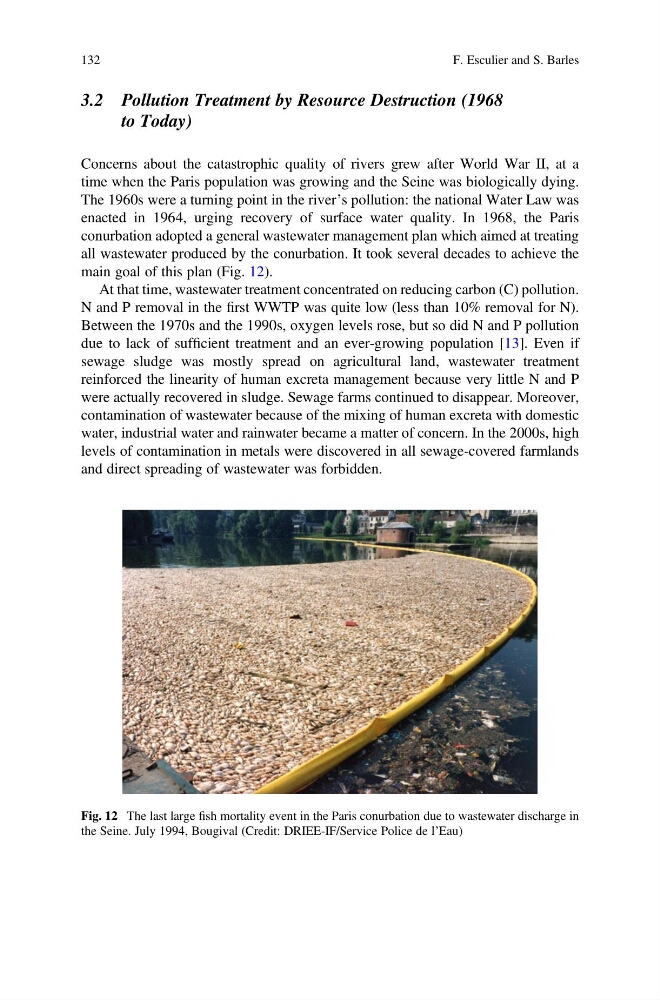
Fig. 12 The last large fish mortality event in the Paris conurbation due to wastewater discharge in
the Seine. July 1994, Bougival (Credit: DRIEE-IF/Service Police de l’Eau)
132
F. Esculier and S. Barles
to Today)
Concerns about the catastrophic quality of rivers grew after World War II, at a
time when the Paris population was growing and the Seine was biologically dying.
The 1960s were a turning point in the river’s pollution: the national Water Law was
enacted in 1964, urging recovery of surface water quality. In 1968, the Paris
conurbation adopted a general wastewater management plan which aimed at treating
all wastewater produced by the conurbation. It took several decades to achieve the
main goal of this plan (Fig. 12).
At that time, wastewater treatment concentrated on reducing carbon (C) pollution.
N and P removal in the first WWTP was quite low (less than 10% removal for N).
Between the 1970s and the 1990s, oxygen levels rose, but so did N and P pollution
due to lack of sufficient treatment and an ever-growing population [13]. Even if
sewage sludge was mostly spread on agricultural land, wastewater treatment
reinforced the linearity of human excreta management because very little N and P
were actually recovered in sludge. Sewage farms continued to disappear. Moreover,
contamination of wastewater because of the mixing of human excreta with domestic
water, industrial water and rainwater became a matter of concern. In the 2000s, high
levels of contamination in metals were discovered in all sewage-covered farmlands
and direct spreading of wastewater was forbidden.
Fig. 12 The last large fish mortality event in the Paris conurbation due to wastewater discharge in
the Seine. July 1994, Bougival (Credit: DRIEE-IF/Service Police de l’Eau)
132
F. Esculier and S. Barles