

The combination of these diverse improvements did not lead to radical change in
the global circularity of human excreta management. Although between the 1800s
and the 1850s N recycling had been multiplied by two, the total N circularity of
Parisians’ excreta still did not exceed 10%.
A major change appeared with the extension of sewers. The total length of Paris’s
sewers timidly rose from 20 km at the end of the eighteenth century to 40 km in 1831
and 168 km in 1858. Their main initial purpose was the collection of rainwater and
cleaning water from street fountains. In the first half of the nineteenth century,
houses were not connected to the sewers: few houses had a domestic water supply,
and dumping human excreta in sewers was considered both unhygienic and a waste
of a valuable resource, so it was forbidden. But this changed radically in the middle
of the century. As the domestic water supply increased, direct dumping of domestic
water on streets became less and less acceptable. In 1852, disposal of domestic water
(what is now called grey water) in the sewer became compulsory and general
servicing of Paris with the sewer was undertaken. In the 1860s, the total length of
the sewers was close to 600 km [28].
The combination of a steep increase in night soil volumes, extended sewers and
the declining quality of the Seine River because of sewage water discharge led
engineers to consider another technique to manage human excreta. Flush toilets
could be favourably combined with transport of human excreta in the sewers and
spreading of the resulting fertiliser-rich water in sewage farms, a technique already
implemented abroad [29]. In 1868, engineers Adolphe Mille and Alfred DurandClaye received the authorisation to test sewage spreading on fields in Gennevilliers.
Although dry management of human excreta was conducted for the purposes of
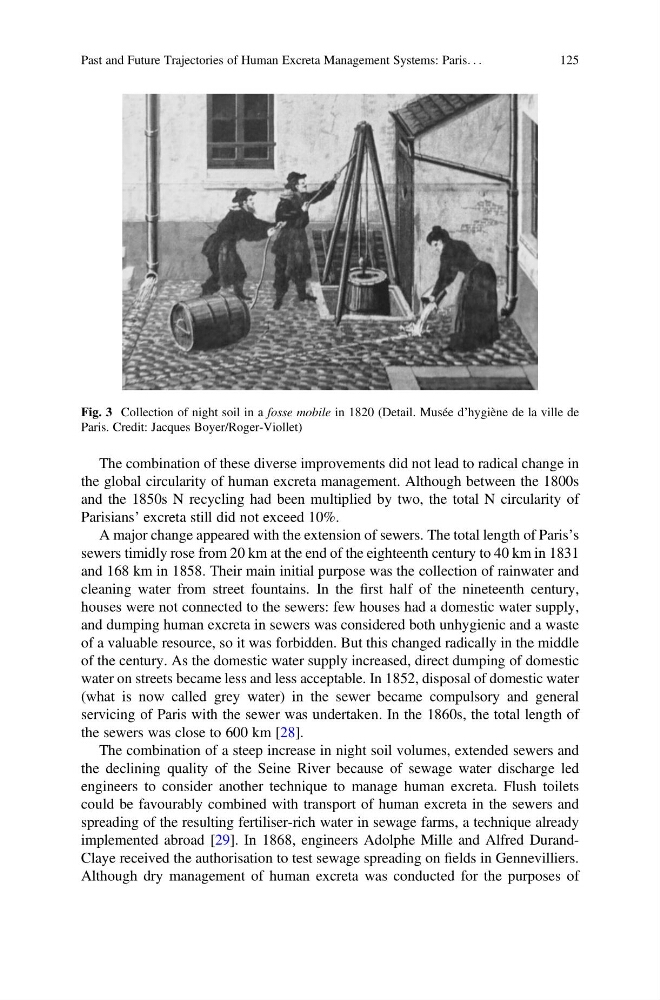
Fig. 3 Collection of night soil in a fosse mobile in 1820 (Detail. Musée d’hygiène de la ville de
Paris. Credit: Jacques Boyer/Roger-Viollet)
Past and Future Trajectories of Human Excreta Management Systems: Paris. . .
125
the global circularity of human excreta management. Although between the 1800s
and the 1850s N recycling had been multiplied by two, the total N circularity of
Parisians’ excreta still did not exceed 10%.
A major change appeared with the extension of sewers. The total length of Paris’s
sewers timidly rose from 20 km at the end of the eighteenth century to 40 km in 1831
and 168 km in 1858. Their main initial purpose was the collection of rainwater and
cleaning water from street fountains. In the first half of the nineteenth century,
houses were not connected to the sewers: few houses had a domestic water supply,
and dumping human excreta in sewers was considered both unhygienic and a waste
of a valuable resource, so it was forbidden. But this changed radically in the middle
of the century. As the domestic water supply increased, direct dumping of domestic
water on streets became less and less acceptable. In 1852, disposal of domestic water
(what is now called grey water) in the sewer became compulsory and general
servicing of Paris with the sewer was undertaken. In the 1860s, the total length of
the sewers was close to 600 km [28].
The combination of a steep increase in night soil volumes, extended sewers and
the declining quality of the Seine River because of sewage water discharge led
engineers to consider another technique to manage human excreta. Flush toilets
could be favourably combined with transport of human excreta in the sewers and
spreading of the resulting fertiliser-rich water in sewage farms, a technique already
implemented abroad [29]. In 1868, engineers Adolphe Mille and Alfred DurandClaye received the authorisation to test sewage spreading on fields in Gennevilliers.
Although dry management of human excreta was conducted for the purposes of
Fig. 3 Collection of night soil in a fosse mobile in 1820 (Detail. Musée d’hygiène de la ville de
Paris. Credit: Jacques Boyer/Roger-Viollet)
Past and Future Trajectories of Human Excreta Management Systems: Paris. . .
125