

excreta management, in a context of the industrial revolution and a threefold increase
in the urban population. Cesspool watertightness increased the efficiency of collection, but, at the same time, development of water distribution led to higher and more
diluted volumes of night soil to collect. Per capita night soil collection was multiplied by five between the 1800s and the 1860s, and total collected night soil volumes
were multiplied by 15. New storage techniques appeared, such as the fosse mobile
where night soil was not emptied from a cesspool but stored in a barrel, which was
collected together with its content (Fig. 3).
Improvements also appeared at the treatment facility. Numerous inventors,
scholars or companies worked on processes that could extract or concentrate the
valuable nutrients of human excreta. In 1820, for instance, Joseph Donat received a
medal from the Royal and Central Society of Agriculture (known today as the
Académie d’Agriculture de France) for his proposal of mixing the liquid part of
night soil with an absorbent material to obtain a concentrated fertiliser [26]. Some of
these technical improvements were implemented in Paris night soil treatment facilities. In 1852, most night soil treatment had been transferred to Bondy (10 km
upstream of Paris along the Ourcq canal) where, alongside 10,000 m
3 of the
traditional poudrette, three other products were obtained by the extraction of N
from the liquid phase: 8 t of ammonium muriate (NH 4 Cl), 40 t of volatile alkali
(NH 4 OH) and 835 t of ammonium sulphate ((NH 4 ) 2 SO 4 ), which was mostly shipped
to England (these figures are for 1852) [27].
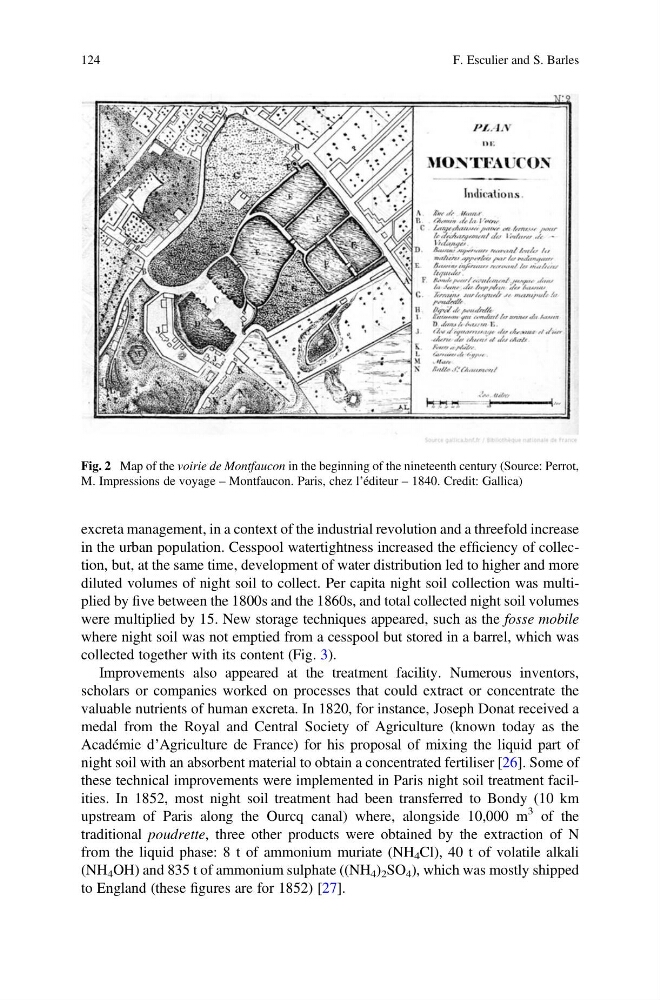
Fig. 2 Map of the voirie de Montfaucon in the beginning of the nineteenth century (Source: Perrot,
M. Impressions de voyage – Montfaucon. Paris, chez l’éditeur – 1840. Credit: Gallica)
124
F. Esculier and S. Barles
in the urban population. Cesspool watertightness increased the efficiency of collection, but, at the same time, development of water distribution led to higher and more
diluted volumes of night soil to collect. Per capita night soil collection was multiplied by five between the 1800s and the 1860s, and total collected night soil volumes
were multiplied by 15. New storage techniques appeared, such as the fosse mobile
where night soil was not emptied from a cesspool but stored in a barrel, which was
collected together with its content (Fig. 3).
Improvements also appeared at the treatment facility. Numerous inventors,
scholars or companies worked on processes that could extract or concentrate the
valuable nutrients of human excreta. In 1820, for instance, Joseph Donat received a
medal from the Royal and Central Society of Agriculture (known today as the
Académie d’Agriculture de France) for his proposal of mixing the liquid part of
night soil with an absorbent material to obtain a concentrated fertiliser [26]. Some of
these technical improvements were implemented in Paris night soil treatment facilities. In 1852, most night soil treatment had been transferred to Bondy (10 km
upstream of Paris along the Ourcq canal) where, alongside 10,000 m
3 of the
traditional poudrette, three other products were obtained by the extraction of N
from the liquid phase: 8 t of ammonium muriate (NH 4 Cl), 40 t of volatile alkali
(NH 4 OH) and 835 t of ammonium sulphate ((NH 4 ) 2 SO 4 ), which was mostly shipped
to England (these figures are for 1852) [27].
Fig. 2 Map of the voirie de Montfaucon in the beginning of the nineteenth century (Source: Perrot,
M. Impressions de voyage – Montfaucon. Paris, chez l’éditeur – 1840. Credit: Gallica)
124
F. Esculier and S. Barles