

Pourbaix diagrams using thermodynamic data were introduced to dictate the speciation of Ce in solution by the simultaneous indications of chemical (as a function of
pH) and electrochemical reactions (as a function of electrochemical potential (pe,
calculated as pe ¼ 16.9 E H (V) at 25
C)). As an example, in Channei et al. (2017),
the speciation diagrams for the simple system of Ce
3+ -H 2 O, Ce
4+ -H 2 O, and E H -pH
diagrams for Ce-H 2 O were respectively displayed. It can be found that Ce(IV) on the
surface of CNPs is not in equilibrium with water in the section of water stability, so
the reduction of Ce(IV) to Ce(III) occurs spontaneously (Channei et al. 2017; Cui
et al. 2014). Therefore, the composition is shifted into the Ce
3+ predominance
region. Then, Ce
3+ hydrolyzes to Ce(OH)
2+ and the end products of CeO 2 Á2H 2 O
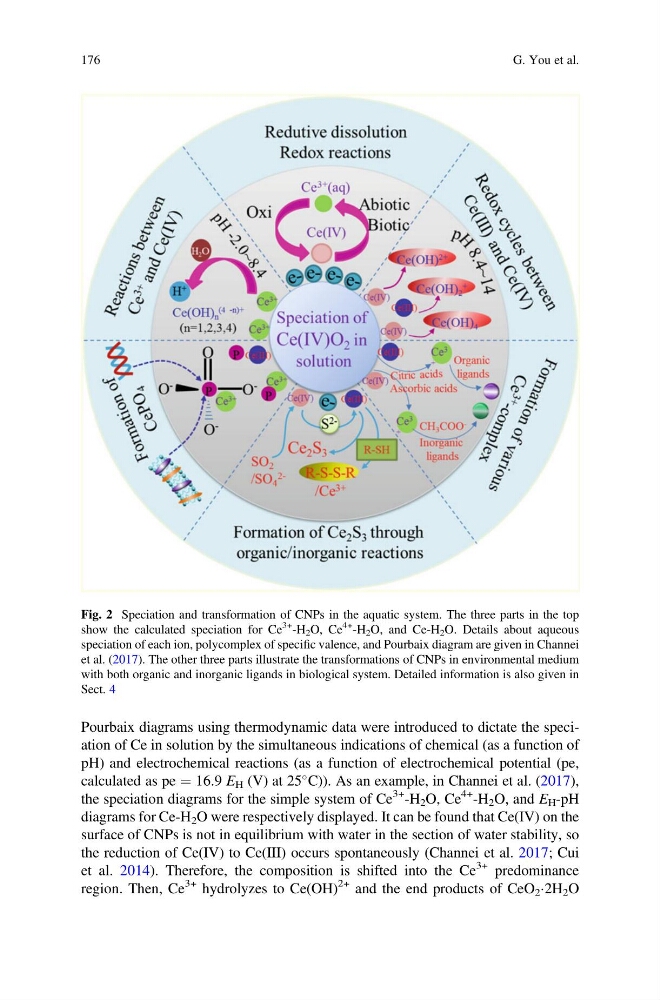
Fig. 2 Speciation and transformation of CNPs in the aquatic system. The three parts in the top
show the calculated speciation for Ce
3+ -H 2 O, Ce
4+ -H 2 O, and Ce-H 2 O. Details about aqueous
speciation of each ion, polycomplex of specific valence, and Pourbaix diagram are given in Channei
et al. (2017). The other three parts illustrate the transformations of CNPs in environmental medium
with both organic and inorganic ligands in biological system. Detailed information is also given in
Sect. 4
176
G. You et al.
pH) and electrochemical reactions (as a function of electrochemical potential (pe,
calculated as pe ¼ 16.9 E H (V) at 25
C)). As an example, in Channei et al. (2017),
the speciation diagrams for the simple system of Ce
3+ -H 2 O, Ce
4+ -H 2 O, and E H -pH
diagrams for Ce-H 2 O were respectively displayed. It can be found that Ce(IV) on the
surface of CNPs is not in equilibrium with water in the section of water stability, so
the reduction of Ce(IV) to Ce(III) occurs spontaneously (Channei et al. 2017; Cui
et al. 2014). Therefore, the composition is shifted into the Ce
3+ predominance
region. Then, Ce
3+ hydrolyzes to Ce(OH)
2+ and the end products of CeO 2 Á2H 2 O
Fig. 2 Speciation and transformation of CNPs in the aquatic system. The three parts in the top
show the calculated speciation for Ce
3+ -H 2 O, Ce
4+ -H 2 O, and Ce-H 2 O. Details about aqueous
speciation of each ion, polycomplex of specific valence, and Pourbaix diagram are given in Channei
et al. (2017). The other three parts illustrate the transformations of CNPs in environmental medium
with both organic and inorganic ligands in biological system. Detailed information is also given in
Sect. 4
176
G. You et al.