

411
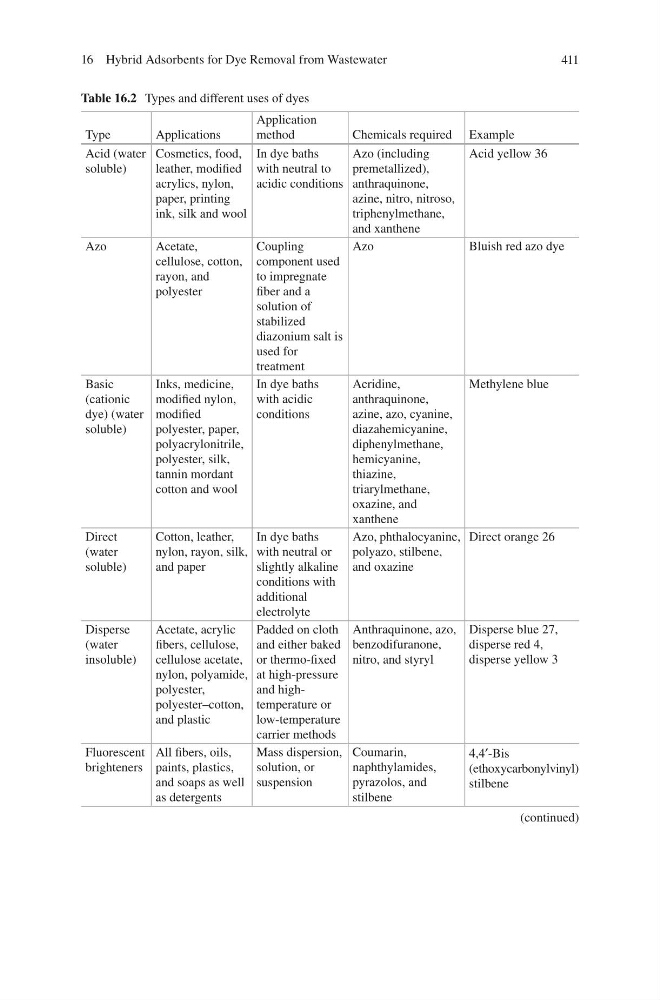
Table 16.2 Types and different uses of dyes
Type
Applications
Application
method
Chemicals required Example
Acid (water
soluble)
Cosmetics, food,
leather, modified
acrylics, nylon,
paper, printing
ink, silk and wool
In dye baths
with neutral to
acidic conditions
Azo (including
premetallized),
anthraquinone,
azine, nitro, nitroso,
triphenylmethane,
and xanthene
Acid yellow 36
Azo
Acetate,
cellulose, cotton,
rayon, and
polyester
Coupling
component used
to impregnate
fiber and a
solution of
stabilized
diazonium salt is
used for
treatment
Azo
Bluish red azo dye
Basic
(cationic
dye) (water
soluble)
Inks, medicine,
modified nylon,
modified
polyester, paper,
polyacrylonitrile,
polyester, silk,
tannin mordant
cotton and wool
In dye baths
with acidic
conditions
Acridine,
anthraquinone,
azine, azo, cyanine,
diazahemicyanine,
diphenylmethane,
hemicyanine,
thiazine,
triarylmethane,
oxazine, and
xanthene
Methylene blue
Direct
(water
soluble)
Cotton, leather,
nylon, rayon, silk,
and paper
In dye baths
with neutral or
slightly alkaline
conditions with
additional
electrolyte
Azo, phthalocyanine,
polyazo, stilbene,
and oxazine
Direct orange 26
Disperse
(water
insoluble)
Acetate, acrylic
fibers, cellulose,
cellulose acetate,
nylon, polyamide,
polyester,
polyester–cotton,
and plastic
Padded on cloth
and either baked
or thermo- fixed
at high-pressure
and hightemperature or
low- temperature
carrier methods
Anthraquinone, azo,
benzodifuranone,
nitro, and styryl
Disperse blue 27,
disperse red 4,
disperse yellow 3
Fluorescent
brighteners
All fibers, oils,
paints, plastics,
and soaps as well
as detergents
Mass dispersion,
solution, or
suspension
Coumarin,
naphthylamides,
pyrazolos, and
stilbene
4,4′-Bis
(ethoxycarbonylvinyl)
stilbene
(continued)
16 Hybrid Adsorbents for Dye Removal from Wastewater
Table 16.2 Types and different uses of dyes
Type
Applications
Application
method
Chemicals required Example
Acid (water
soluble)
Cosmetics, food,
leather, modified
acrylics, nylon,
paper, printing
ink, silk and wool
In dye baths
with neutral to
acidic conditions
Azo (including
premetallized),
anthraquinone,
azine, nitro, nitroso,
triphenylmethane,
and xanthene
Acid yellow 36
Azo
Acetate,
cellulose, cotton,
rayon, and
polyester
Coupling
component used
to impregnate
fiber and a
solution of
stabilized
diazonium salt is
used for
treatment
Azo
Bluish red azo dye
Basic
(cationic
dye) (water
soluble)
Inks, medicine,
modified nylon,
modified
polyester, paper,
polyacrylonitrile,
polyester, silk,
tannin mordant
cotton and wool
In dye baths
with acidic
conditions
Acridine,
anthraquinone,
azine, azo, cyanine,
diazahemicyanine,
diphenylmethane,
hemicyanine,
thiazine,
triarylmethane,
oxazine, and
xanthene
Methylene blue
Direct
(water
soluble)
Cotton, leather,
nylon, rayon, silk,
and paper
In dye baths
with neutral or
slightly alkaline
conditions with
additional
electrolyte
Azo, phthalocyanine,
polyazo, stilbene,
and oxazine
Direct orange 26
Disperse
(water
insoluble)
Acetate, acrylic
fibers, cellulose,
cellulose acetate,
nylon, polyamide,
polyester,
polyester–cotton,
and plastic
Padded on cloth
and either baked
or thermo- fixed
at high-pressure
and hightemperature or
low- temperature
carrier methods
Anthraquinone, azo,
benzodifuranone,
nitro, and styryl
Disperse blue 27,
disperse red 4,
disperse yellow 3
Fluorescent
brighteners
All fibers, oils,
paints, plastics,
and soaps as well
as detergents
Mass dispersion,
solution, or
suspension
Coumarin,
naphthylamides,
pyrazolos, and
stilbene
4,4′-Bis
(ethoxycarbonylvinyl)
stilbene
(continued)
16 Hybrid Adsorbents for Dye Removal from Wastewater