

383
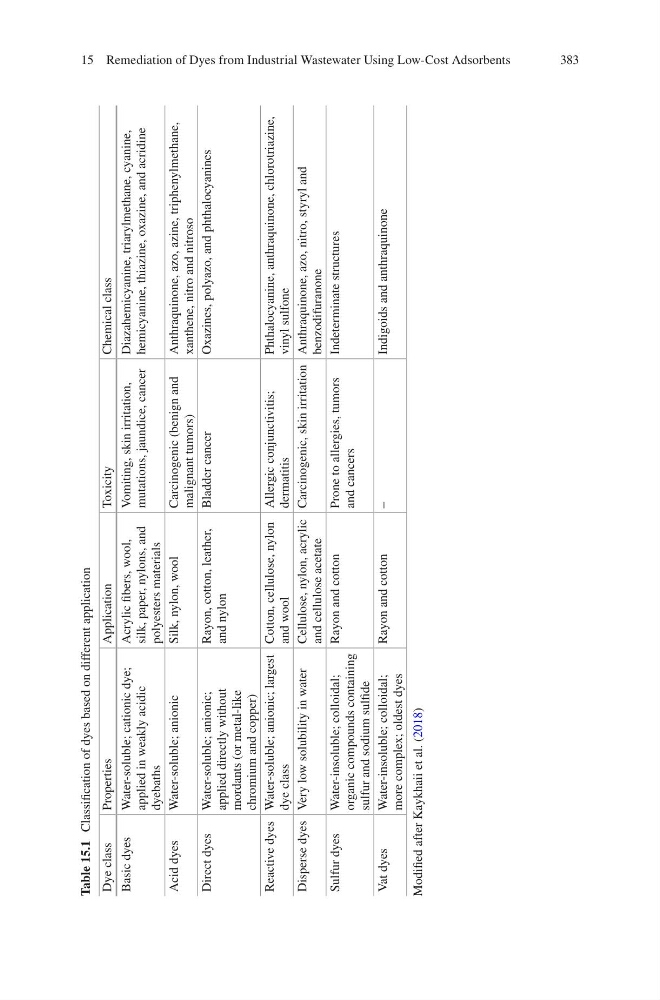
Table 15.1 Classification of dyes based on different application
Dye class
Properties
Application
Toxicity
Chemical class
Basic dyes
Water-soluble; cationic dye;
applied in weakly acidic
dyebaths
Acrylic fibers, wool,
silk, paper, nylons, and
polyesters materials
Vomiting, skin irritation,
mutations, jaundice, cancer
Diazahemicyanine, triarylmethane, cyanine,
hemicyanine, thiazine, oxazine, and acridine
Acid dyes
Water-soluble; anionic
Silk, nylon, wool
Carcinogenic (benign and
malignant tumors)
Anthraquinone, azo, azine, triphenylmethane,
xanthene, nitro and nitroso
Direct dyes
Water-soluble; anionic;
applied directly without
mordants (or metal-like
chromium and copper)
Rayon, cotton, leather,
and nylon
Bladder cancer
Oxazines, polyazo, and phthalocyanines
Reactive dyes Water-soluble; anionic; largest
dye class
Cotton, cellulose, nylon
and wool
Allergic conjunctivitis;
dermatitis
Phthalocyanine, anthraquinone, chlorotriazine,
vinyl sulfone
Disperse dyes Very low solubility in water
Cellulose, nylon, acrylic
and cellulose acetate
Carcinogenic, skin irritation Anthraquinone, azo, nitro, styryl and
benzodifuranone
Sulfur dyes
Water-insoluble; colloidal;
organic compounds containing
sulfur and sodium sulfide
Rayon and cotton
Prone to allergies, tumors
and cancers
Indeterminate structures
Vat dyes
Water-insoluble; colloidal;
more complex; oldest dyes
Rayon and cotton
–
Indigoids and anthraquinone
Modified after Kaykhaii et al. (2018)
15 Remediation of Dyes from Industrial Wastewater Using Low-Cost Adsorbents
Table 15.1 Classification of dyes based on different application
Dye class
Properties
Application
Toxicity
Chemical class
Basic dyes
Water-soluble; cationic dye;
applied in weakly acidic
dyebaths
Acrylic fibers, wool,
silk, paper, nylons, and
polyesters materials
Vomiting, skin irritation,
mutations, jaundice, cancer
Diazahemicyanine, triarylmethane, cyanine,
hemicyanine, thiazine, oxazine, and acridine
Acid dyes
Water-soluble; anionic
Silk, nylon, wool
Carcinogenic (benign and
malignant tumors)
Anthraquinone, azo, azine, triphenylmethane,
xanthene, nitro and nitroso
Direct dyes
Water-soluble; anionic;
applied directly without
mordants (or metal-like
chromium and copper)
Rayon, cotton, leather,
and nylon
Bladder cancer
Oxazines, polyazo, and phthalocyanines
Reactive dyes Water-soluble; anionic; largest
dye class
Cotton, cellulose, nylon
and wool
Allergic conjunctivitis;
dermatitis
Phthalocyanine, anthraquinone, chlorotriazine,
vinyl sulfone
Disperse dyes Very low solubility in water
Cellulose, nylon, acrylic
and cellulose acetate
Carcinogenic, skin irritation Anthraquinone, azo, nitro, styryl and
benzodifuranone
Sulfur dyes
Water-insoluble; colloidal;
organic compounds containing
sulfur and sodium sulfide
Rayon and cotton
Prone to allergies, tumors
and cancers
Indeterminate structures
Vat dyes
Water-insoluble; colloidal;
more complex; oldest dyes
Rayon and cotton
–
Indigoids and anthraquinone
Modified after Kaykhaii et al. (2018)
15 Remediation of Dyes from Industrial Wastewater Using Low-Cost Adsorbents