

325
remove the toxic contaminants came due to the potential adverse effects of the pollutants to humans consuming the polluted water sources.
Some of the well-documented studies on the effects of heavy metals on humans
are skin inflammatory diseases, damage to the kidneys, gastrointestinal issues, and,
in more severe cases, death (Table 13.2). The problem becomes even more apparent
in developing countries that do not have proper water treatment resources and no
access to clean water source (Joseph et al. 2019). According to the WHO, 844 million people lack even a basic drinking water service, and 159 million are dependent
on surface water (WHO 2017).
Therefore, it is highly imperative now to take measure to reduce or eliminate
heavy metal contamination in water sources due to effluents from the industry.
Many different approaches have been reported in recent times to remove heavy metals from wastewater or industrial effluents such as activated carbon adsorption (J. Li
et al. 2018; Renu et al. 2016), carbon nanotechnology (Peng et al. 2017; Sherlala
et al. 2018; Xu et al. 2018), modified adsorbents (Sajid et al. 2018; Xu et al. 2018;
Zare et al. 2018), electrocoagulation (Al-Qodah and Al-Shannag 2017; Bazrafshan
et al. 2015), membrane filtration (Kim et al. 2018), and microbial remediation
(Ayangbenro et al. 2017; Li and Tao 2015).
However, the cost of production of these adsorbents and the process itself have
been found to be too high to cater to the developing countries. Some of the methods
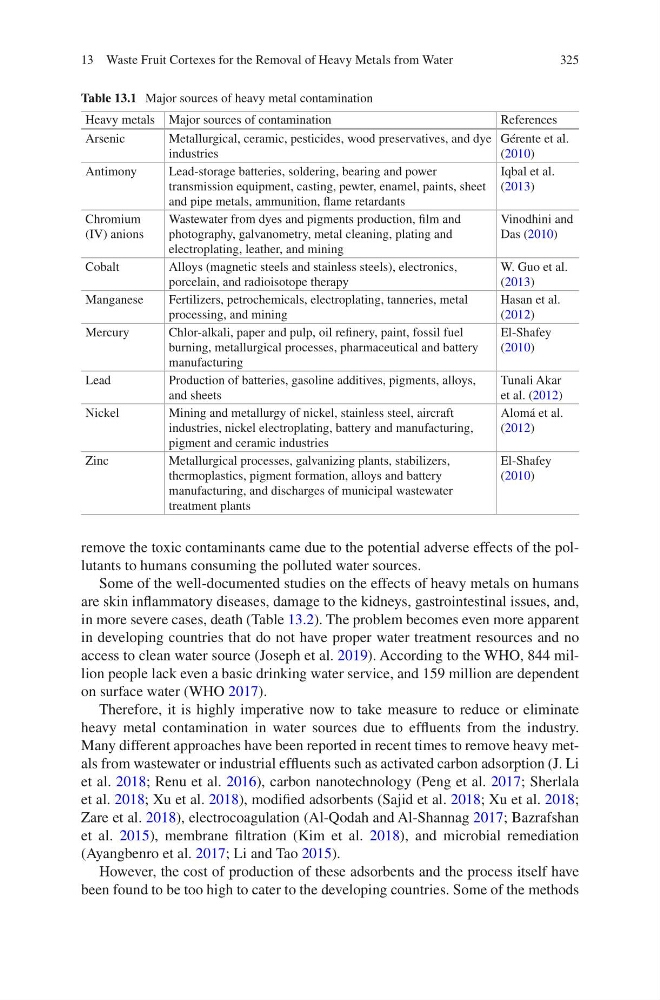
Table 13.1 Major sources of heavy metal contamination
Heavy metals Major sources of contamination
References
Arsenic
Metallurgical, ceramic, pesticides, wood preservatives, and dye
industries
Gérente et al.
(2010)
Antimony
Lead-storage batteries, soldering, bearing and power
transmission equipment, casting, pewter, enamel, paints, sheet
and pipe metals, ammunition, flame retardants
Iqbal et al.
(2013)
Chromium
(IV) anions
Wastewater from dyes and pigments production, film and
photography, galvanometry, metal cleaning, plating and
electroplating, leather, and mining
Vinodhini and
Das (2010)
Cobalt
Alloys (magnetic steels and stainless steels), electronics,
porcelain, and radioisotope therapy
W. Guo et al.
(2013)
Manganese
Fertilizers, petrochemicals, electroplating, tanneries, metal
processing, and mining
Hasan et al.
(2012)
Mercury
Chlor-alkali, paper and pulp, oil refinery, paint, fossil fuel
burning, metallurgical processes, pharmaceutical and battery
manufacturing
El-Shafey
(2010)
Lead
Production of batteries, gasoline additives, pigments, alloys,
and sheets
Tunali Akar
et al. (2012)
Nickel
Mining and metallurgy of nickel, stainless steel, aircraft
industries, nickel electroplating, battery and manufacturing,
pigment and ceramic industries
Alomá et al.
(2012)
Zinc
Metallurgical processes, galvanizing plants, stabilizers,
thermoplastics, pigment formation, alloys and battery
manufacturing, and discharges of municipal wastewater
treatment plants
El-Shafey
(2010)
13 Waste Fruit Cortexes for the Removal of Heavy Metals from Water
remove the toxic contaminants came due to the potential adverse effects of the pollutants to humans consuming the polluted water sources.
Some of the well-documented studies on the effects of heavy metals on humans
are skin inflammatory diseases, damage to the kidneys, gastrointestinal issues, and,
in more severe cases, death (Table 13.2). The problem becomes even more apparent
in developing countries that do not have proper water treatment resources and no
access to clean water source (Joseph et al. 2019). According to the WHO, 844 million people lack even a basic drinking water service, and 159 million are dependent
on surface water (WHO 2017).
Therefore, it is highly imperative now to take measure to reduce or eliminate
heavy metal contamination in water sources due to effluents from the industry.
Many different approaches have been reported in recent times to remove heavy metals from wastewater or industrial effluents such as activated carbon adsorption (J. Li
et al. 2018; Renu et al. 2016), carbon nanotechnology (Peng et al. 2017; Sherlala
et al. 2018; Xu et al. 2018), modified adsorbents (Sajid et al. 2018; Xu et al. 2018;
Zare et al. 2018), electrocoagulation (Al-Qodah and Al-Shannag 2017; Bazrafshan
et al. 2015), membrane filtration (Kim et al. 2018), and microbial remediation
(Ayangbenro et al. 2017; Li and Tao 2015).
However, the cost of production of these adsorbents and the process itself have
been found to be too high to cater to the developing countries. Some of the methods
Table 13.1 Major sources of heavy metal contamination
Heavy metals Major sources of contamination
References
Arsenic
Metallurgical, ceramic, pesticides, wood preservatives, and dye
industries
Gérente et al.
(2010)
Antimony
Lead-storage batteries, soldering, bearing and power
transmission equipment, casting, pewter, enamel, paints, sheet
and pipe metals, ammunition, flame retardants
Iqbal et al.
(2013)
Chromium
(IV) anions
Wastewater from dyes and pigments production, film and
photography, galvanometry, metal cleaning, plating and
electroplating, leather, and mining
Vinodhini and
Das (2010)
Cobalt
Alloys (magnetic steels and stainless steels), electronics,
porcelain, and radioisotope therapy
W. Guo et al.
(2013)
Manganese
Fertilizers, petrochemicals, electroplating, tanneries, metal
processing, and mining
Hasan et al.
(2012)
Mercury
Chlor-alkali, paper and pulp, oil refinery, paint, fossil fuel
burning, metallurgical processes, pharmaceutical and battery
manufacturing
El-Shafey
(2010)
Lead
Production of batteries, gasoline additives, pigments, alloys,
and sheets
Tunali Akar
et al. (2012)
Nickel
Mining and metallurgy of nickel, stainless steel, aircraft
industries, nickel electroplating, battery and manufacturing,
pigment and ceramic industries
Alomá et al.
(2012)
Zinc
Metallurgical processes, galvanizing plants, stabilizers,
thermoplastics, pigment formation, alloys and battery
manufacturing, and discharges of municipal wastewater
treatment plants
El-Shafey
(2010)
13 Waste Fruit Cortexes for the Removal of Heavy Metals from Water