

277
(dichlorodiphenyltrichloroethane) = 0.006 mg/L) (Holme 1984). 98% of dyes under
studies show Lethal Concentration 50 over 1 mg/L. Particularly high toxicity (Lethal
Concentration 50 = 0.8 mg/L) shows basic yellow 37 (Holme 1984). According to
Ventura-Camargo and Marin-Morales (2013), oral exposure of humans to the azo
dyes can lead to the formation of aromatic amines by both the intestinal microflora
and liver azoreductases. Moreover, some of these amines have exhibited carcinogenic properties.
Difficulties in developing a suitable method (economical, effective, and simple)
for synthetic dyes removal are caused by application of different types of dyes in
technological process and changes in production technology (Forgacs et al. 2004).
In order to control the negative impact of different types of dyes on the environment
and living organisms, intensive research is carried out to develop effective and
selective methods of their removal and degradation. Textile wastewaters can be
treated using biological, chemical, physical, as well as physicochemical combination processes (Fig. 11.4).
The advantage of biological treatment of wastewaters containing dyes is undoubtedly the price and simplicity of operations using microbial biomass, fungal, and
microbial cultures, algae degradation, as well as pure or mixed cultures under aerobic and anaerobic conditions. This technique is insufficient to remove dyes form
wastewaters completely. It is ineffective method for different types of dyes, and
there can be formed methane and hydrogen sulfides as by-products. In addition, it is
time-consuming. The efficiency of biological wastewater treatment varies 76–90%
(Katheresan et al. 2018).
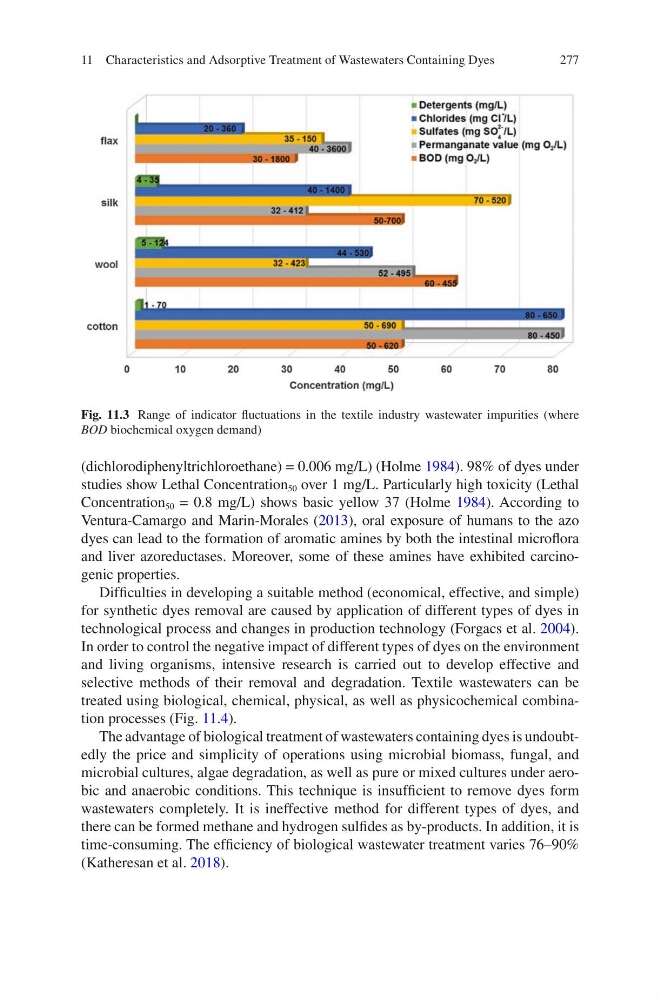
Fig. 11.3 Range of indicator fluctuations in the textile industry wastewater impurities (where
BOD biochemical oxygen demand)
11 Characteristics and Adsorptive Treatment of Wastewaters Containing Dyes
(dichlorodiphenyltrichloroethane) = 0.006 mg/L) (Holme 1984). 98% of dyes under
studies show Lethal Concentration 50 over 1 mg/L. Particularly high toxicity (Lethal
Concentration 50 = 0.8 mg/L) shows basic yellow 37 (Holme 1984). According to
Ventura-Camargo and Marin-Morales (2013), oral exposure of humans to the azo
dyes can lead to the formation of aromatic amines by both the intestinal microflora
and liver azoreductases. Moreover, some of these amines have exhibited carcinogenic properties.
Difficulties in developing a suitable method (economical, effective, and simple)
for synthetic dyes removal are caused by application of different types of dyes in
technological process and changes in production technology (Forgacs et al. 2004).
In order to control the negative impact of different types of dyes on the environment
and living organisms, intensive research is carried out to develop effective and
selective methods of their removal and degradation. Textile wastewaters can be
treated using biological, chemical, physical, as well as physicochemical combination processes (Fig. 11.4).
The advantage of biological treatment of wastewaters containing dyes is undoubtedly the price and simplicity of operations using microbial biomass, fungal, and
microbial cultures, algae degradation, as well as pure or mixed cultures under aerobic and anaerobic conditions. This technique is insufficient to remove dyes form
wastewaters completely. It is ineffective method for different types of dyes, and
there can be formed methane and hydrogen sulfides as by-products. In addition, it is
time-consuming. The efficiency of biological wastewater treatment varies 76–90%
(Katheresan et al. 2018).
Fig. 11.3 Range of indicator fluctuations in the textile industry wastewater impurities (where
BOD biochemical oxygen demand)
11 Characteristics and Adsorptive Treatment of Wastewaters Containing Dyes