

263
The mechanism behind the heavy metal adsorption is ion-exchange process: ion
exchange occurs because of the presence of functional group on the surface of the
biomass which proved to be potentially active substrate for removal of toxic elements. Uptake mechanism: This is a complex mechanism in which organic matter
form complex compound with inorganic metal ions through a covalent bond or electrostatic force. Chelation: This mechanism occurs when more than one e
−
doner is
present in the functional group which helps the biomass to form a chelate cage-like
complex structure with metal ions. Precipitation: Precipitation is highly dependent
upon conjugate metal ion concentration and pH.
10.4 Mechanisms of Heavy Metal Removal
Among all of the remediation techniques for removal of heavy metal from wastewater, adsorption-assisted technique is a very simple and commercial approach to
adopt. There are several mechanisms of adsorption like physical and sorption, ion
and ligand exchange, chelation, or surface and internal complexation (Dai et al.
2018). Surface and interfacial adsorption are mainly responsible for physisorption
which frequently occurs in low-cost adsorbents. In surface adsorption, metal ions
are drifted from solution to the adsorbent surface by diffusion. On the adsorbent
surface having opposite charge to the adsorbate, metal ions are strongly attracted by
some electronic forces such as dipole–dipole interactions, moderate forces of attraction, or H-bonding (Sulyman et al. 2017). Once metal ions crosses boundary layer,
they readily attached to adsorbent surface and thereby successively removed from
the solution. Figure 10.3 shows pictorial representation of the mechanism. During
interfacial adsorption, metal ions after getting diffused from the liquid boundary
2020
2017
2014
2011
2008
2005
2002
Year
1999
1996
1993
1990
1987
1984
300
250
200
150
Documents
100
50
0
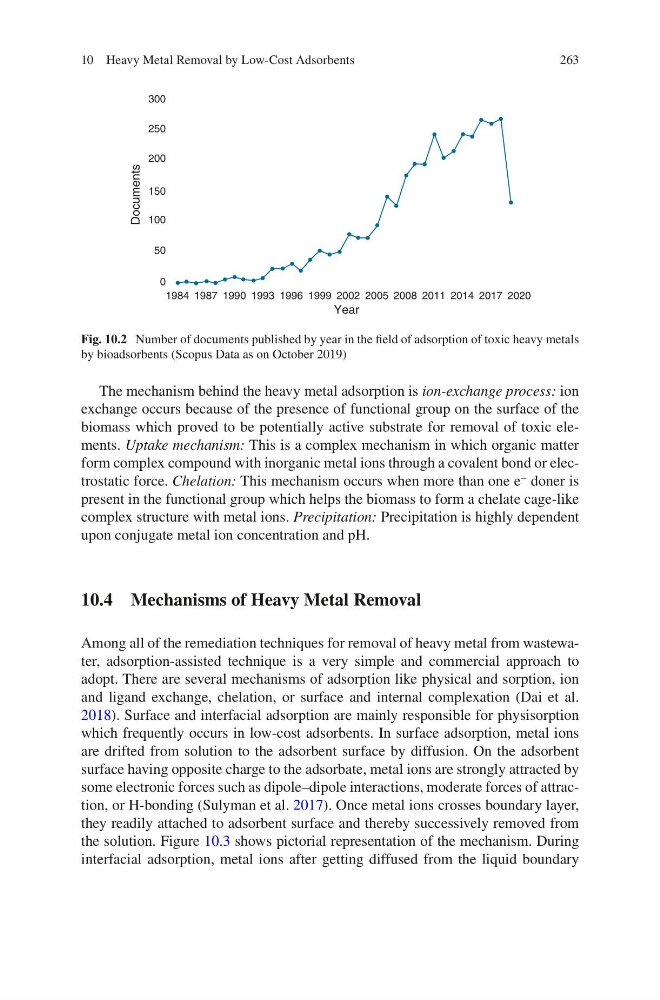
Fig. 10.2 Number of documents published by year in the field of adsorption of toxic heavy metals
by bioadsorbents (Scopus Data as on October 2019)
10 Heavy Metal Removal by Low-Cost Adsorbents
The mechanism behind the heavy metal adsorption is ion-exchange process: ion
exchange occurs because of the presence of functional group on the surface of the
biomass which proved to be potentially active substrate for removal of toxic elements. Uptake mechanism: This is a complex mechanism in which organic matter
form complex compound with inorganic metal ions through a covalent bond or electrostatic force. Chelation: This mechanism occurs when more than one e
−
doner is
present in the functional group which helps the biomass to form a chelate cage-like
complex structure with metal ions. Precipitation: Precipitation is highly dependent
upon conjugate metal ion concentration and pH.
10.4 Mechanisms of Heavy Metal Removal
Among all of the remediation techniques for removal of heavy metal from wastewater, adsorption-assisted technique is a very simple and commercial approach to
adopt. There are several mechanisms of adsorption like physical and sorption, ion
and ligand exchange, chelation, or surface and internal complexation (Dai et al.
2018). Surface and interfacial adsorption are mainly responsible for physisorption
which frequently occurs in low-cost adsorbents. In surface adsorption, metal ions
are drifted from solution to the adsorbent surface by diffusion. On the adsorbent
surface having opposite charge to the adsorbate, metal ions are strongly attracted by
some electronic forces such as dipole–dipole interactions, moderate forces of attraction, or H-bonding (Sulyman et al. 2017). Once metal ions crosses boundary layer,
they readily attached to adsorbent surface and thereby successively removed from
the solution. Figure 10.3 shows pictorial representation of the mechanism. During
interfacial adsorption, metal ions after getting diffused from the liquid boundary
2020
2017
2014
2011
2008
2005
2002
Year
1999
1996
1993
1990
1987
1984
300
250
200
150
Documents
100
50
0
Fig. 10.2 Number of documents published by year in the field of adsorption of toxic heavy metals
by bioadsorbents (Scopus Data as on October 2019)
10 Heavy Metal Removal by Low-Cost Adsorbents